

Adjustment of Status | Florida, Texas & New York
Adjustment of Status Legal Help for Immigrants in Florida, Texas and New York
AG Immigration Law P.A. Contact our office to talk through your situation with our team.
By Adriana Gomez · Published October 29, 2026
Adjustment of Status Attorney Houston | AG Immigration Law
If a green card decision and a removal question are both on your desk in Houston, our team can review your facts with you before you decide your next step. Talk it through with our team — we can walk you through how a situation like yours is usually handled and what your options are.
What Adjustment of Status Is and Who It Is For
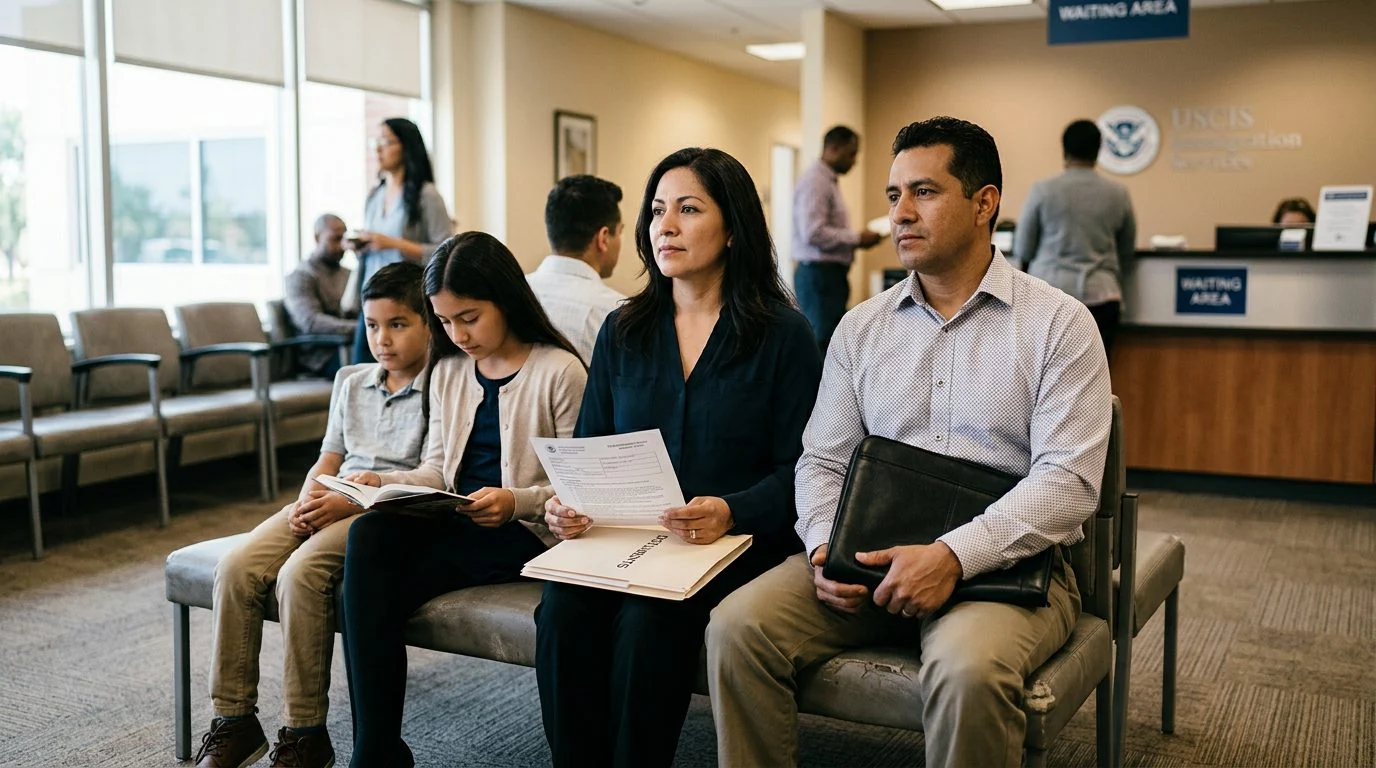
Adjustment of status is how you apply for a green card while you are inside the United States. You file Form I-485 with USCIS instead of going to a consular interview abroad. This page explains the basics of adjustment of status for readers across the US who are weighing this option against their own situation.
The law sets three basic tests. To adjust status under 8 U.S.C. § 1255(a), the applicant must have been inspected and admitted or paroled into the United States, or have an approved VAWA self-petition. In addition, the applicant must file an application, be eligible to receive an immigrant visa and admissible to the United States for permanent residence, and have an immigrant visa immediately available at the time the application is filed.
People usually reach this route through a family petition, an employment-based petition, or another eligible basis. Eligibility depends on your current status and your full immigration history. Having a spouse who is a citizen or green card holder helps, since that person may file a petition on behalf of a spouse, but it does not settle the question by itself.
What an Adjustment of Status Case Covers
An adjustment of status case covers eligibility review, the filing package, and the steps that follow filing. Each part matters, and a gap in one part can slow the whole case.
- Eligibility review: We look at your entry record, your status history, and any past USCIS notices or immigration court orders.
- Form I-485 and supporting forms: We prepare the application and check every answer against your records before filing.
- Family petitions: A U.S. citizen or green card holder may file a petition for a spouse (8 C.F.R. § 204.2(a)(1)). We review how that petition connects to your adjustment request.
- Medical exam and interview preparation: We explain the civil surgeon exam and help you prepare for the USCIS interview.
- Requests for evidence: When USCIS asks for more documents, we review the request and organize a response.
Removal defense matters here too. If you have a removal case, we review your green card request together with that case.
How the Process Works, Step by Step
The process moves in five stages: intake, document collection, preparation, filing, and follow-up. Each stage builds on the one before it.
- Start with a paid consultation. You share your papers and your history so we can review your facts.
- Collect documents. You gather identity records, status papers, and relationship or employment evidence. We give you a checklist.
- Prepare and review. We draft the forms and check the full package before anything goes to USCIS.
- File and attend required steps. After filing, you may need a medical exam with a designated civil surgeon, biometrics, and an interview. The medical report becomes part of the record (8 C.F.R. § 245.5).
- Follow up. We track the case status and advise you on what to do while the application is pending.
Each applicant must be interviewed, though the rule allows waivers for a child under 14 and in some other cases (8 C.F.R. § 245.6). Processing times vary with USCIS workloads and case type, so no fixed timeline applies.
Do You Need a Lawyer for Adjustment of Status?
Some applicants file on their own. Others choose a lawyer’s review because their history adds complexity. The question is whether your facts raise issues that need a close look.
Certain problems can block the filing. The statute bars some applicants who are in unlawful status on the filing date. The same bar can reach a person who continued in or accepted unauthorized employment before filing for adjustment of status, or who has failed to continuously maintain a lawful status since entering the United States (other than through no fault of their own or for technical reasons), although immediate relatives, approved VAWA self-petitioners and certain special immigrants are excepted from this part of the bar, and subsection (k) may also apply (8 U.S.C. § 1255(c)). Immediate relatives have an exception to some of these bars, so the family relationship can change the answer.
A lawyer reviews these points before you file. Prior removal orders, prior denials, and criminal history also call for careful review. Bring those facts to a paid consultation so they can be reviewed before you file.
What Does an Adjustment of Status Attorney Cost?
Cost depends on the work your case needs and the government fees it triggers. USCIS fees are required as the rules provide in 8 C.F.R. part 106 (8 C.F.R. § 103.7(b)). An application filed with an immigration court carries its own fee (8 U.S.C. § 1812(a)).
Consultations are paid. During that meeting, we explain our fees. Any fee quote lists everything you may owe, including government filing fees.
Not sure what your next step is?
Talk it through with our team — we can walk you through how a situation like yours is usually handled and what your options are.
Why Work With AG Immigration Law P.A.
AG Immigration Law P.A. focuses on immigration matters, including removal defense, adjustment of status, family petitions, naturalization, removal of conditions on green cards, waivers, and BIA appeals. Adriana Gomez is the responsible lawyer for this page.
Our team helps clients organize documents, keep schedules, and track filing steps. We also explain each rule we rely on, so you can check the official text yourself. We link each statute and regulation on this page to its official source.
We do not promise results, and this page does not describe past outcomes. What we offer is a clear review of your facts, a complete filing package, and plain answers about what comes next.
Frequently Asked Questions About Adjustment of Status in Houston
What is the difference between adjustment of status and consular processing?
Adjustment is filed with USCIS inside the United States. Consular processing is completed at a U.S. consulate abroad.
Bring those facts to a paid consultation for review.
How long does an adjustment of status attorney Houston case take?
Processing times vary with USCIS workloads and case type, so no fixed timeline applies.
Do I need a medical exam?
Yes.
Will I have an interview?
Each applicant must be interviewed, though the rule allows some waivers.
What documents do I need to start?
Start with identity records, immigration papers, any USCIS notices, and relationship or employment evidence.

Talk to Adriana Gomez About Your Adjustment of Status Question
If you live in Houston and face a green card decision along with a removal question, your next step matters. Use the contact form, call the office, or message us on WhatsApp to book a paid consultation with Adriana Gomez.
Why clients work with AG Immigration Law
Focused immigration practice
Our practice focuses on immigration law, including adjustment of status, family petitions, naturalization, waivers, removal defense and BIA appeals.
Clear communication
We explain each step of the adjustment process in plain language so you know what is happening with your case.
Serving immigrants across Florida, Texas and New York
We help clients in the Florida, Texas and New York areas, including Miami, Orlando, Houston, San Antonio and New York City.
Choose your path with care
consulate abroad. The right path depends on your personal facts, so speak with us before you file.
How to get started with our office
1. Reach out
Call our office, send a message on WhatsApp or complete the contact form on this page.
2. Book a paid consultation
Schedule a consultation to review your immigration history, documents and questions about your case.
3. Build your plan
We discuss the options that fit your facts and explain what documents and steps come next.
4. Move forward together
Our team keeps you informed as your adjustment of status case progresses with USCIS.