


Adjustment of Status | Florida, Texas & New York
Adjustment of Status Attorneys Focused on Careful, Complete Filings
AG Immigration Law P.A. helps immigrants in Miami, Broward County, Orlando, Houston, San Antonio and New York City work through adjustment of status, from forms and evidence to interview preparation. Adriana Gomez is the responsible attorney for this page.
By Adriana Gomez · Published October 30, 2026
Adjustment of Status Attorneys | AG Immigration Law P.A.
Adjustment of status is how you get a green card without leaving the United States. You file Form I-485 with USCIS, and if you qualify, you can become a lawful permanent resident from inside the country. This page explains who this route fits and what decides eligibility. It is written for readers, including people across Texas, who are deciding whether to file.
If you have a pending I-485, an interview notice, or a denial letter, contact our team by form, phone, or WhatsApp to set up a paid consultation. Talk it through with our team — we can walk you through how a situation like yours is usually handled and what your options are.
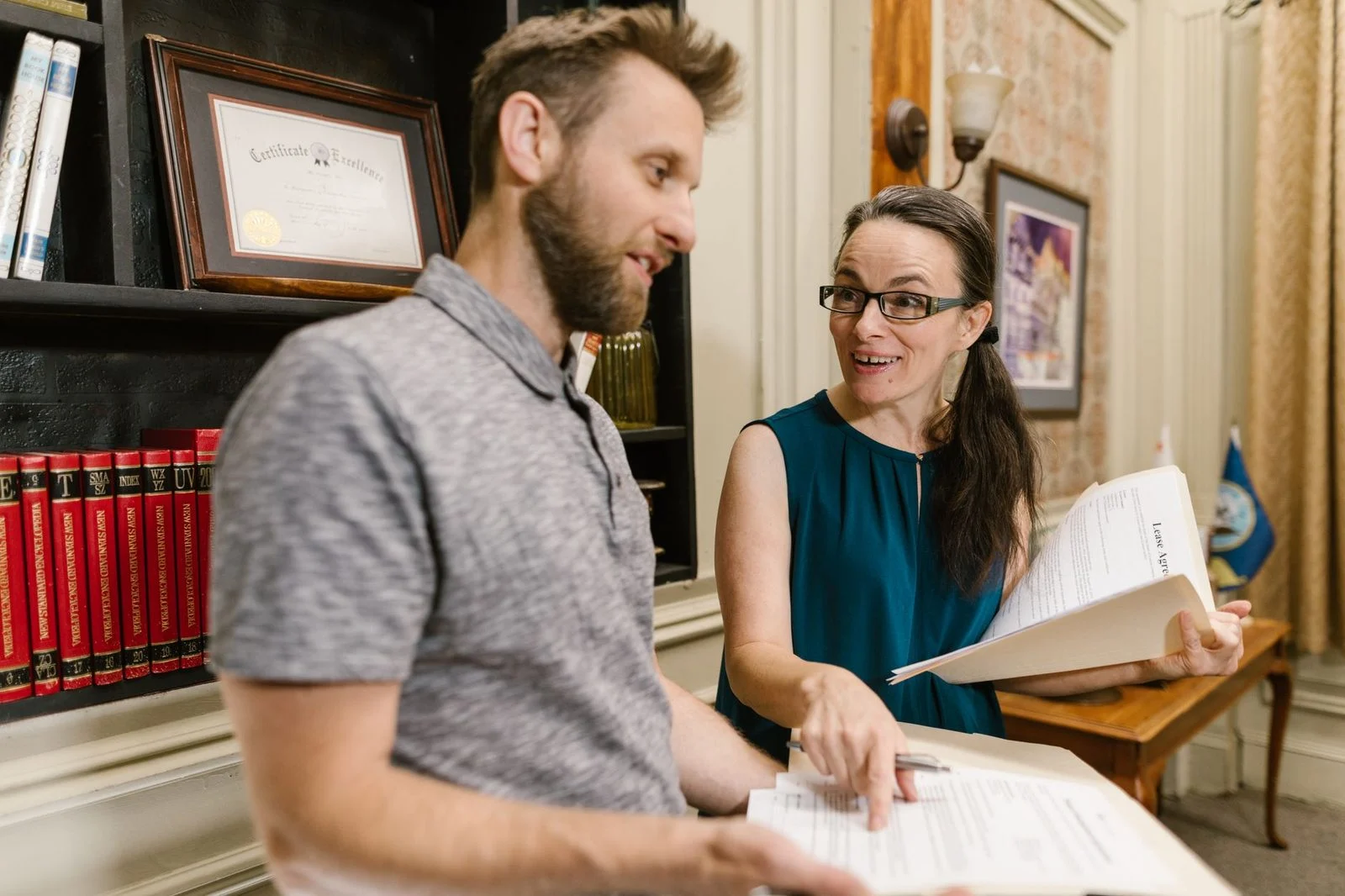
What adjustment of status is and who it fits
Adjustment of status is a green card application you file from inside the United States. Under 8 U.S.C. § 1255, if you were inspected and admitted or paroled into the United States, or have an approved VAWA self-petition, your status may change to lawful permanent resident if you file an application, you are eligible for an immigrant visa and admissible to the United States for permanent residence, and an immigrant visa is immediately available when you file.
Most people on this route have a petition behind them. That petition is often a family petition or an employment petition. The petition and the adjustment filing move on separate tracks, so each one needs its own review.
Most applicants attend an interview with an immigration officer. The rule lists exceptions, such as a child under 14 or a case the agency decides does not need an interview. 8 C.F.R. § 245.6 sets out these rules.
Eligibility questions that decide whether you can file
Your entry, your current status, and visa availability decide whether you can file. Check these three areas first.
- How you entered. 8 C.F.R. § 245.1 allows filing for a person physically present in the United States, except an alien who is ineligible to apply for adjustment of status under paragraph (b) or (c) of this section, who is eligible for an immigrant visa, with one available when the application is filed.
- Your status history. 8 U.S.C. § 1255 excludes some people (other than an immediate relative as defined in section 1151(b) of this title or a special immigrant described in section 1101(a)(27)(H), (I), (J), or (K) of this title) who work without authorization before filing, are out of status on the filing date, or have not, other than through no fault of their own or for technical reasons, kept lawful status continuously since entry. The statute has exceptions, so a history like this needs careful review.
- Visa availability. For many preference categories, the Visa Bulletin from the U.S. Department of State shows whether a number is available. Your priority date must be earlier than the date listed, or your category must show as current.
Gather these documents early:
- Passport and any prior visas
- Birth and marriage records
- Prior USCIS notices and receipts
- Where an affidavit of support is required, the sponsor must execute it on the form USCIS designates and include a photocopy or IRS-issued transcript of the sponsor’s complete federal income tax return for the most recent taxable year, as described in 8 C.F.R. § 213a.2.
Whether you can file depends on the facts in your file. Use this list to start your review.
What our work covers in an adjustment case
Our work covers the forms, evidence, and interview steps of an adjustment case. It also covers removal defense and BIA appeals if a denial leads to court.
- Filing package. We prepare Form I-485 and the supporting forms that often travel with it, including I-130 family petitions, I-765 work permission, I-131 travel documents, and I-864 affidavits of support.
- We plan the filing sequence around that exam.
- Evidence and cover letter. We organize exhibits so the reviewing officer can follow your case.
- Requests for evidence. We respond to USCIS requests case by case.
- Interview preparation. We review your application, likely questions, and the documents to bring.
- Removal defense and BIA appeals. If a case moves into immigration court, these matters are part of our practice. Board of Immigration Appeals decisions are collected by EOIR. Some matters may be referred to another lawyer or firm.
How an adjustment case moves from filing to decision
An adjustment case moves through filing, biometrics, a medical exam, possible evidence requests, an interview, and a decision. Each stage has its own documents and deadlines.
- Consultation. You bring your file. We identify your category and any eligibility issues.
- Documents. We gather records and assemble the filing package. You review it before it is filed.
- Filing. USCIS has jurisdiction to decide an adjustment application unless an immigration judge has that jurisdiction. See 8 C.F.R. § 245.2.
- Biometrics. USCIS may require biometric collection or an appearance. It sends the date, time, and place. See 8 C.F.R. § 103.2.
- Interview. You attend the interview, and we prepare you for it beforehand.
- Decision. An approval records your permanent residence as of the approval date. If USCIS denies an adjustment application, an applicant who is not an arriving alien may generally ask an immigration judge to consider it again in removal proceedings. Arriving aliens face narrower limits, and the same rule on appeal and renewal applies to adjustment under the Act of November 2, 1966 (the Cuban Adjustment Act), so whether this option exists depends on the applicant’s specific situation.
Processing times vary, and USCIS publishes current estimates.
How adjustment of status cases are handled at AG Immigration Law
AG Immigration Law P.A. limits its practice to immigration matters. This page is the responsibility of Adriana Gomez. Our practice areas include:
- Removal defense
- Adjustment of status
- Family petitions
- Naturalization
- Removal of conditions on green cards
- Waivers
- BIA appeals
In some cases, the law allows certain grounds of inadmissibility to be waived. In certain situations defined by federal immigration law, the Attorney General has discretion to waive particular grounds of inadmissibility, for example for humanitarian purposes or to assure family unity, but each waiver applies only to the specific grounds and people the law describes and only when its conditions are satisfied.
Our team includes assistants and office staff who keep your file moving. You can reach the firm by contact form, phone, or WhatsApp.
Not sure what your next step is?
Talk it through with our team — we can walk you through how a situation like yours is usually handled and what your options are.
Fees, the paid consultation, and what to bring
Consultations are paid, and the fee is explained before the consultation begins. The fee discussion covers everything you may owe, including attorney fees, USCIS filing fees, medical exam costs, and document fees. If your case is in immigration court, 8 U.S.C. § 1812 sets a fee for an application to adjust status, paid at filing or before the court decides it.
Bring these items to your consultation:
- Passport and immigration documents
- USCIS notices, including any receipt or interview notice
- Marriage or birth records
- Prior applications
- A timeline of your entries and departures
At the consultation, we review your file, check your category, and set out next steps. To book, use the contact page.

Frequently asked questions
Short answers for readers searching for an adjustment of status attorney San Antonio.
Do I need a lawyer to file for adjustment of status?
Filing goes to USCIS. Many people choose a lawyer to review the forms, evidence, and interview steps.
How much does a lawyer charge for adjustment of status?
Attorney fees are explained at the paid consultation, and that discussion covers everything you may owe.
Can I work while my I-485 is pending?
Possibly. Under 8 C.F.R. § 274a.12, for purposes of section 245(c)(8) of the Act, an alien who has filed a properly filed adjustment of status application is not deemed an ‘unauthorized alien’ while it is pending final adjudication if the alien has otherwise obtained permission from the Service pursuant to 8 CFR 274a.12 to engage in employment, or if the alien had been granted employment authorization before filing and that authorization does not expire during the application’s pendency.
What happens if my adjustment is denied?
For applicants who file under section 245 of the Act, 8 C.F.R. § 245.2(a)(5)(ii) states that no appeal lies from the director’s denial, but an applicant who is not an arriving alien retains the right to renew the application in proceedings under 8 CFR part 240 (removal proceedings), and the same rule applies to applicants under the Act of November 2, 1966 (§ 245.2(a)(5)(iii)); the regulation adds that nothing in it entitles a person to section 240 proceedings who is not otherwise so entitled. Removal defense and BIA appeals are part of our practice.
If you have a pending I-485, an interview notice, or a denial letter, contact our team by form, phone, or WhatsApp to set up a paid consultation.
How We Approach Adjustment of Status
Organized Filings
We review each form and supporting document with you so the file tells a clear, accurate story to USCIS.
Careful Review of Risks
Before anything is filed, we look at prior immigration history, status questions and other issues that could affect your case.
Support for Your Family
Many adjustment cases involve a spouse, children or a relative petition. We coordinate those pieces so nothing is overlooked.
Clear Communication
You will know where your case stands and what the next step is, in plain language and in the language you prefer.
Related Services We Handle
Removal Defense
Representation in removal proceedings, including preparing applications for relief and court appearances.
Family Petitions
Petitions for qualifying relatives, prepared and organized with the adjustment process in mind.
Waivers
Review and preparation of waiver applications that may be needed alongside an adjustment case.
BIA Appeals
Appeals to the Board of Immigration Appeals, with attention to deadlines and the written record.
Important: Do Not Guess on Your Status
Small errors on a green card application, travel history or prior immigration filing can cause larger problems later. Speak with an attorney before you submit forms, travel abroad or respond to a notice from USCIS.