

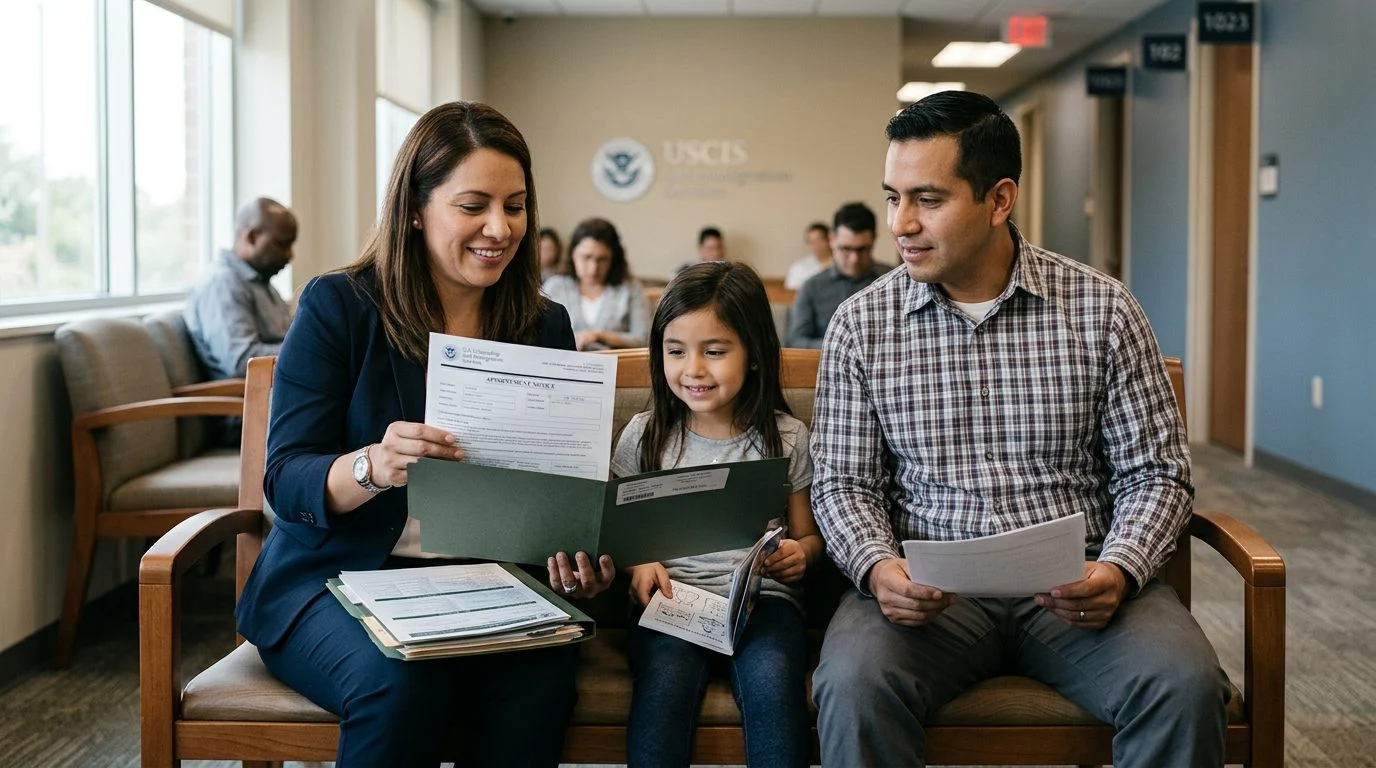
Adjustment of Status | Florida, Texas & New York
Adjustment of Status Representation, Handled Step by Step
AG Immigration Law P.A. focuses on adjustment of status and related immigration matters for clients in Florida, Texas and New York. Adriana Gomez is the responsible attorney for this page.
By Adriana Gomez · Published October 29, 2026
Adjustment of Status Attorneys | AG Immigration Law
Our team handles adjustment of status cases for eligible people who want to apply for a green card without leaving the United States. Adjustment of status (AOS) is filed with USCIS on Form I-485 when the legal requirements are met. This page explains how AOS works, what our representation covers, and what to expect. Adriana Gomez is the lawyer responsible for this page.
If you're weighing whether to file your I-485 from inside the U.S. now, or first resolve an entry or status question, reach out to Adriana Gomez and our team today. Talk it through with our team — we can walk you through how a situation like yours is usually handled and what your options are.

What Adjustment of Status Is and Who It Is For
Adjustment of status lets an eligible person become a lawful permanent resident while still in the United States. Under 8 U.S.C. § 1255, the applicant must have been inspected and admitted or paroled into the United States (or hold an approved VAWA self-petition), file, be eligible for an immigrant visa and admissible, and have a visa immediately available when the application is filed.
Physical presence is the starting point. Under 8 C.F.R. § 1245.1, a person physically present in the United States may apply, unless a listed exception applies.
AOS is used in three common situations:
- People with a family-based petition that makes a visa available.
- People with an employer-based petition.
- Cuban nationals who may qualify under the Cuban adjustment provision in the note to section 1255.
Your entry history matters too. USCIS eligibility policy explains that inspection is the formal process of determining whether a person may lawfully enter the United States. Your entry record and current status shape which path is open to you.
What Our Adjustment of Status Representation Covers
Our representation covers the review, the filing, and the steps through the decision. Here is what that includes.
- Eligibility review. We check your entry history, your status history, and any past immigration filings, including USCIS or immigration court matters.
- Unlawful status and work issues. Section 1255 keeps AOS from applying to certain people, including some who took unauthorized work or lacked lawful status when they filed. USCIS unlawful-status rules list exceptions, including for immediate relatives.
- Form I-485 package. We prepare the application and supporting evidence. Where the rules allow, we handle filings made with the related petition. 8 C.F.R. § 1245.2 explains when a filing may go in together with a petition and when it must wait for approval.
- Medical exam. A designated civil surgeon must examine the applicant, and the report goes into the record under 8 C.F.R. § 1245.5. A medical examination is not required of an applicant who entered the United States as a nonimmigrant spouse, fiancé(e), or child of a United States citizen (K status), if the applicant was medically examined before and as a condition of the visa, and the exam occurred not more than 1 year before the application.
- Interview preparation. Each applicant is interviewed by an immigration officer. 8 C.F.R. § 1245.6 allows the interview to be waived in listed cases, and we prepare clients for the interview.
- Removal issues. If you are in removal proceedings (other than as an arriving alien), the immigration judge hearing your case has exclusive jurisdiction to decide your AOS application, under 8 C.F.R. § 1245.2. Our removal defense work covers that setting.
- Costs. Attorney services and government or third-party costs are different. We explain which items are which.
How the Adjustment of Status Process Works, Step by Step
The process has six stages, from your first review through the USCIS decision.
- Review. We look at your documents, your entry and status history, and the basis for your case.
- Document gathering. Common items include passports, entry records, birth and marriage certificates, tax records, and your petition or receipt notice.
- Preparation and filing. We assemble the I-485 package and any related filing, and review it with you before it goes to USCIS.
- A designated civil surgeon completes the required exam, unless the applicant entered the United States as a nonimmigrant spouse, fiancé(e), or child of a United States citizen (K status) and was medically examined before and as a condition of the visa, with that exam occurring not more than 1 year before the application.
- Interview. Each applicant is interviewed by an immigration officer, though 8 C.F.R. § 1245.6 lists cases where the interview may be waived.
- Decision. If approved, permanent residence is recorded as of the date of the approval order, under 8 C.F.R. § 1245.2. If denied, no appeal lies from the director’s decision, but a non-arriving applicant may renew the application in proceedings under 8 C.F.R. part 1240.
Timing has two parts. For preference applicants, 8 C.F.R. § 1245.1 says the Visa Bulletin is consulted to determine whether an immigrant visa is immediately available. USCIS processing times also vary by office and form, so ask about current timing at your consultation.
Adjustment of Status Help for Miami and South Florida Readers
Readers in South Florida may be weighing a family petition, a job-based petition, or the Cuban adjustment rules. Each path has its own requirements, so the right route depends on your history.
Many cases involve more than one issue. A visa, a parole document, or a pending application can change how your case is reviewed. Bring every USCIS notice, passport, and immigration record you have to the consultation.
If you already have an open removal case, the review covers both tracks. The immigration judge has exclusive jurisdiction over an AOS application filed in removal proceedings, so filing strategy has to fit the court process.
Why Work With Our Immigration Practice
Our practice focuses on immigration law, and adjustment of status is one of its core services. The practice focuses on removal defense, adjustment of status, family petitions, naturalization, removal of conditions on green cards, waivers, and BIA appeals.
Adriana Gomez is the responsible lawyer for this page. Our team, including support staff who help with paperwork and scheduling, works on each matter with her.
Because the practice also handles removal defense, AOS questions that touch immigration court can be reviewed in one place. Each consultation starts with your actual documents, so the review reflects your own file.
Not sure what your next step is?
Talk it through with our team — we can walk you through how a situation like yours is usually handled and what your options are.
Questions Clients Ask Before Filing Adjustment of Status
Most questions come down to your status on the filing date, your entry history, and the basis for your petition.
Do I have to leave the U.S. to file?
No. AOS is filed from inside the United States when you are physically present and eligible under 8 C.F.R. § 1245.1. Talk with us before any trip, since travel plans can affect your case.
Can I file if I overstayed?
It depends on the facts. Unlawful status on the filing date can bar AOS under section 1255, but USCIS policy lists exceptions, including for immediate relatives.
USCIS policy confirms this for pending adjustment applications.
Do I need a medical exam?
Yes. A designated civil surgeon must examine you, under 8 C.F.R. § 1245.5. A medical examination is not required if you entered the United States as a nonimmigrant spouse, fiancé(e), or child of a United States citizen (K status) and were medically examined before and as a condition of the visa, provided that exam occurred not more than 1 year before you applied for adjustment.
Is the consultation paid?
Yes. Consultations are paid, and we tell you the fee before you book.

Talk With Adriana Gomez About Your Adjustment of Status Filing
The next step is a paid consultation with Adriana Gomez, where we review your basis, entry history, and status. If you are deciding whether to file your I-485 now, or first sort out an entry or status question, reach out now.
Use the contact page to fill out the form, call the office, message us on WhatsApp, or book a consultation: contact us.
How We Approach Your Adjustment of Status Case
Careful File Review
We look closely at your immigration history, documents and timeline so the filing reflects the facts of your case.
Planning Before Filing
Questions about travel, status or prior applications are easier to address before anything is submitted.
Support From Our Team
Our assistants and office staff help keep your documents, deadlines and communication organized from start to finish.
Clear Communication
We explain each step in plain language so you know what is happening with your case and what comes next.
Talk With Us Before You Travel
Travel plans can affect an adjustment of status case. Please speak with our office before leaving the United States or making any other changes that could impact your application.
Ways to Reach AG Immigration Law P.A.
Fill Out Our Contact Form
Share a brief summary of your situation and we will follow up to schedule your next step.
Call the Office
Speak directly with our staff about your adjustment of status question and how to proceed.
Message on WhatsApp
Send us a message on WhatsApp to start the conversation at a time that works for you.
Book a Paid Consultation
Meet with our team to review your facts in depth. Consultations are paid services.