

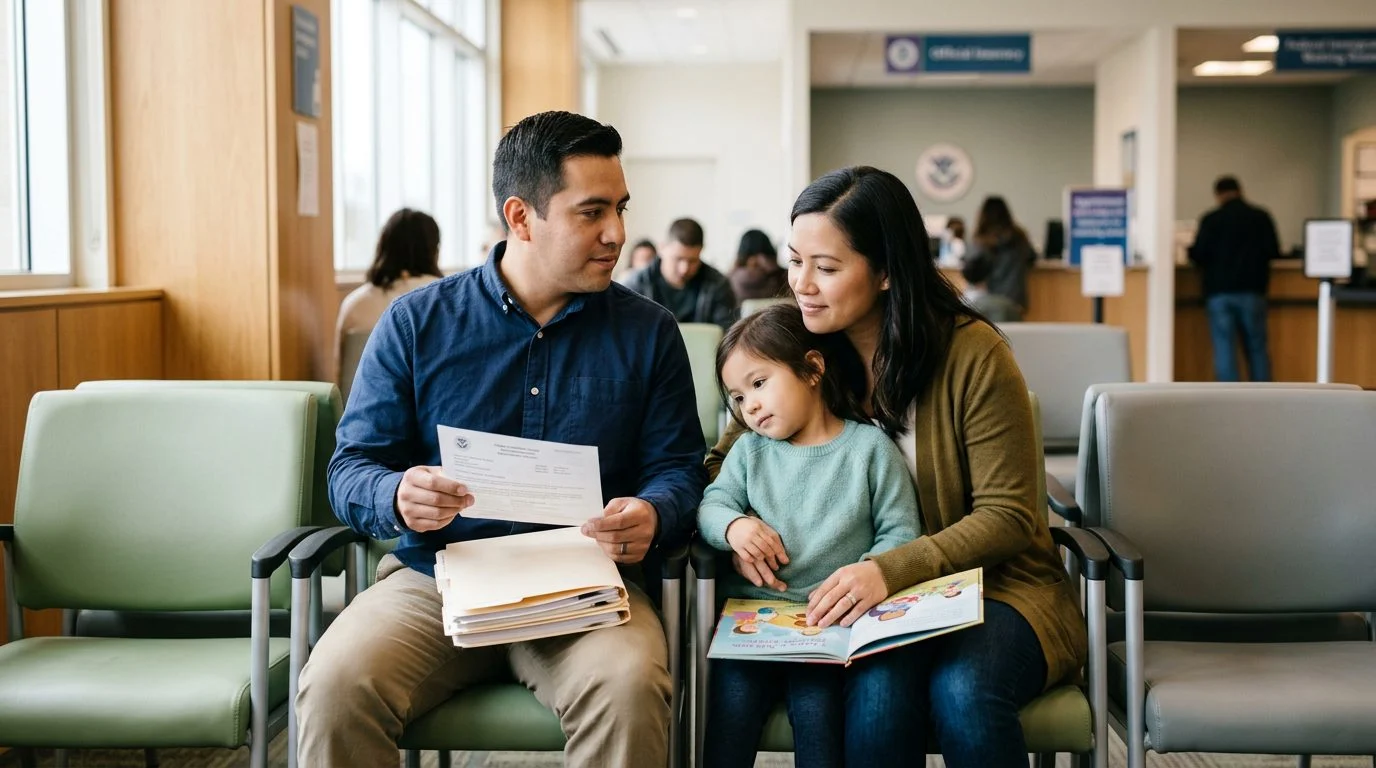
Adjustment of Status | Florida, Texas & New York
Adjustment of Status Representation, Built Around Your Case
AG Immigration Law P.A. focuses on adjustment of status and related immigration matters, helping clients understand their options and prepare each step of the process.
By Adriana Gomez · Published October 30, 2026
Adjustment of Status Services | AG Immigration Law
Adjustment of status lets a person already in the United States apply for a green card without leaving the country. It is filed on Form I-485 with U.S. Citizenship and Immigration Services (USCIS). This page explains how the filing works, what it includes, and what can complicate it. It is written for readers looking for adjustment of status representation who want to contact AG Immigration Law P.A. AG Immigration Law P.A. focuses on removal defense, adjustment of status, family petitions, naturalization, removal of conditions on green cards, waivers, and BIA appeals.
If you are weighing a green card filing from inside the United States, our team can review your immigration history with you before anything is filed. Talk it through with our team — we can walk you through how a situation like yours is usually handled and what your options are.

What Adjustment of Status Is and Who It Is For
Adjustment of status is the request to become a lawful permanent resident while you are inside the United States. The law requires three things: an application, eligibility for an immigrant visa and admissibility for permanent residence, and an immigrant visa that is immediately available when you file. 8 U.S.C. § 1255 sets out those requirements.
The statute starts with people who were inspected and admitted or paroled into the country. It also has exceptions, so each case is reviewed on its own history. A federal regulation adds that a person physically present in the United States may apply, unless a listed restriction applies. 8 C.F.R. § 245.1 states that rule.
People who usually consider this path include immediate relatives of U.S. citizens, family-preference applicants, employment-based applicants, and some people whose cases are already in removal proceedings. Each group has its own rules, so the category matters from the start.
What Our Adjustment of Status Work Covers
Our team handles the forms, evidence, and filings that go into an adjustment case, from first review through the interview.
- Form I-485 preparation. We organize the application, the supporting evidence, and the forms that go with it.
- The underlying petition. An application for adjustment of status may be filed only when an immigrant visa is immediately available. If, at the time of filing, approval of a visa petition filed for classification under section 201(b)(2)(A)(i), section 203(a) or section 203(b)(1), (2) or (3) of the Act would make a visa immediately available to the alien beneficiary, the application is considered properly filed whether submitted concurrently with or subsequent to the visa petition, provided it meets the filing requirements (8 C.F.R. § 245.2). Otherwise, the petition must be approved first. 8 C.F.R. § 245.2 sets this rule.
- Affidavit of support. An affidavit of support must be executed by a sponsor of the alien as a contract, in which the sponsor agrees to provide support to maintain the sponsored alien at an annual income not less than 125 percent of the Federal poverty line during the period the affidavit is enforceable (8 U.S.C. § 1183a).
- 8 C.F.R. § 245.5 requires an applicant for adjustment of status to have a medical examination by a designated civil surgeon, except that a medical examination shall not be required of an applicant who entered the United States as a nonimmigrant spouse, fianceé, or fianceeé of a United States citizen or the child of such an alien, if the applicant was medically examined prior to, and as a condition of, the issuance of the nonimmigrant visa, provided that the medical examination occurred not more than 1 year before the date of application for adjustment of status (8 C.F.R. § 245.5).
- Interview preparation. Each applicant is interviewed. The rule allows a waiver of the interview in some cases, such as for a child under 14. 8 C.F.R. § 245.6 covers the interview.
- Waivers. Some grounds of inadmissibility can be waived in limited cases. Certain waivers under the immigration laws may be available for humanitarian purposes, to assure family unity, or when otherwise in the public interest.
- Removal cases. USCIS normally decides adjustment. In some cases, an immigration judge decides it instead. 8 C.F.R. § 245.2 explains this split.
Adjustment of Status vs. Consular Processing
Adjustment of status happens inside the United States through USCIS. Consular processing means applying for an immigrant visa at a U.S. consulate abroad. Which path fits depends on your entry history, status, and category.
Readers often compare the two on these points:
- Where the case is decided. Adjustment stays with USCIS or an immigration judge. Consular processing ends with a visa interview abroad.
- Travel. Leaving the United States while an adjustment case is pending can affect that case. Review travel plans before you book any trip.
- Status history. The statute bars many applicants who are in unlawful status on the filing date or who did not keep lawful status since entry. 8 U.S.C. § 1255 also makes exceptions, including for immediate relatives.
- Unauthorized work. Accepting unauthorized employment before filing can also bar adjustment for many applicants. The same section sets out this bar.
A consultation is where we review these facts for your case.
How the Adjustment of Status Process Works, Step by Step
Most cases move through a history review, a filing, a medical exam, and an interview. Timing varies from case to case, based on the category and the USCIS office.
- History review. We review your entries, status history, and visa category during a consultation.
- Category check. We confirm the petition or visa category and whether an immigrant visa is available.
- Evidence gathering. You collect passports, prior filings, civil records, and tax and income records for the affidavit of support.
- Filing. The I-485 and any petition go to USCIS. You then receive a receipt notice.
- Medical exam and biometrics. A civil surgeon completes the required exam, and you attend the biometrics appointment.
- Requests and interview. We help you answer any requests for evidence and prepare for the interview. A decision follows.
Issues That Can Complicate an Adjustment Case
The biggest issues involve status history, work history, grounds of inadmissibility, and past court orders. Each one needs review before anything is filed.
- Unlawful status or unauthorized work. These can bar adjustment for many applicants, with exceptions in the statute. 8 U.S.C. § 1255 sets the rules.
- Admissibility grounds. Some grounds, including certain criminal history, must be reviewed before filing. Some can be waived in limited cases. 8 U.S.C. § 1182 covers waivers.
- Support obligations. Under 8 U.S.C. § 1183a, the person petitioning for the alien’s admission must have executed an affidavit of support with respect to such alien. It is not enforceable after the immigrant has worked, or can be credited with, 40 qualifying quarters of coverage, and did not receive any Federal means-tested public benefit during any such period, under the statute’s conditions. 8 U.S.C. § 1183a sets this out.
- A non-arriving applicant can renew the application in removal proceedings under 8 CFR part 240. 8 C.F.R. § 245.2 states this. The practice focuses on removal defense, waivers, and BIA appeals, so these issues fit the work. The Executive Office for Immigration Review publishes BIA and Attorney General precedent decisions on adjustment and waivers.
- Errors can cause delays or denials.
Not sure what your next step is?
Talk it through with our team — we can walk you through how a situation like yours is usually handled and what your options are.
Questions About Adjustment of Status in Houston
Do I need a lawyer for adjustment of status in Houston?
A lawyer can review your history before you file, which matters when bars or prior violations may apply.
Can I file for adjustment if I entered on a visa and stayed longer?
It depends on your facts, including your status history and category. The statute bars some applicants out of status on the filing date, though immediate relatives are excepted.
Do I need an interview?
Each applicant is interviewed under federal rules. The rule allows the interview to be waived in some cases, such as for a child under 14.
Is a green card lawyer different from an immigration attorney?
A green card lawyer is an attorney who handles this kind of filing. The practice focuses on the areas listed on this page.
What does a consultation cost?
Consultations are paid, so please contact the office for the current consultation fee and details of any other costs you may owe before you book.
Can you handle my case if it is already in immigration court?
Yes, the practice focuses on removal defense. An immigration judge can decide adjustment in some cases. 8 C.F.R. § 245.2 reads: “USCIS has jurisdiction to adjudicate an application for adjustment of status filed by any alien, unless the immigration judge has jurisdiction to adjudicate the application under 8 CFR 1245.2(a)(1).”

Talk With Our Team About Your Adjustment Case
If you are weighing a green card filing from inside the United States, the next step is a review of your immigration history before you file. Adriana Gomez is the responsible lawyer for this page. You can reach the office through the contact form, by phone, or by WhatsApp. AG Immigration Law P.A. is a law firm that limits its focus to the practice areas named above, and you can contact the office to discuss your matter.
How We Approach Adjustment of Status
Review of your immigration history
We look closely at your past entries, prior filings and any earlier immigration actions before anything is submitted.
Attention to bars and prior issues
Prior violations and other history can affect an adjustment case, so we examine those issues early.
Coordinated support from our team
Adriana Gomez is the responsible lawyer for this page. Our assistants and office staff help keep your documents and deadlines organized.
Clear communication in English and Spanish
We explain each filing and next step in plain language so you know what is happening with your case.
Talk to a Lawyer Before You File
Small details in your immigration history can change which options are available to you. Speaking with a lawyer before you file helps you understand how your facts may apply.
Ways to Start Your Case With Us
Fill out our contact form
Share a brief summary of your situation and we will follow up to discuss next steps.
Call our office
Speak directly with our staff about adjustment of status and scheduling a consultation.
Message us on WhatsApp
Send a message with your questions and our team will respond to help you move forward.
Book a consultation
Meet with our lawyers to review your history, your goals and the questions you need answered.