

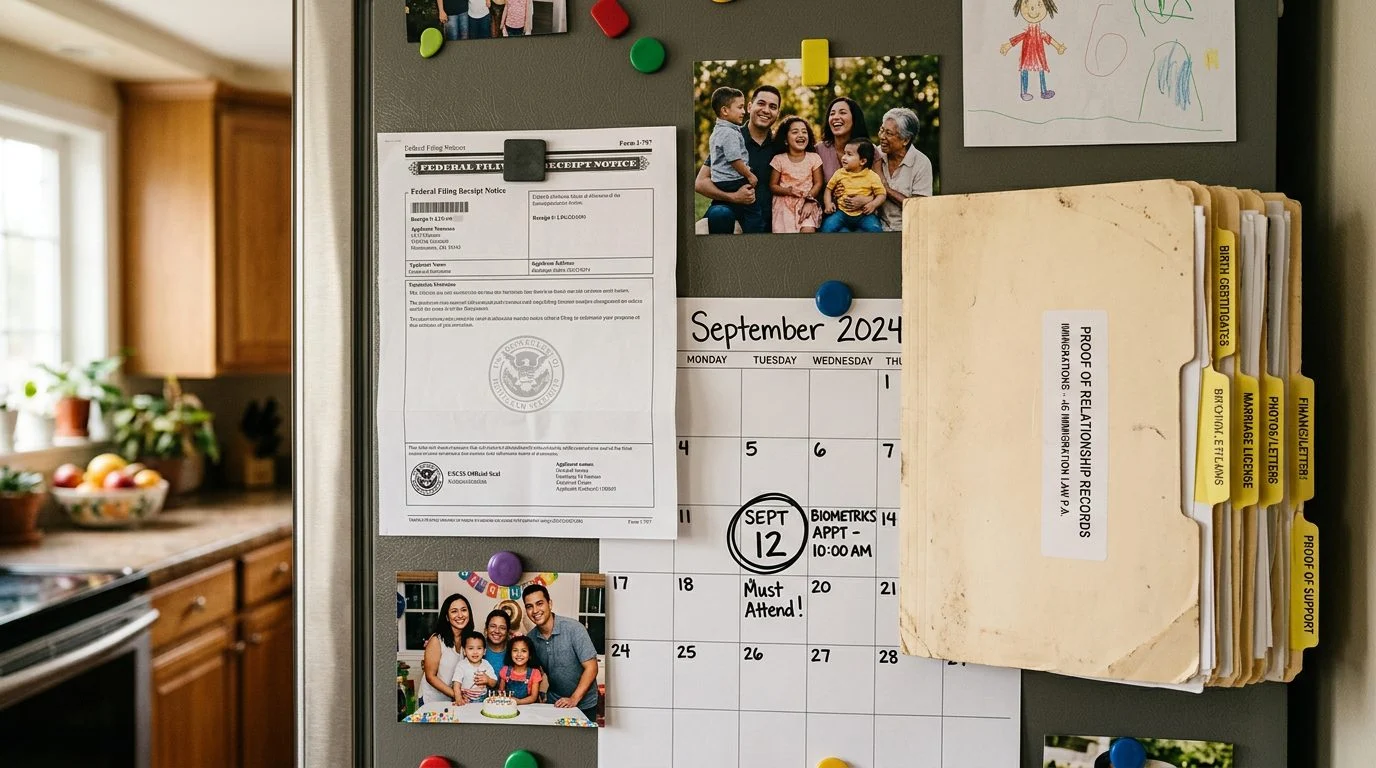
Family Petitions | Florida, Texas and New York
Family Petitions Handled With Care, Clear Communication and Practical Guidance
AG Immigration Law P.A. focuses on family petitions for U.S. citizens and green card holders who want to bring loved ones to the United States. Responsible lawyer: Adriana Gomez.
By Adriana Gomez · Published October 30, 2026
Family Petitions Lawyers New York | AG Immigration Law P.A.
Looking for family petitions lawyers in New York? Start with one question: what does a family petition actually do? A family petition asks U.S. Citizenship and Immigration Services (USCIS) to recognize a family relationship. A U.S. citizen may file it for a spouse, child, parent or sibling, and a green card holder may file it for a spouse or an unmarried child. This page explains how that works. AG Immigration Law P.A. focuses on family petitions and related immigration matters for families in the United States. Adriana Gomez is the responsible lawyer for this page.
If your spouse or child is abroad and you're unsure which filing path fits, reach out to our team and bring your records so we can talk through your facts. Talk it through with our team — we can walk you through how a situation like yours is usually handled and what your options are.

What a Family Petition Is and Who It Is For
A family petition is the first filing in a family-based green card case, and it proves the relationship. The rule comes from 8 CFR § 204.2. A United States citizen or lawful permanent resident may file a petition on behalf of a spouse.
The petition does not give the relative a green card by itself. Approval proves the relationship. The relative then needs a separate path to permanent residence, such as adjustment of status inside the United States or consular processing abroad.
Read the petition as proof of a relationship, not as a visa. That one point clears up a lot of confusion.
The petitioner and the beneficiary carry different duties. The petitioner files the petition and may need to sign an affidavit of support. The beneficiary supplies personal records and a full immigration history.
This guide is written for New York and New York City families. You may be a citizen or green card holder with a spouse, child, parent or sibling abroad. You may also be the relative who needs a petition filed.
Which Family Members Can Be Petitioned For
Spouses, children and parents of U.S. citizens are called immediate relatives under the statute. Under 8 U.S.C. § 1151, immediate relatives are the children, spouses, and parents of a citizen of the United States, except that, in the case of parents, such citizens must be at least 21 years of age. In the case of an alien who was the spouse of a citizen of the United States and was not legally separated from the citizen at the time of the citizen’s death, the alien (and each child of the alien) remains an immediate relative after the date of the citizen’s death, but only if the spouse files a petition under section 1154(a)(1)(A)(ii) of this title within 2 years after such date and only until the date the spouse remarries.
- Spouses of U.S. citizens (a spouse whose citizen spouse has died remains an immediate relative only if the spouse was not legally separated from the citizen at the time of the death, files a petition within 2 years after the death, and only until the spouse remarries).
- Children of U.S. citizens
- Parents of U.S. citizens, when the citizen is at least 21
Other relatives fall into family preference categories. These categories have yearly limits. The same statute caps family-sponsored immigrants at a set yearly number. It also limits them to 27 percent of the worldwide level in the first three quarters of a fiscal year.
A green card holder may petition for a spouse, as noted above.
Know which category your relative falls in before you file. The category decides the wait.
What the Service Covers
Our service covers the petition, the proof of relationship, and the related filings that follow in a family case.
- The petition and evidence. We prepare and review Form I-130 and proof of the relationship, such as marriage and birth records. Under 8 CFR § 204.2, when a mother files a petition for a child born out of wedlock, the child’s birth certificate, issued by civil authorities and showing the mother’s name, must accompany the petition.
- Affidavit of support review. We review the sponsor’s obligations. 8 U.S.C. § 1183a treats the affidavit as a contract. 8 U.S.C. § 1183a treats the affidavit as a contract. It is not enforceable once the sponsored person has 40 qualifying quarters of work credit and, for quarters after December 31, 1996, did not receive any Federal means-tested public benefit during those periods.
- Conditional green cards. A green card based on a marriage less than 24 months old is conditional. The joint Form I-751 petition, signed by both spouses, must be filed within the 90-day period immediately before the second anniversary of the date the conditional resident obtained permanent residence. If the marriage has ended or the petitioning spouse refuses to join, the conditional permanent resident may apply for a waiver of the requirement to file the joint petition. See 8 CFR § 216.4.
- Removal proceedings then start, under 8 CFR § 216.4.
- Related firm services. We handle waivers, adjustment of status, removal defense and BIA appeals when a family case needs them.
Adjustment of status inside the United States and consular processing abroad are the two main routes. Which one fits depends on the facts.
How the Process Works, Step by Step
A family petition moves through five stages: intake, documents, filing, USCIS response, and the visa or adjustment stage.
- Intake. We review relationships, key dates, prior filings and status history.
- Document checklist. We build a list based on the relationship and the beneficiary’s country of birth.
- Preparation. We prepare and review Form I-130 and supporting forms before filing.
- Response. We track the case and address requests from USCIS.
- Visa or adjustment stage. Consular cases move through the visa process abroad. Adjustment cases move through a separate filing inside the United States.
Country of birth matters. An immigrant is generally charged to the foreign state where they were born, with listed exceptions. That rule can affect how a case moves.
Visa timing has its own limits. An immigrant visa is valid for a period not exceeding six months, as set by regulation. Visa registration can also end if the applicant does not apply within one year after notice that a visa is available. The statute allows reinstatement if the applicant shows, within two years, that circumstances beyond their control caused the delay.
Early mistakes often cost time. Missing relationship proof or unclear dates can trigger follow-up requests, and each one adds delay. Track every notice and every date.
Why Clients Work With AG Immigration Law P.A.
AG Immigration Law P.A. focuses on immigration matters, including family petitions, adjustment of status, naturalization, waivers, removal of conditions on green cards, removal defense and BIA appeals.
Adriana Gomez is the responsible lawyer for this page. Our team includes assistants and office staff who work with our attorneys on family files.
Family cases often overlap with other areas. A petition may lead to an adjustment application, a conditional residence filing, or a waiver request. Because the firm handles each of these areas, related filings can stay with one firm.
Our work covers families in New York and New York City. The office accepts contact through a contact form, by phone, and by WhatsApp. Consultations are paid.
Not sure what your next step is?
Talk it through with our team — we can walk you through how a situation like yours is usually handled and what your options are.
Common Questions About Family Petitions
The answers below cover the points families ask about before filing.
Can a green card holder petition for a spouse?
Yes. A lawful permanent resident may file a petition on behalf of a spouse, under 8 CFR § 204.2.
Does an approved petition give a green card right away?
No. The petition proves the relationship, and the relative’s green card is a separate step.
How long does a family petition take?
The wait varies with the relationship, the category and the country of birth.
Does the petitioner need to show income?
The petitioner signs an affidavit of support.
What should I bring to intake?
Bring marriage and birth records, passports, and every past immigration notice or filing.
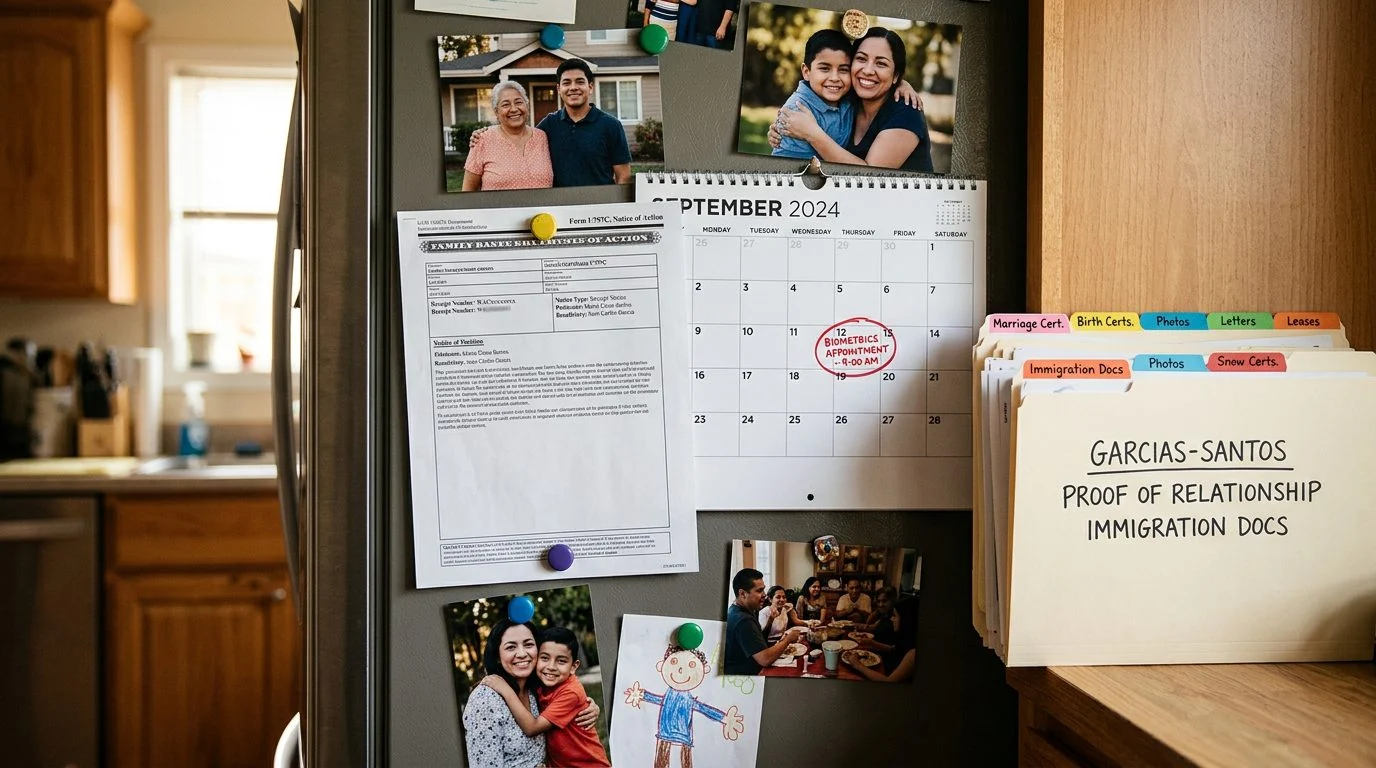
Talk to a Family Petitions Lawyer in New York
If you are choosing how to petition for a spouse, child, parent or sibling, talk through your facts before you file.
Maybe your spouse is abroad and you are weighing whether to file now or wait. Bring your marriage records, passports and past immigration notices. Then reach out to our team so we can review your situation with you.
Related Immigration Services
Adjustment of Status
For eligible applicants already in the United States, we review whether adjusting status is the right path and prepare the filing.
Naturalization
We help eligible permanent residents prepare and organize their naturalization applications.
Removal of Conditions on Green Cards
We assist with the paperwork needed to remove conditions on a green card after it has been granted.
Waivers and Removal Defense
When a family petition raises immigration concerns, we review available waivers and defense options with you.
Why Families Work With Our Office
Organized Filings
Our staff helps gather, organize and track the documents your family petition requires.
Direct Communication
Reach the office by phone, contact form or WhatsApp to ask questions about your case.
Support for the Whole Family
We explain each step so that spouses, parents and children understand what to expect.
Focused Practice
Our practice concentrates on immigration matters, including family petitions and related filings.
Important: A Petition Is One Step
Filing or approval of a family petition does not by itself complete the immigration process for your relative. Other steps may follow, and each one has its own requirements. Speak with our office before taking action on your case.