

Removal Defense Guidance
Can I Show Up to Immigration Court Without a Lawyer?
Immigration court is a high-stakes setting with strict procedures. Learn what to expect, what to do before your hearing, and when to speak with an attorney who focuses on removal defense.
By Adriana Gomez · Published October 25, 2026
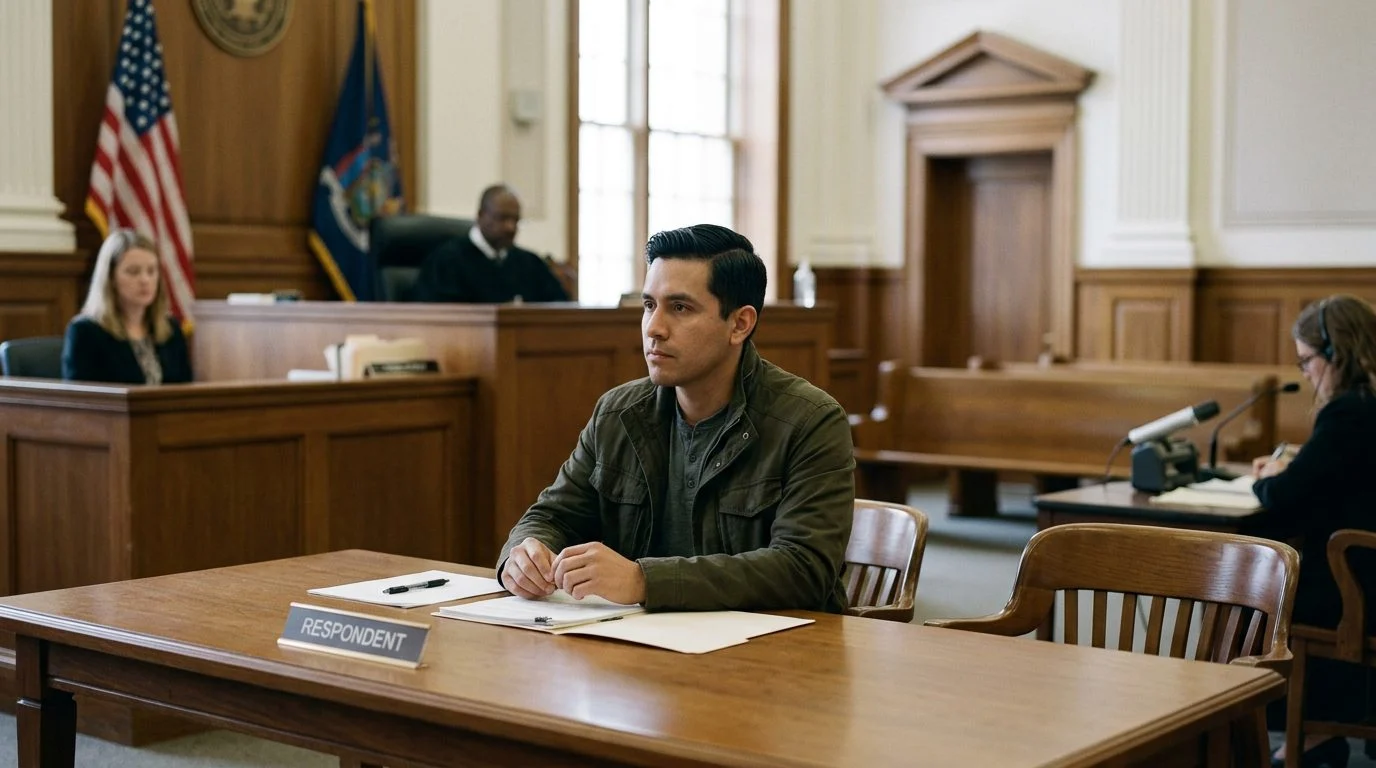
Yes, you can go to immigration court without a lawyer. The rules allow you to be represented, but they don’t require it. Whether going alone is wise depends on the facts of your case, and the choices you make at the first hearing can shape what comes next.
Written under the responsibility of Adriana Gomez, AG Immigration Law P.A.
Yes, You Can Appear Without a Lawyer, but Representation Is Your Choice
You can appear in immigration court without an attorney. The rule says a respondent may be represented by an attorney or another qualified representative (8 CFR 1240.3). That makes a lawyer an option, not a requirement.
Many people who come to court alone feel unsure about what comes next. The rules do give some protection. The judge must advise you of your right to representation, at no expense to the government, by counsel of your own choice authorized to practice in the proceedings (8 CFR 1240.10).
Representing yourself is legally allowed. The sections below show why the choice matters so much.
If a notice has you or someone you love worried about walking into court alone, you don't have to work out the next step by yourself. Reach out to our office to talk it through. Talk it through with our team — we can walk you through how a situation like yours is usually handled and what your options are.

What Happens at a First Immigration Court Hearing
The first hearing is usually short and focuses on the paperwork that started your case. Removal proceedings begin when a Notice to Appear is filed with the immigration court (8 CFR 1239.1). That notice lists the allegations and charges the government makes against you.
A government trial attorney from the Department of Homeland Security, often called an ICE attorney, appears for the government. Many first hearings are master calendar hearings, where the court handles several cases in one session.
You admit or deny each factual allegation and each charge of removability (8 CFR 1240.10). If you admit everything and no issues remain, the judge may treat your admissions as establishing removability, but will not accept an admission from an unrepresented respondent who is incompetent or under the age of 18 and is not accompanied by an attorney or legal representative, a near relative, legal guardian, or friend; nor from an officer of an institution in which a respondent is an inmate or patient.
The judge can set deadlines for applications and evidence. The judge also sets the next hearing date. Removal cases in Florida, Texas, and New York each depend on the facts of the individual case.
What Can Go Wrong When You Appear Alone
The biggest risks are missing a hearing, admitting allegations you don’t fully understand, and letting a filing deadline pass. Each one can change the outcome of your case.
If you do not attend after written notice was provided, the law requires the immigration judge to order you removed in absentia once the government establishes by clear, unequivocal, and convincing evidence that the notice was provided and that you are removable; such an order may later be rescinded only in limited situations, such as exceptional circumstances, and other reopening routes may apply. Notice sent to the most recent address you gave the court can be enough. The law also requires each alien who is required to be registered and is within the United States to notify the Attorney General in writing of each change of address within ten days of the change (8 U.S.C. 1305).
An order entered in absentia cannot be appealed to the Board of Immigration Appeals (8 CFR 1240.15). That is why a missed hearing is so hard to undo.
Deadlines matter too. The judge may set filing deadlines. If a document isn’t filed within the time set, the chance to file it is treated as waived (8 CFR 1003.31).
Relief has its own rules. For cancellation of removal, continuous presence is generally treated as ending when a Notice to Appear is served, though there are exceptions. Adjustment of status and waivers each carry their own requirements. If you appeal, your Notice of Appeal must state your reasons, and failing to do so may lead to dismissal (8 CFR 1240.15).
What to Say and What to Avoid Saying Before the Judge
Answer each question truthfully and briefly. Say only what you know. The judge decides credibility by looking at more than the words you say.
The judge may weigh your demeanor, candor, and responsiveness. The judge may also compare your statements with each other and with other evidence. Inconsistencies can count in a credibility determination, even small ones that don’t go to the heart of your claim. If you don’t know a date or detail, say so instead of guessing.
Before you admit any allegation, make sure you understand it. Ask the judge to explain anything unclear. Remember that admissions can lead to a finding of removability.
You have a reasonable opportunity to examine the evidence against you, present your own evidence, and question government witnesses, but these rights do not entitle you to examine national security information the government may offer in opposition to your admission or to an application for discretionary relief (8 U.S.C. 1229a).
If you need an interpreter, tell the judge early. An interpreter at a hearing must be sworn to interpret and translate accurately, unless the interpreter is an employee of the United States Government, in which event no oath is required (8 CFR 1240.5). A hearing on the merits by telephone requires your consent, given after you’re told you can proceed in person or by video (8 U.S.C. 1229a).
Practical Steps to Take Before Your Hearing
Read every notice, confirm the date and courtroom, and keep your address current. These three steps prevent many avoidable problems.
Start with the Notice to Appear and every hearing notice. Write the date, time, and court address on a calendar. Add a reminder a few days ahead.
Keep your address current with the court. Under federal law, a noncitizen required to be registered must notify the Attorney General in writing of each change of address within ten days of the change. Notice sent to your most recent address can be sufficient for an in absentia hearing (8 CFR 1003.26).
Gather identity documents, earlier immigration papers, and records tied to your case. Keep copies and sort them by date so you can find them quickly.
If a family member has been detained, the ICE detainee locator is the official tool for finding people held in ICE immigration detention. Arrive early on hearing day, dress neatly, and bring a pen and paper.

Where a Lawyer Fits and How to Reach Our Office
A lawyer can help with deadlines, evidence, relief applications, and appeals. Representation is still your choice. AG Immigration Law P.A. handles removal defense, adjustment of status, family petitions, naturalization, removal of conditions on green cards, waivers, and BIA appeals. Adriana Gomez is the lawyer responsible for this page.
If a notice has arrived for you or someone you care about, the waiting and the unknowns can feel heavy. You don’t have to sort through it alone.
Frequently Asked Questions
Can I go to immigration court without a lawyer?
Yes. The rules allow you to be represented, but they do not require a lawyer.
What should I do first?
Read your Notice to Appear and hearing notice, write down every date, and keep your address current with the court.
If you’re weighing whether to go alone, contact our office by the contact form, phone, or WhatsApp. Consultations are paid, and the office will explain any fees for representation. Bring your notices so we can talk through your case.
Preparing for Your First Hearing
Read Your Court Papers
Review your Notice to Appear and every hearing notice carefully. Make sure you understand the charges, the court location, and the date and time listed.
Track Every Date
Write down each court date, filing deadline, and check-in appointment. Missed dates can lead to serious consequences in immigration court.
Keep Your Address Current
Notify the court of any change of address promptly. Important notices are sent by mail, and missing one can affect your case.
Gather Your Documents
Collect identity documents, immigration filings, and records that relate to your case so you are prepared to discuss them at your hearing.
Important: Do Not Wait Until Your Hearing
Immigration cases can involve complex legal questions, possible relief options, and deadlines that are easy to overlook. Reaching out early gives your case the best chance to be reviewed before key decisions are made.
How We Can Help
Removal Defense
Representation in removal proceedings, from the first master calendar hearing through individual hearings.
Applications and Petitions
Help with adjustment of status, family petitions, naturalization, removal of conditions on green cards, and waivers.
BIA Appeals
Guidance on appeals to the Board of Immigration Appeals after an immigration judge's decision.
Direct Communication
Reach our team by phone, contact form, or WhatsApp to ask questions about your court date or your next steps.
Have a Court Date Coming Up? Talk to Our Team Before You Go.
Related practice areas
- Deportation Defense Attorney for Immigration Court: Removal Proceedings Explained
- How Long Do Deportation Proceedings Take? A Guide