

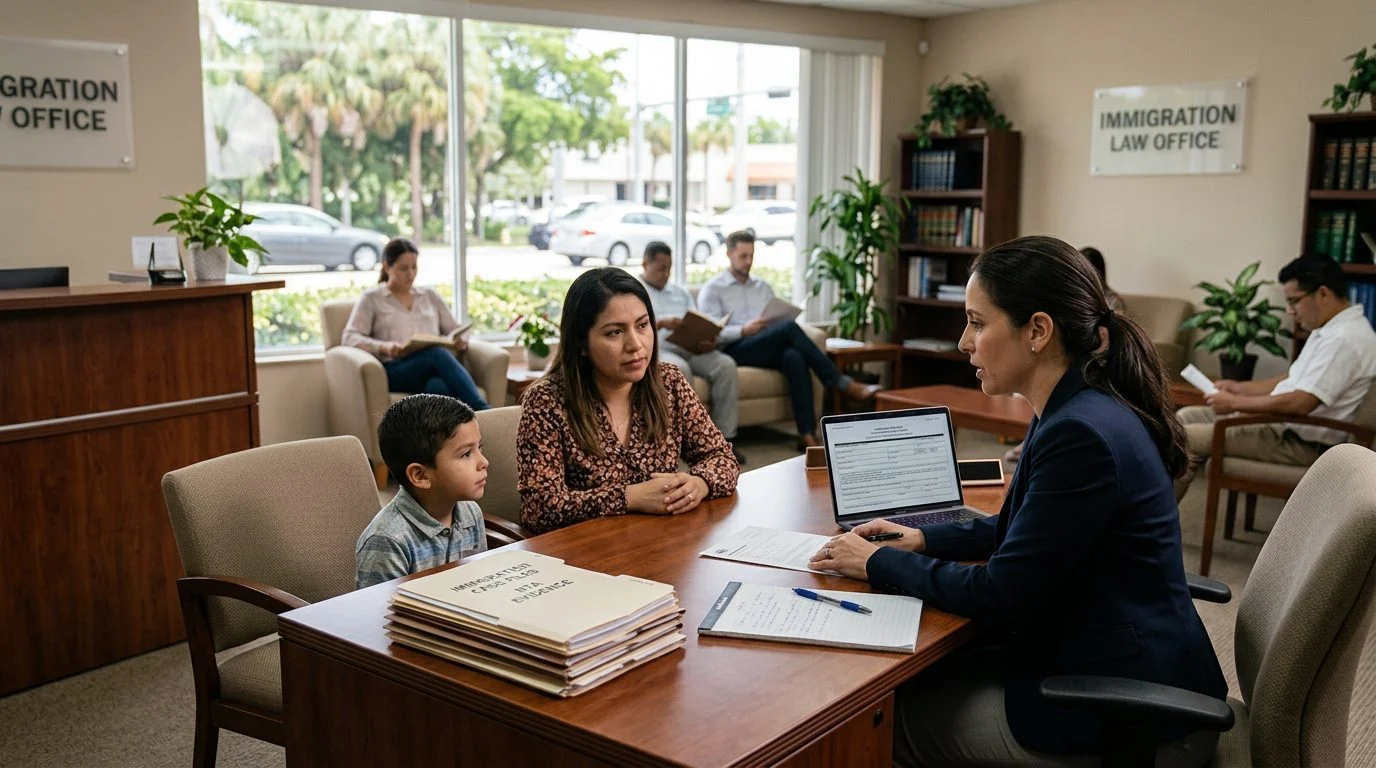
Non-Detained Removal Defense | Florida
Defending Your Immigration Case While You Remain Free
AG Immigration Law P.A. focuses on removal defense for non-detained immigrants in Florida, including Miami, Broward County and Orlando.
By Adriana Gomez · Published October 26, 2026
Non-detained removal defense Florida cases involve people who are not held in immigration custody but face removal proceedings in immigration court. The case still moves on a strict schedule. Missed notices, late filings and thin records can shape what happens next. This page explains what defense covers, how hearings work and what to expect, so you can plan your next step.
Who Non-Detained Removal Defense Is For
Non-detained removal defense is for people who are not held in custody but have a pending removal case. A case usually starts with a notice to appear. That document must list the charges, the time and place of the hearing, and the consequences of missing it.
Common triggers include:
- A notice to appear served on you or your counsel of record
- A hearing notice for a later date
- A case that has been open for a while with no plan yet
This work serves people in Florida with a pending case. It also serves spouses, parents and sponsors who need to understand the process before a hearing.
Early attention matters. You must immediately give the government a written record of any change of address or telephone number (8 U.S.C. § 1229). A missed hearing can lead to a removal order entered without you present.
Not sure what your next step is?
Talk it through with our team — we can walk you through how a situation like yours is usually handled and what your options are.
What Our Representation Covers
Our removal defense work covers the filings, hearings and motions that move a non-detained case forward. Detained cases are a different situation and are not the focus of this page.
- Reviewing the notice to appear and the charges listed in it
- Entering an appearance and handling pleadings at hearings
- Attending master calendar and individual hearings
- Motions to continue, which a judge may grant for good cause, but not in a way that causes the adjudication of an asylum application to exceed 180 days in the absence of exceptional circumstances (8 C.F.R. § 1003.29)
- Under 8 C.F.R. § 1003.20, venue lies at the Immigration Court where jurisdiction vests under § 1003.14. The Immigration Judge, for good cause, may change venue only upon motion by one of the parties, after the charging document has been filed with the Immigration Court, and only after the other party has been given notice and an opportunity to respond. No change of venue may be granted without identification of a fixed street address, including city, state and ZIP code, where the respondent or applicant may be reached for further hearing notification.
- Motions to reopen when the record supports one, such as after an order entered without notice you should have received (8 U.S.C. § 1229a)
- Appeals to the Board of Immigration Appeals after an adverse decision, which run on a strict deadline
Relief From Removal Reviewed in These Cases
Relief eligibility depends on your history, how you entered and the grounds charged, so each case gets its own review. Not every form of relief fits every person. Forms commonly reviewed include:
- Cancellation of removal for certain permanent residents. Eligibility depends on the facts of each case, so contact our office to discuss your situation. The application goes to the immigration court on Form EOIR-42 (8 C.F.R. § 1240.20).
- Asylum. The general rule requires filing within one year after arrival in the United States, with exceptions (8 U.S.C. § 1158).
- Withholding of removal and protection under the Convention Against Torture. If the evidence points to a mandatory ground for denial, you carry the burden to prove by a preponderance of the evidence that it does not apply (8 C.F.R. § 1208.16).
- Adjustment of status and waivers. These may come up when eligibility exists.
Filing deadlines and evidence needs differ by form of relief. Track each one closely, because missing a requirement can end an option early.
How Removal Cases Move Through Florida Immigration Courts
Most cases start with a master calendar hearing, where the judge checks your pleadings and sets the schedule. Contested cases then move to an individual hearing, where the judge hears testimony and reviews evidence.
At the master calendar, the judge requires you to state whether you admit or deny the factual allegations and the charge of removability (8 C.F.R. § 1240.10). DHS may add charges in writing during the case. The judge must then read and explain them to you (8 C.F.R. § 1240.10).
At the individual hearing, the judge decides whether your testimony is credible and persuasive. The judge may also require corroborating evidence, unless you cannot reasonably obtain it.
The judge’s decision can be oral or written. It must include a finding on inadmissibility or deportability and the reasons for granting or denying relief (8 C.F.R. § 1240.12). An appeal can go to the Board of Immigration Appeals, except from an order of removal entered in absentia (8 C.F.R. § 1240.15).
Venue can matter for case planning, so the immigration court where a case would be heard is worth discussing early. A change of venue requires a motion and a fixed street address where you can receive hearing notices (8 C.F.R. § 1003.20).

Step-by-Step: What to Expect From Intake to Decision
Your case moves in stages, from first contact to a hearing decision or appeal. Timelines differ by court docket and by case. We set expectations for each stage once your case is reviewed.
- Initial contact and paid consultation. You review your case documents and your options with the lawyer.
- Document review. We look at the notice to appear, hearing notices, prior filings, immigration history and identity records.
- Strategy. We identify the relief and motions to evaluate, and the evidence each one needs.
- Evidence and witnesses. We gather declarations, country conditions materials and records.
- Hearing preparation. You prepare for testimony, and we review the government’s submissions.
- Hearings and appeal. We handle each hearing and any Board appeal within its deadline.
Timing matters early. The first hearing date cannot be set earlier than 10 days after the notice to appear is served, unless you request an earlier date in writing (8 U.S.C. § 1229).
Why Clients Work With AG Immigration Law P.A.
AG Immigration Law P.A. focuses on removal defense and related immigration matters. The practice includes removal defense, adjustment of status, family petitions, naturalization, removal of conditions on green cards, waivers and BIA appeals. Adriana Gomez is the responsible lawyer for this page.
Our team includes support staff who help with filings, records and scheduling. That support keeps deadlines, forms and hearing dates organized from one stage to the next.
We explain each stage in plain terms and tie each step to the rule that governs it. You should know why a filing is due and what it must contain before it goes to the court.
Not sure what your next step is?
Talk it through with our team — we can walk you through how a situation like yours is usually handled and what your options are.
Frequently Asked Questions
Can my non-detained case change later?
Your situation can change, so it’s smart to review your case promptly. Early review gives you more time to plan.
What happens at the first hearing?
The master calendar hearing covers your response to the charges. The judge then sets the next steps and dates.
Can my case move to another Florida immigration court?
A case may move to another immigration court, but only on a motion for good cause.
What if the judge orders removal?
You may appeal to the Board of Immigration Appeals. The deadline runs from the date of the decision, and your Notice of Appeal must state your reasons.
What if I miss my hearing?
The court can order removal in your absence. If you were given oral notice, in your native language or another language you understand, of the time and place of the hearing and of these consequences, and a final order of removal was entered in absentia, certain relief can be barred for 10 years after the date of that order, unless you did not attend because of exceptional circumstances.
What does a paid consultation involve?
A paid consultation is where the lawyer reviews your documents and your options. Fees are explained when you book.
Next Step: Book a Paid Consultation for Your Florida Removal Case
If a notice to appear or hearing notice from a Florida immigration court is in your hands, the next date on it matters. Contact AG Immigration Law P.A. to book a paid consultation and start your defense plan. You can fill out the contact form, call the office, or message us on WhatsApp.
How We Support Non-Detained Clients
Careful Case Preparation
We organize your records, prepare your response to the charges and plan the evidence your case may need.
Clear Communication
We explain each step in plain language, from the first hearing to the decisions that follow, so you know what to expect.
Support for Your Whole Family
Many removal cases affect spouses, children and relatives. We consider how your case connects to your family's future.
Do Not Ignore Court Papers
Keep every notice from the immigration court and bring them to us. Changes in your situation can affect your case, so reviewing your file early gives you more time to plan.
Our Services in Non-Detained Cases
Removal Defense
Representation in immigration court, from your first master calendar hearing through individual hearings.
Relief Applications
Adjustment of status, waivers and other relief options reviewed for your individual circumstances.
Family Petitions and Naturalization
Help with family-based petitions, naturalization and the removal of conditions on green cards.
BIA Appeals
Review and appeal work before the Board of Immigration Appeals when a decision needs to be challenged.
Talk With Our Team About Your Non-Detained Case
Related practice areas
- Deportation Defense Attorney for Immigration Court: Removal Proceedings Explained