

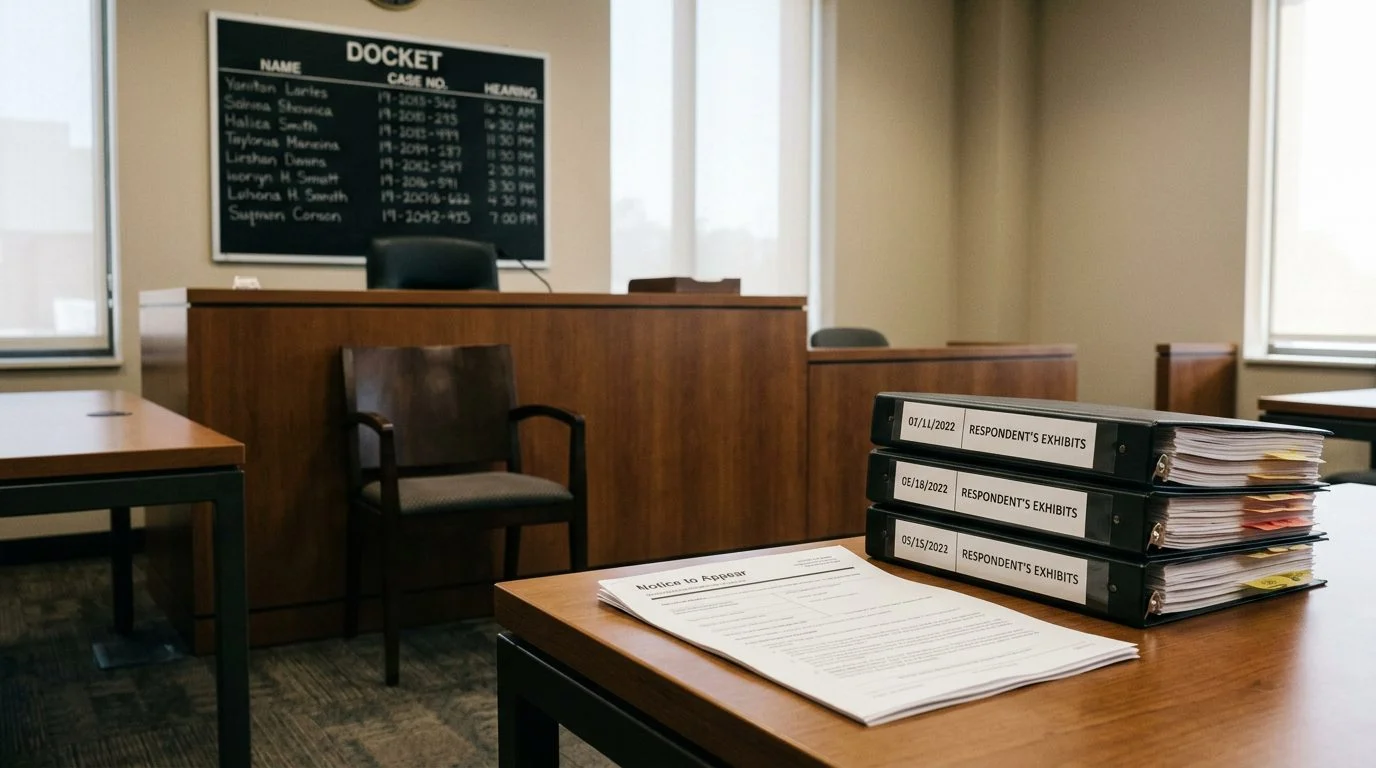
Removal Defense | Immigration Court
Waiting on a Change of Venue? Know What Shapes the Timeline
Adriana Gomez and the team at AG Immigration Law P.A. focus on removal defense, including motions to change venue in immigration court.
By Adriana Gomez · Published October 27, 2026
A change of venue asks an Immigration Judge to move your removal case to a different immigration court. There is no single timeline for this. If you’re asking how long it takes for immigration court to change venue after sending a motion, the answer depends on the facts of your case.
This guide is for people with a pending removal case and for the family members helping them. It explains the steps in plain words, the factors that affect timing, and the mistakes that can cost a hearing.
What a Change of Venue Means in Immigration Court
A change of venue is a request to move your case to a different immigration court. Venue is the court location where your case is heard. Under 8 C.F.R. § 1003.20, venue starts at the court where jurisdiction vests. Jurisdiction vests when a charging document, such as a Notice to Appear, is filed with that court under 8 C.F.R. § 1003.14.
The Immigration Judge may change venue only upon a motion by one of the parties, for good cause, after the charging document has been filed, under 8 C.F.R. § 1003.20. We cover good cause below.
A change of address is a different duty. It tells the court where to send your notices. Within five days of a move, you must file written notice on Form EOIR-33 with the court handling your case, or with the new court if venue has changed. That rule appears in 8 C.F.R. § 1003.15. A venue motion asks for a new hearing location, so you may need to do both.
For background on how these cases work, see our removal defense page.
If a venue motion or a missed notice has you worried about your next hearing, our team can talk through your situation with you by form, phone, or WhatsApp. Talk it through with our team — we can walk you through how a situation like yours is usually handled and what your options are.
Why There Is No Single Answer to the Timing Question
No single timeline applies to every venue motion. The rule sets steps, not a set number of days for a decision. The time it takes depends on the court, its docket, and the issues raised in your motion.
The process moves through three stages. First, a party files the motion. Second, the other side gets notice and a chance to respond. Third, the Immigration Judge decides. Each stage takes time, and a response can add to it. The judge cannot grant the motion until the other party has had that notice and opportunity, under 8 C.F.R. § 1003.20.
Your hearing date does not move on its own while the motion is pending. The Immigration Court schedules cases and gives notice of each hearing’s time and place, under 8 C.F.R. § 1003.18. Until you receive a written change, treat the current date as set. Missing a hearing carries serious consequences, which we cover below.
How the Motion Is Actually Filed
A venue motion is a written request filed with the immigration court. It explains why the case should move and names the new location you want. It usually includes supporting papers, such as proof of where you live and work. The other side then has a chance to respond before the judge rules.
Filing has rules. Attorneys and accredited representatives must file electronically in cases eligible for electronic filing, under 8 C.F.R. § 1003.31. Deadlines matter. If a document is not filed within the time the judge sets, the chance to file it is deemed waived, under the same section.
The motion must also identify a fixed street address, including city, state, and ZIP code, where you can be reached. The judge cannot grant a change without it, per 8 C.F.R. § 1003.20.
Keep a complete copy of everything you file, along with receipts or confirmations. Original documents must be available on request to the court or the other side. Good records save time later.
The Good Cause Standard and How It Shapes the Process
The judge may change venue only for good cause, and only upon motion by one of the parties, after the other party has been given notice and an opportunity to respond. Every case turns on its own facts, and the details of your situation matter.
Motions usually point to facts about your life. These include where you live, where you work, and where your family is. They may also explain why your current court location creates real hardship, such as long travel that makes attending hearings difficult. Documents that show these facts give the judge something concrete to weigh.
A well-documented motion takes more work to build. You need records, dates, and a clear explanation. That preparation can take time before the motion is filed, which is one reason the overall timeline varies.
A judge may also grant a continuance, which is a postponement, for good cause shown, but a continuance may not cause the adjudication of an asylum application to exceed 180 days absent exceptional circumstances. See 8 C.F.R. § 1003.29. A continuance is a separate request. It does not replace a venue motion.
How Detained Cases Are Handled Differently
Detained cases can move on a different track than cases where the person is free. Custody and bond decisions are considered separately from the removal hearing itself, under 8 C.F.R. § 1003.19.
Transfers matter. A transfer can change which court handles the case, and it can affect where a venue request is decided.
If you or a family member is detained, act quickly. Track every transfer notice and check the person’s location. ICE’s Online Detainee Locator System is the official tool for finding people held in ICE immigration detention. Keep copies of every notice you receive.
Missed Notices and the Address Mistake That Can Trigger a Removal Order
A wrong or outdated address can cause you to miss a hearing notice. That can lead to a removal order entered in absentia, meaning without you present. Under 8 C.F.R. § 1003.26, the judge orders removal in absentia when the government shows by clear, unequivocal, and convincing evidence that you are removable and that written notice of the time and place of proceedings and written notice of the consequences of failure to appear were provided. Notice sent to the most recent address you provided is sufficient. If you did not provide an address as required, no written notice is needed for the judge to proceed.
The consequences can last.
Federal law also requires notice of address changes. 8 U.S.C. § 1305 requires each alien who is required to be registered and who is within the United States to give written notice of each change of address within ten days. Keep your address records current while a motion is pending. For address steps, see our change of address guidance.
Not sure what your next step is?
Talk it through with our team — we can walk you through how a situation like yours is usually handled and what your options are.
What to Keep Track of While the Motion Is Pending
Keep every hearing date on your calendar until a written order or new notice confirms a change. Check your mail and the court’s notices often. Don’t assume the case has moved just because a motion was sent.
Keep copies of all filings, receipts, and confirmations. Write down the date each document was sent and how it was sent.
File Form EOIR-33 within five days of any move. This step helps the court reach you and prevents missed notices.
Organize the documents that support your reason. Proof of residence, such as leases or utility bills, is useful. So are work records and evidence of family ties, such as birth certificates or letters. Group them by topic so they’re easy to find before each hearing.
Talking Through Your Case With Our Office
A venue motion often comes up during stressful times. You may have moved, a family member may be in detention, or a notice may have gone to the wrong address. Each situation raises different questions about timing, filings, and hearing dates.
Adriana Gomez is the lawyer responsible for this page. Our team can review the facts of your case and explain what the steps mean for you. You can reach the office through the contact form, by phone, or by WhatsApp.
Consultations are paid. The office will explain the consultation fee when you call or write.

Frequently Asked Questions
How long does immigration court take to decide a motion to change venue?
There is no set deadline for an immigration judge to rule on a motion to change venue. The timing depends on the court’s schedule, whether the government responds, and whether the judge decides the motion on paper or at a hearing.
Does the immigration court have to respond within a certain number of days after I file?
The judge sets the briefing schedule, which may give the government attorney time to respond. Follow the deadlines in your filing receipt and any court order, because those dates control. Contact our office if you are unsure about a deadline.
Can I speed up a decision on my motion to change venue?
You can ask the court to rule promptly and explain any time-sensitive reasons, but the judge decides whether to act sooner. To discuss the timing of your case, contact our office.
What happens to my hearings while the motion is pending?
Unless the court orders otherwise, your scheduled hearings generally remain on the calendar, so you should keep attending them. Missing a hearing can result in a removal order entered in absentia, so contact our office right away if you have questions about your next court date.
What Can Affect How Long a Venue Motion Takes
The Court's Schedule
An immigration judge's docket plays a large role in when a motion is reviewed and decided.
Whether the Government Responds
The timing of the government's response to a motion can shift how quickly the court moves forward.
Paper Decision or Hearing
Some motions are decided on the written filings, while others are set for a hearing. Each path follows a different timeline.
The Details of Your Case
The reasons for the motion, the evidence submitted, and the status of your other proceedings all affect what happens next.
Why Clients Work With Our Office
Focused Removal Defense
Our practice focuses on removal defense and related matters, so venue questions are handled alongside the rest of your case.
Careful Preparation
We organize filings and supporting documents so the court has a complete record to review.
Clear Fee Discussion
We explain what our services cover and what costs may apply before you decide how to move forward.
Several Ways to Reach Us
Call the office, send a message on WhatsApp, or fill out our contact form to get started.
Do Not Assume a Quick Answer
There is no set deadline for an immigration judge to rule on a motion to change venue. Keep track of every court notice and hearing date, and bring questions about your case to our office rather than waiting for the court to act on its own schedule.