

Removal Defense
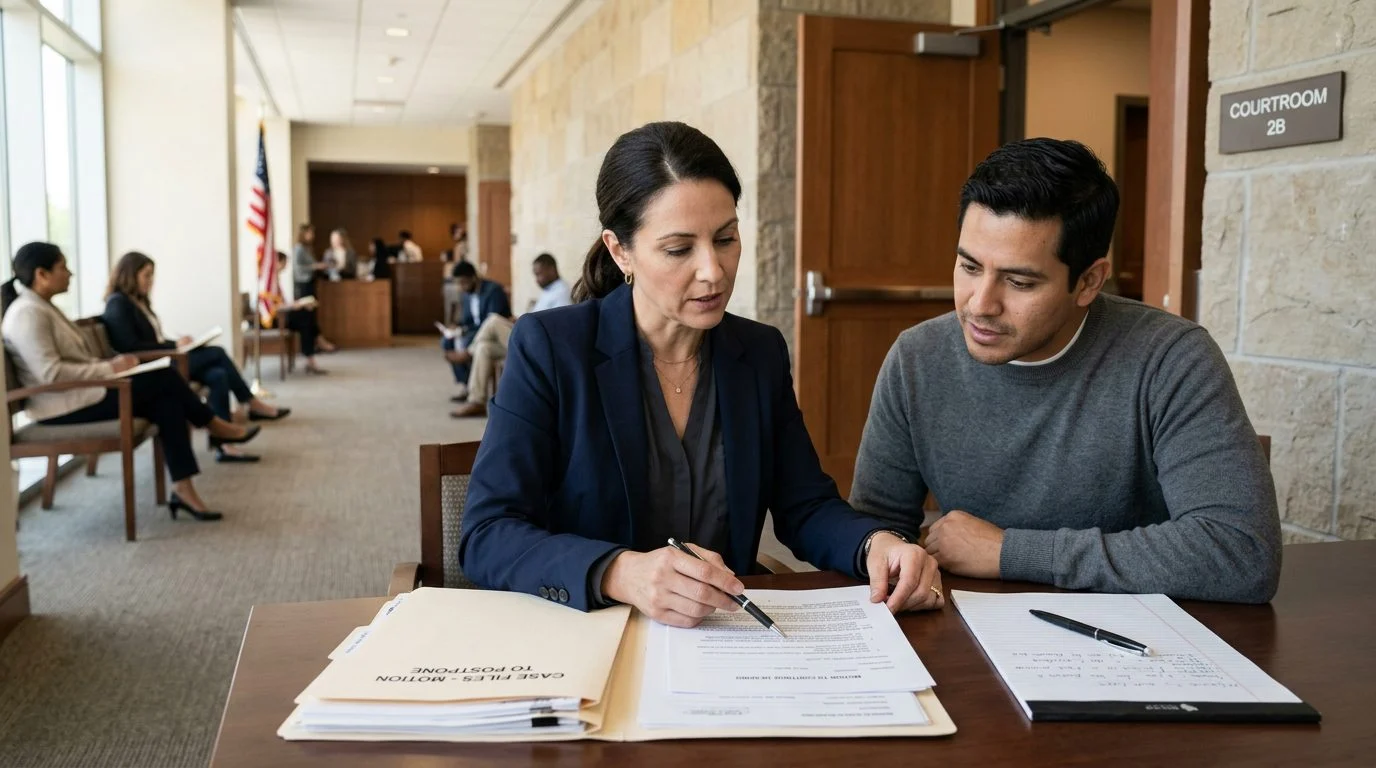
Thinking About Postponing Your Immigration Court Hearing?
Learn how immigration judges weigh postponement requests and how AG Immigration Law P.A. can help you prepare a clear, well-supported request as part of your removal defense.
By Adriana Gomez · Published October 25, 2026
Yes, you can ask an immigration judge to postpone your hearing, but the judge decides each request. Can I postpone my immigration court hearing? You can ask, and you’ll need a clear reason backed by facts. This guide answers the questions people ask most about moving a court date, what happens after a missed hearing, and what to check on your papers. It’s written for people reading for themselves, or for a parent, spouse or friend who has a court date.
What Does It Mean to Postpone an Immigration Court Hearing?
A postponement moves a scheduled hearing to a later date. Lawyers often call this a continuance. Under 8 C.F.R. § 1003.29, an immigration judge may grant a motion for continuance for good cause shown. Under 8 C.F.R. § 1003.29, the immigration judge may grant a motion for continuance for good cause shown.
Once a hearing has started, a different rule applies. Under 8 C.F.R. § 1240.6, the judge may grant a reasonable adjournment on the judge’s own choice or, for good cause, on a request from you or the government.
Many cases start at a master calendar hearing. This is a short hearing where the judge checks the case, sets deadlines and schedules the next step. A later individual hearing is where the judge hears the case itself. Check which kind of hearing is on your notice.
If your case includes an asylum application, there is a limit. A continuance may not cause the asylum case to take more than 180 days, absent exceptional circumstances, under 8 C.F.R. § 1003.29.
If a court date you didn't choose is weighing on you, our team can talk through your options with you, so you don't have to face it alone. Talk it through with our team — we can walk you through how a situation like yours is usually handled and what your options are.
What Reasons Can Support a Request to Postpone?
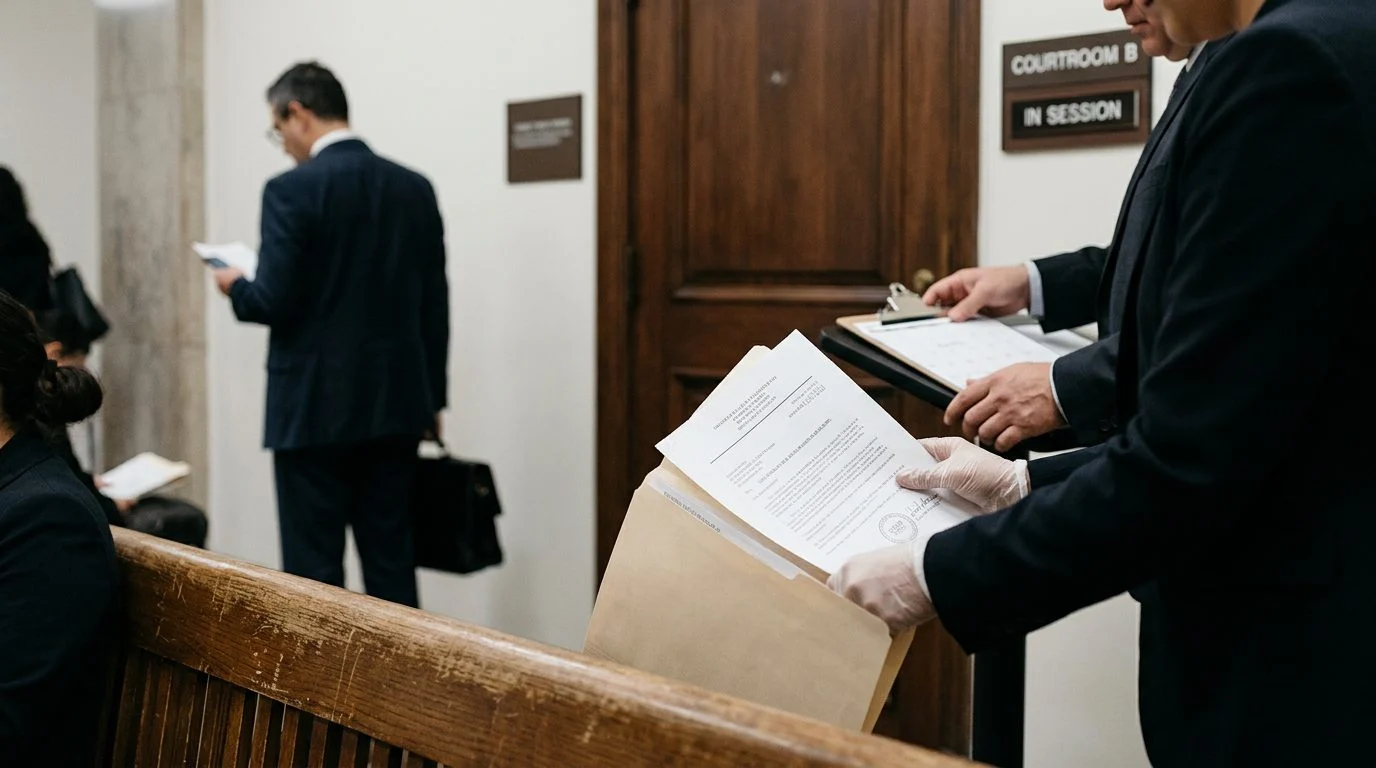
Requests work best when they name one specific reason and attach proof. The judge reviews the facts and papers in each request. Reasons you can raise include:
- A pending application or petition that could change the case
- Time needed to gather records, medical files or other evidence
- A serious illness, supported by a doctor’s letter
- A documented emergency, such as a hospital stay or a death in the family
Federal law gives you a reasonable chance to see the evidence against you and to present your own, but these rights do not let you examine national security information the Government may offer in opposition to your admission to the United States or to your application for discretionary relief. See 8 U.S.C. § 1229a. Have your papers ready before you ask. See 8 U.S.C. § 1229a. Have your papers ready before you ask.
A request that says only that the date is inconvenient usually needs more support. A reason backed by documents gives the judge something concrete to review. A common mistake is waiting until the week of the hearing to start gathering papers.
How Do You Write a Letter to the Court Requesting a Postponement?
Ask for a postponement in a written motion, not a casual letter. Under 8 C.F.R. § 1003.23, pre-decision motions must be in writing, unless the immigration judge otherwise permits. They must also state the grounds, the relief sought and the jurisdiction, with particularity.
Your written request should include:
- Your full name, any other names you use, and your A-number
- Your next hearing date and the new date you are asking for
- The specific reason, in clear, plain sentences
- Supporting documents, labeled to match each reason
Motions to reopen or reconsider a decision of an immigration judge must be filed with the immigration court that has administrative control over your Record of Proceeding. If a lawyer represents you, that lawyer must file electronically in cases eligible for it. See 8 C.F.R. § 1003.31. If a fee applies, the filing must include proof of payment or a fee waiver request.
Timing matters. The judge may set deadlines for filings. Confirm the court’s current filing instructions before you send anything.
How Many Times Can an Immigration Hearing Be Rescheduled?
Repeating the same reason gives the judge little new to weigh. A request backed by new documents gives the judge something new to review.
Keep every date on your calendar until the court issues a written change. Judges can set and extend time limits for filings, under 8 C.F.R. § 1003.31. A date you assume has moved may not have moved.
What Is a Motion to Reconsider in Immigration Court?
A motion to reconsider asks the judge to look again at a decision already made. Subject to certain exceptions, a party may file only one motion to reconsider and one motion to reopen. See 8 C.F.R. § 1003.23.
A motion to reconsider is not the same as asking to move a future hearing. A motion to reopen is a different tool. It must state new facts to be proven at a hearing, supported by affidavits and other evidence. The judge will not grant it unless the judge is satisfied that the evidence is material and was not available and could not have been discovered or presented at the former hearing.
In plain words, reconsideration points to a mistake in the decision. Reopening brings in new proof.
What Happens If You Miss Your Immigration Hearing?
If you miss a removal hearing, the judge can order you removed in absentia. Under 8 C.F.R. § 1003.26, the judge must do so when the government shows, by clear, unequivocal and convincing evidence, that you are removable. The government must also show that written notice of the time, place and consequences was given to you or your lawyer of record.
Address duties matter here. Each alien required to register who is within the United States must notify the Attorney General in writing of each change of address within ten days from the date of the change, under 8 U.S.C. § 1305. Immigration court rules also require a written change on Form EOIR-33 within five days, under 8 C.F.R. § 1003.15.
Under the address rules, if your address is missing or incorrect, you must give the immigration court written notice of an address and telephone number within five days of service of the charging document, under 8 C.F.R. § 1003.15. An old address can cost you a hearing. If an order has been entered, review it quickly, because your options narrow with time.
Not sure what your next step is?
Talk it through with our team — we can walk you through how a situation like yours is usually handled and what your options are.
What Should You Check Before Your Hearing Date?
A removal case begins when a Notice to Appear is filed with the immigration court. See 8 C.F.R. § 1239.1. The notice must identify the nature of the proceedings, the charges and the court’s address, under 8 C.F.R. § 1003.15. Compare those details with your calendar.
Check these items:
- The hearing date, time and court address
- Your current address and phone number on file with the court
- Every notice, receipt and hearing paper, kept in one folder
- Any change from the court, in writing
If a relative is held in immigration detention, the Online Detainee Locator System is the official ICE tool for finding where a person is held.

Talk With Our Team About Your Hearing Date
If your hearing date is set and you aren’t sure what to do next, AG Immigration Law P.A. can talk it through with you. A hearing date you did not choose can feel frightening. That’s especially true when you’re reading the notice for someone else.
You may be facing a notice that doesn’t match your calendar, a sudden illness, a pending application that needs more time, or a missed hearing that has already happened. Each situation has its own facts and its own paperwork.
AG Immigration Law P.A. focuses on removal defense. The firm also handles adjustment of status, family petitions, naturalization, removal of conditions on green cards, waivers and BIA appeals. Adriana Gomez is the lawyer responsible for this page.
Frequently Asked Questions
Can I postpone my immigration court hearing for any reason?
You can ask, but the judge decides whether you have good cause. Strong requests name a specific reason and include proof.
How do I ask the court for a postponement?
File a written motion with the immigration court that holds your case file. Confirm the court’s current filing rules first.
Review any missed hearing quickly.
The office offers paid consultations. If a court date you didn’t choose is weighing on you, reach out through the contact form, by phone, or by WhatsApp. Our team can talk through your options with you, so you don’t have to face it alone.
How We Can Help With Your Hearing
Removal Defense Focus
Our practice concentrates on removal defense, so we understand how a postponement request fits into the overall strategy for your case.
Written Motions
We help prepare and organize the written motion and supporting evidence for the court that holds your case file.
Timing and Preparation
We review your hearing notice and case status so your request is organized and presented with the details the court needs.
Clear Communication
Our team keeps you informed about each step, and you can reach our office by phone, contact form or WhatsApp.
Do Not Assume a Request Will Be Granted
A judge decides whether to postpone a hearing. Missing a scheduled hearing can have serious consequences, so do not wait to act on a request. Speak with our office before you make any decision about your court date.
Information That Often Supports a Request
Your Hearing Notice
Bring the notice that lists your court, hearing date and case details so the request matches the court record.
Proof of Pending Matters
Receipts, filing notices or approval paperwork for a related application can help explain why more time is needed.
Medical or Personal Records
Documentation of a serious illness, family emergency or other specific reason can give the judge concrete facts to consider.
Your Contact Information
Keep your address and phone number current so the court and our office can reach you about your case.
Speak With Our Team About Your Hearing
Related practice areas
- Deportation Defense Attorney for Immigration Court: Removal Proceedings Explained
- Removal Defense in Florida