

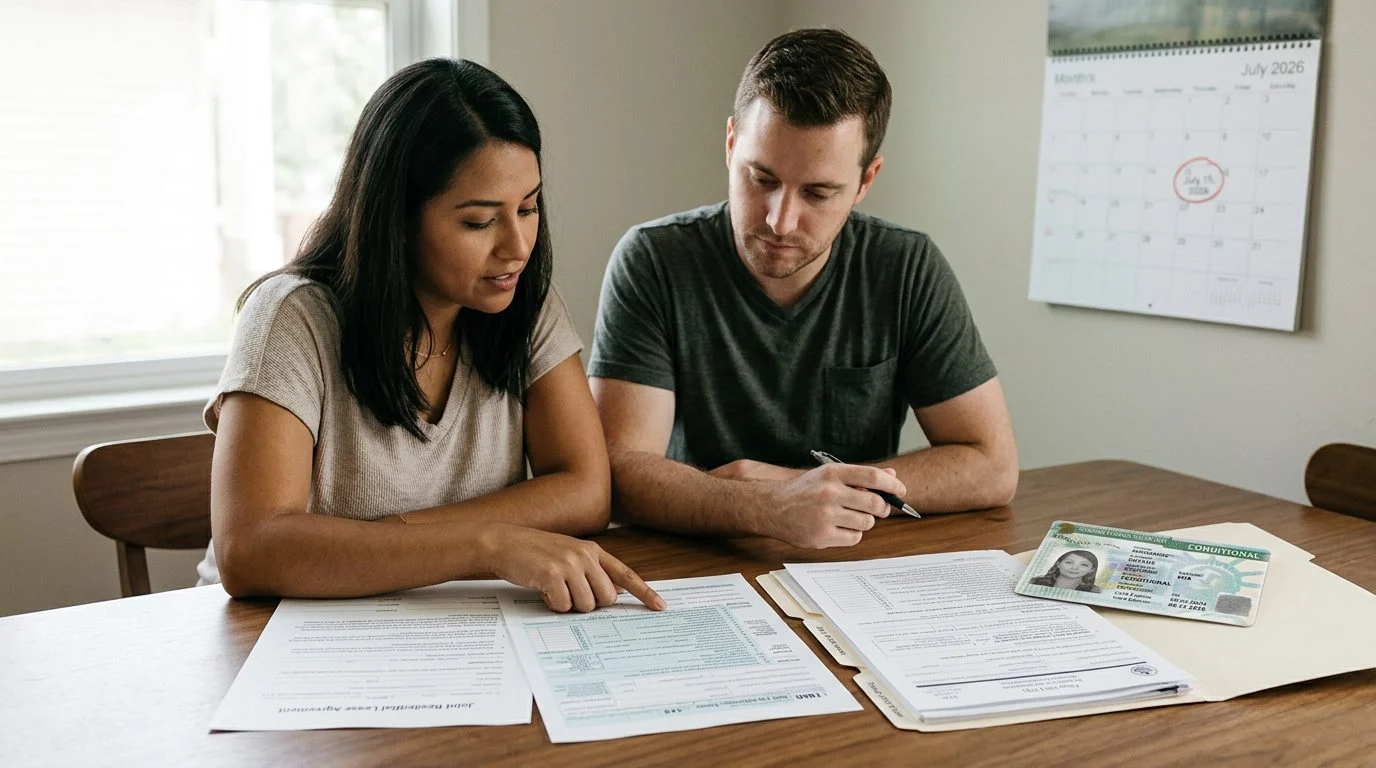
Family Petitions
Who Files the Green Card Petition, and Why It Matters
The petitioner's role shapes every step of a green card case. Learn how it works and how our office can help you prepare.
By Adriana Gomez · Published October 30, 2026
Who is the petitioner when applying for a green card? The petitioner is the person who files the petition that starts the case. The beneficiary is the person who would receive permanent residence once the case is approved and the final application is completed. In family cases, the petitioner is usually a U.S. citizen or a green card holder. In a self-petition, the beneficiary files for themselves. This page explains each role in plain words, using the federal rules that set them out. Adriana Gomez is the lawyer responsible for this page at AG Immigration Law P.A.
Who the petitioner is in a green card case
The petitioner asks the government to recognize a qualifying relationship. The beneficiary is the person who wants the green card.
Under 8 CFR 204.1, petitions may be filed based on a qualifying relationship to a U.S. citizen or lawful permanent resident. The petition is usually the first step. It does not hand anyone a card by itself. The beneficiary later files a separate application, such as Form I-485 when adjusting status inside the United States.
The same family can have different roles on different forms. A citizen might be the petitioner for a spouse. Read each form to see who is named as the petitioner.
If a relative's case has you asking who must file, you don't have to sort it out alone. Reach our office by contact form, phone, or WhatsApp to talk through your facts. Talk it through with our team — we can walk you through how a situation like yours is usually handled and what your options are.
Family-based petitions: who files Form I-130
In a family case, a U.S. citizen or green card holder is usually the petitioner. The relative who would receive the green card is the beneficiary.
Under 8 CFR 204.2, a U.S. citizen or a lawful permanent resident may file a petition on behalf of a spouse. The family petition is commonly filed on Form I-130. 8 C.F.R. § 204.2 reads: “In the case of any adoption occurring on or after the Convention effective date, a Form I-130 may be filed and approved only if the United States citizen petitioner was not habitually resident in the United States at the time of the adoption.”
Other relatives, such as parents, siblings, and adult children, have their own rules. Those rules depend on the relationship and on whether the petitioner is a citizen or a green card holder. Keep the petition’s purpose in view. It proves a qualifying family tie. It does not grant status to the relative on its own.
What the petitioner must provide and sign
The petitioner must prove their own status and the family tie. Documents do the proving, so gather them early.
Under 8 CFR 204.1, documents must show the petitioner’s U.S. citizenship or lawful permanent resident status and the claimed relationship. Primary evidence should be used when it is available. Secondary evidence may be accepted when it is not. A photocopy of a green card or a naturalization certificate can serve as proof of status.
Accuracy matters. The petitioner signs the forms and stands behind the information on them. Errors and gaps in records can slow a case, so review each document before filing.
In many family-based cases, the petitioner also signs an affidavit of support. An affidavit of support is executed by the sponsor as a contract that is legally enforceable against the sponsor. A sponsor must be a U.S. citizen or lawful permanent resident. A substitute sponsor or joint sponsor may be a citizen, national, or lawful permanent resident. The affidavit is not enforceable after the sponsored person has worked 40 qualifying quarters or can be credited with them, subject to the statute’s conditions. The affidavit goes on the form USCIS designates, as 8 CFR 213a.2 explains.
Employer-filed petitions: who files Form I-140
Employment-based immigrant petitions under section 203(b)(1), (b)(2), or (b)(3) of the Act are filed on Form I-140, while special immigrant petitions under section 203(b)(4) for section 101(a)(27)(C) immigrants are filed on Form I-360, as 8 CFR 204.5 provides. These petitions fall outside the practice areas this firm handles, which are removal defense, adjustment of status, family petitions, naturalization, removal of conditions on green cards, waivers, and BIA appeals. This page therefore does not explain how employer petitions are prepared or argued.
If you are unsure whether your matter falls within these areas, contact our office. We will tell you whether we can help with your case or whether it may need to be referred to another lawyer or firm.
Self-petitions: when the beneficiary files for themselves
A self-petition is a case where the person files for themselves. The self-petitioner is both the petitioner and the beneficiary.
Under 8 CFR 204.1, a spouse or child of an abusive citizen or lawful permanent resident files Form I-360 to self-petition. Self-petitions have their own eligibility rules and evidence needs.
The statute sets separate rules for some children.
Some later changes do not undo approval.
A child who accompanies a self-petitioning spouse may get the same priority date without a separate petition. Under 8 CFR 204.2, the child must be unmarried, under 21, and otherwise qualify as the self-petitioner’s child under section 101(b)(1)(F) of the Act until becoming a permanent resident, and must not have been classified based on a self-petition of their own.
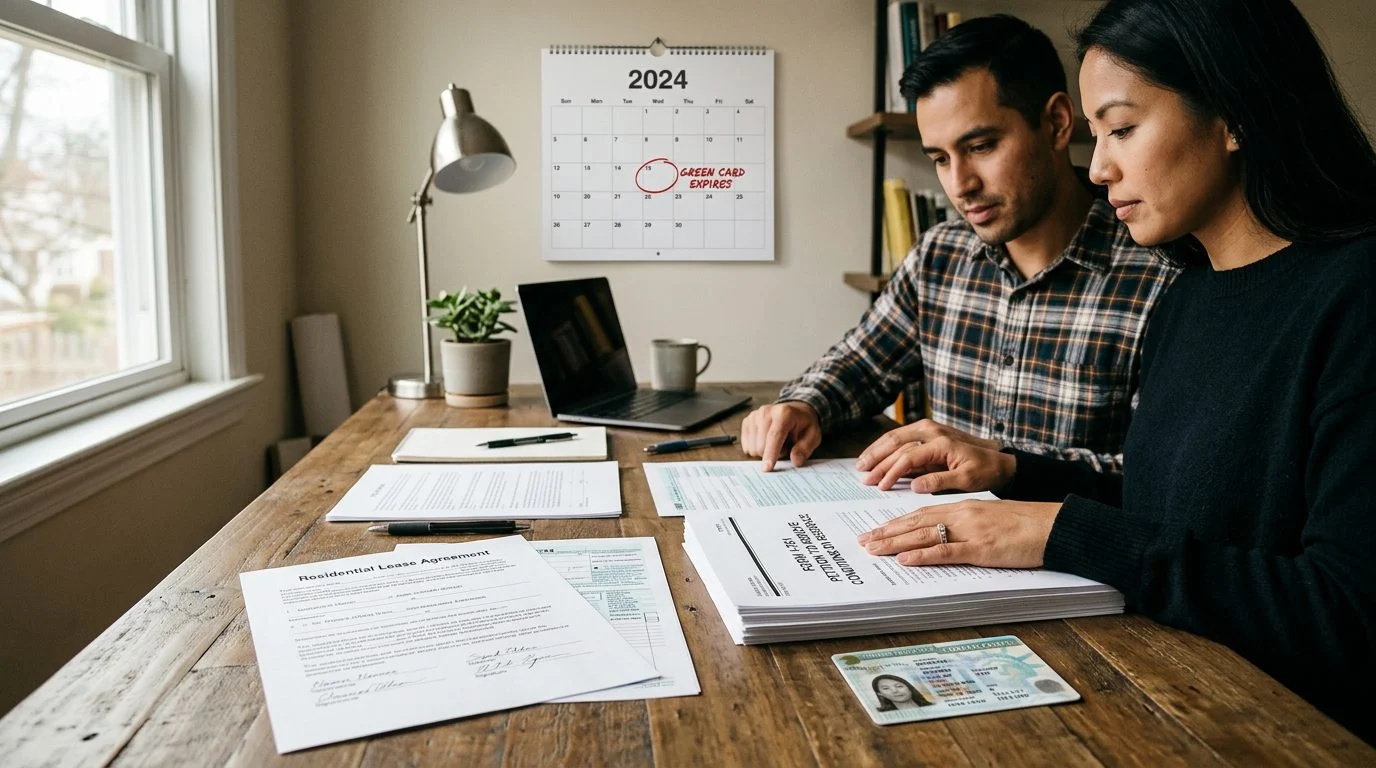
How the petitioner’s role connects to the beneficiary’s application
An approved petition does not, by itself, issue a green card. The beneficiary still has to apply.
That is why the petition and the application should be planned together. The petitioner’s documents and affidavit of support can still matter at this stage.
Approval is not locked in forever. Under 8 U.S.C. 1155, the Secretary of Homeland Security may revoke approval at any time for good and sufficient cause, effective as of the approval date.
For someone already in removal proceedings, adjustment is one option among others. Our removal defense work looks at how each option fits the wider picture.
Not sure what your next step is?
Talk it through with our team — we can walk you through how a situation like yours is usually handled and what your options are.
Conditional green cards and the petitioner’s continuing role
A conditional green card must be made permanent through a joint filing within the 90-day period immediately preceding the second anniversary of the date the alien obtained permanent residence. If the joint petition cannot be filed due to the termination of the marriage through annulment, divorce, or the death of the petitioning spouse, or if the petitioning spouse refuses to join in the filing of the petition, the conditional permanent resident may apply for a waiver of the requirement to file the joint petition.
The petition to remove the condition must be filed during the 90-day period before the second anniversary of obtaining that status.
Under 8 CFR 216.4, the conditional resident and the spouse who filed the original petition file Form I-751 together. The petition may be filed regardless of physical presence in the United States.
Missing the window has serious results. Failure to file properly on time leads to automatic termination of permanent residence status and removal proceedings. A late filing is accepted only with written good cause.
The regulation also allows a waiver of the joint filing requirement when the marriage has ended or the petitioning spouse refuses to join.
When removal proceedings affect the petition or the green card
A removal case runs on its own track, but it can affect the petition and the card.
Under 8 U.S.C. 1229a, a person in removal proceedings has a reasonable opportunity to examine the evidence against them. They may present evidence and cross-examine government witnesses.
Notices matter a great deal. The same statute allows an in absentia removal order when a person who has been given written notice, or whose counsel of record has been given it, does not attend the proceeding, and the government establishes removability by clear, unequivocal, and convincing evidence. Written notice sent to the most recent address provided can be sufficient.
Keep hearing dates on the calendar. Keep your address current with the government. Each case turns on its own record.
Talk with our team about your petitioner question
Asking who the petitioner is often comes up when a relative faces a notice, a hearing, or a deadline. If that’s your situation, you may be gathering facts for someone you love.
Frequently asked questions
Who is the beneficiary in a green card case?
The beneficiary is the person who would receive permanent residence once the case is approved and completed.
Can a green card holder petition for a spouse?
Yes. Under 8 CFR 204.2, a lawful permanent resident may file a petition on behalf of a spouse.
Does an approved petition alone give someone a green card?
No. The beneficiary still files an application, such as Form I-485 for adjustment of status.
What is a conditional green card?
It is permanent residence granted on a conditional basis to certain alien spouses. The couple must file Form I-751 in the 90-day window before the second anniversary.
If you’re helping a relative work out who must file, you don’t have to do it alone. Consultations at AG Immigration Law P.A. are paid services. You can reach our office through the contact form, by phone, or on WhatsApp to talk through the facts of your situation.
How Our Office Approaches Your Petition
Careful Document Review
We review the petition, supporting evidence and relationship records before anything is filed.
Attention to Filing Details
Small errors in forms or names can cause delays, so we check each detail against the filing requirements.
Clear Communication
We explain each step in plain language so you know what to expect and what we need from you.
Support From Our Staff
Our assistants and office staff help keep your documents organized and your questions answered.
Check the Petitioner Details Early
Mistakes about who is filing, who is the beneficiary and which form applies can affect the entire case. Review these details with a lawyer before you submit anything.
Ways to Reach Us
Contact Form
Send us a short message describing your situation and we will follow up.
Phone Call
Call our office to speak with a member of our staff about your petition.
WhatsApp Message
Message us on WhatsApp for quick questions about scheduling or documents.
Paid Consultation
Book a consultation to review your petition details with our responsible lawyer, Adriana Gomez.