

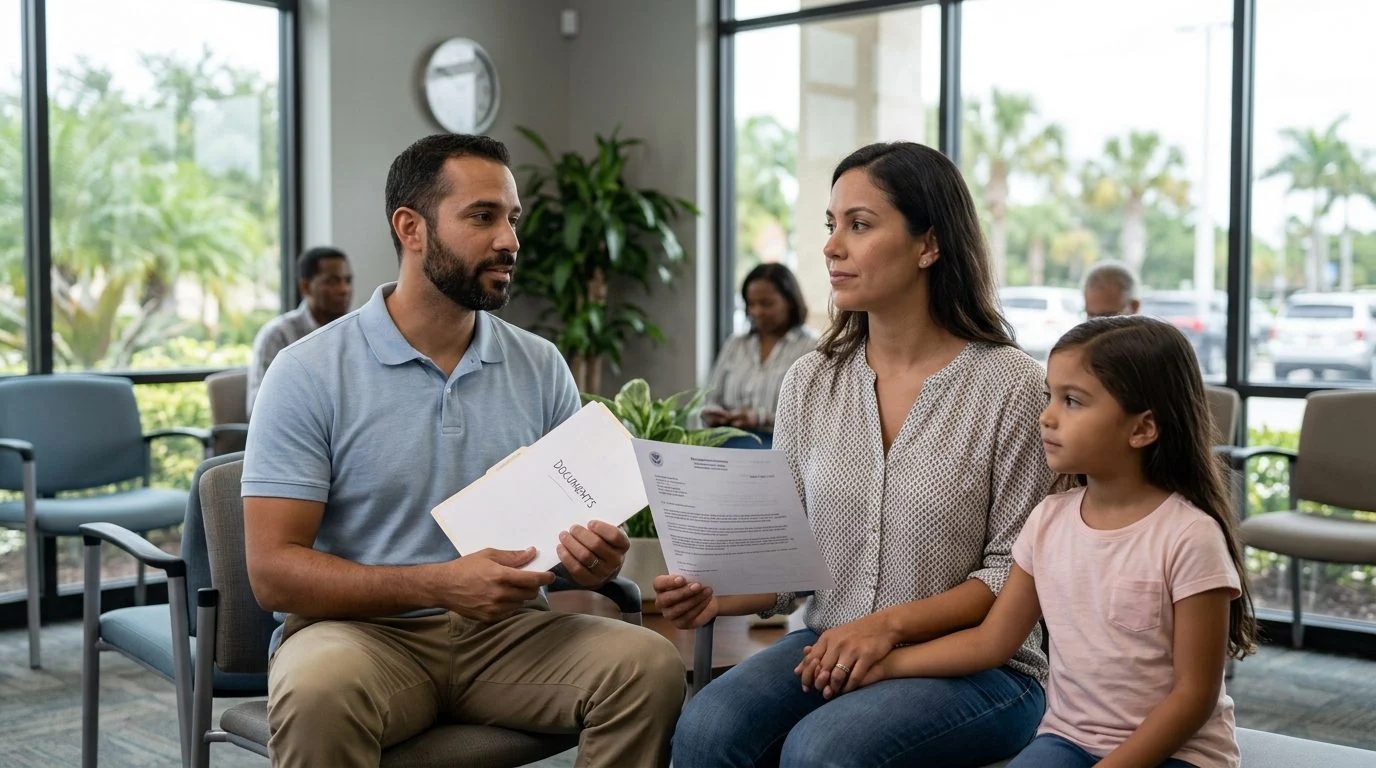
Immigration Appeals and Denials
Received a Denial? Learn What Your Options Are
Your denial notice is a starting point, not a final answer. Here is how the motion and appeal process works, and where to begin.
By Adriana Gomez · Published November 12, 2026
I-290B Appeal for an Adjustment of Status Denial
You received a denial of your green card application, and the deadline is already on your mind.
This guide explains the denial notice, the deadline, the filing options, and what a denial can mean if removal proceedings begin. The details of your notice matter, so read it closely.
If a denial notice is in your hands and the deadline is close, you don't have to work out the next step alone. Our team is ready to talk through your notice with you. Talk it through with our team — we can walk you through how a situation like yours is usually handled and what your options are.
What a USCIS Denial of Adjustment of Status Means
A denial ends that request at USCIS, but it doesn’t always end the path to a green card. The reasons in the notice shape every choice that comes after it.
Adjustment of status is the process of asking for a green card from inside the United States, using Form I-485. The Migration Policy Institute explainer describes adjustment as one federal green-card pathway. It covers adjustment from another status and sponsorship by family or an employer.
USCIS must explain its reasons in writing. Under 8 C.F.R. § 103.3, the officer shall state the specific reasons for denial. Look for the reasons, the decision date, and any instructions about an appeal or motion.
This guide is for the applicant. It’s also for a spouse, parent, or adult child who is reading the notice on the applicant’s behalf. Write down the decision date the day the notice arrives.
What Form I-290B Is and What It Covers
Under 8 C.F.R. § 245.2(a)(5)(ii), no appeal lies from the director’s denial of an application for adjustment of status, but the applicant, if not an arriving alien, retains the right to renew the application in proceedings under 8 CFR part 240. An I-290B appeal or motion is filed with a written brief that explains the problem.
A complete filing package usually includes:
- The completed Form I-290B
- The USCIS filing fee
- A written brief that names the error
- A copy of the denial notice
- Supporting evidence, including any new evidence
8 C.F.R. § 106.2 sets an $800 fee for a Notice of Appeal or Motion filed to reopen or reconsider a USCIS decision. There is no fee for conditional permanent residents who filed a waiver of the joint filing requirement based on battery or extreme cruelty and then file that notice after their Petition to Remove the Conditions on Residence was denied. Motions also require a nonrefundable fee, under 8 C.F.R. § 103.5. Check the current form instructions before you file, because USCIS fees can change.
The Deadline: How Many Days You Have to File
The general deadline is 30 days after the decision is served on you. The same 30-day rule applies to a motion to reopen or reconsider a USCIS decision, under 8 C.F.R. § 103.5.
When the notice comes by mail, 3 extra days are added. Under 8 C.F.R. § 103.8, service by mail is complete upon mailing. Count from that date, not the day the envelope arrives.
Missing the deadline has real consequences:
- A late appeal must be rejected as improperly filed. The fee is not refunded, under 8 C.F.R. § 103.3.
The clock keeps running while you gather evidence. Calendar the deadline when the notice arrives. Keep proof of the mailing date and the filing date.
Appeal or Motion: Choosing the Right Route
A denied adjustment application generally cannot be appealed under 8 C.F.R. § 245.2. 8 CFR 245.2 says no appeal lies from the director’s denial, but the applicant, if not an arriving alien, retains the right to renew the application in proceedings under 8 CFR part 240, and a parolee who meets the conditions in § 245.2(a)(1) may also renew it there. The appeal rules in § 103.3 apply to many other USCIS decisions, but § 245.2 controls adjustment denials.
That leaves these routes:
- Motion to reopen: offers new facts or evidence. The official may reopen the case for proper cause shown.
- Motion to reconsider: asks USCIS to look again at its decision and explain why the decision was wrong.
- A new Form I-485: a separate option.
Whether a new filing makes sense depends on the facts of the denial.
What to Expect After You File
Once you file, USCIS reviews the motion and the record. Then it issues a written decision. The process takes time, and the timing can change.
Here is the typical flow:
- File the complete package before the deadline.
- Keep proof of filing and any receipt you receive.
- USCIS reviews the motion, the brief, and the evidence.
- USCIS serves a written decision.
Routine service means mailing the notice by ordinary mail to the affected party and the representative of record at the last known address or, if a party requests it, advising the party by electronic mail and posting the decision to the party’s USCIS account, under 8 C.F.R. § 103.8. Keep your address current with USCIS.
The decision may grant the motion or deny it. The notice explains the reasons. Check the notice and current USCIS information for processing estimates.
Not sure what your next step is?
Talk it through with our team — we can walk you through how a situation like yours is usually handled and what your options are.
Building the Brief and Evidence
A strong brief names the exact error and ties it to evidence. Under 8 C.F.R. § 103.3, an appeal must specifically identify any erroneous conclusion of law or statement of fact. An appeal that doesn’t identify specifically any erroneous conclusion of law or statement of fact shall be summarily dismissed.
Useful supporting material often includes:
- Updated or new documents that answer the stated reasons
- Legal arguments with the rules cited
- Corrected or completed forms
- Clear statements tied to each denial reason
Common mistakes weaken a filing:
- A brief that repeats the denial reasons without answering them
- Evidence filed late, with no reason given
- Incomplete or unsigned forms
- Missing copies of the notice and the filing
A motion to reopen also requires a statement about whether the decision is the subject of any court case, under § 103.5. Keep copies of everything you file, along with every receipt.
When a Denial Leads to Removal Proceedings
A denial can lead to removal proceedings in some cases. In those cases, DHS may issue a Notice to Appear. Under 8 C.F.R. § 239.1, several officers may issue one, including service center directors and supervisory immigration services officers.
When proceedings begin, the adjustment request is handled in immigration court. The ICE guide on adjustment of status explains that an adjustment application in removal proceedings is made before an immigration judge.
The court schedule is a separate clock from the USCIS deadline. Track both. A missed court hearing is serious. Under 8 U.S.C. § 1229a, a person who does not attend after written notice may be ordered removed in absentia if the Service establishes by clear, unequivocal, and convincing evidence that the written notice was so provided and that the alien is removable.
If the case reaches the Board of Immigration Appeals, the issues must be raised in the Notice of Appeal. Under 8 C.F.R. § 1003.38, any issue not raised is deemed waived. AG Immigration Law P.A. focuses on removal defense and BIA appeals, alongside adjustment of status.

Frequently Asked Questions
What is the deadline to file Form I-290B?
Under 8 C.F.R. § 103.5, the general deadline for a motion to reopen or reconsider is 30 days after the decision the motion seeks to reopen or reconsider.
Can I appeal a denied I-485?
A denied adjustment application generally cannot be appealed. The right procedural path depends on the facts of each case.
What happens if I file late?
A late appeal must be rejected, and the filing fee is not refunded. A late motion to reopen may be excused only in limited situations.
Can I file a new I-485 instead?
Yes, that is a separate option. Whether it makes sense depends on the facts of the denial.
How long does review take?
Timing varies and can change. Check the notice and current USCIS information for estimates.
If a denial notice is in front of you and the deadline is close, contact our team through the contact form. You can also call the office, message on WhatsApp, or book a paid consultation.
How Our Practice Can Help
Reviewing Your Denial Notice
We read the decision closely to identify the stated grounds, the filing requirements, and any deadlines that apply to your case.
Adjustment of Status Matters
Our practice handles adjustment of status applications and the denials that can follow, including the procedural questions they raise.
Clear Communication
We explain which paths may be available, what each one involves, and what the tradeoffs are, so you can make informed decisions.
Focused Immigration Practice
Our team focuses on removal defense, family petitions, naturalization, waivers, and BIA appeals, and supports clients through each stage.
Act Promptly
Review your denial notice for any filing deadline and bring it to us as soon as you receive it. Waiting can limit the options available to you.
Ways to Get Started
Send a Contact Form
Share basic details about your denial and your case. Our staff will follow up with next steps.
Call the Office
Speak with our staff directly about your notice and the timing of your response.
Message Us on WhatsApp
Reach out by WhatsApp with questions about your denial and the documents you have on hand.
Book a Consultation
Meet with Adriana Gomez to discuss your denial, the available procedural paths, and what to expect.