


Immigration Law Updates
Green Card Changes in 2026: Know Where You Stand Before You File
New policies and forms can change how a case is prepared. Here is how to read the updates and what to ask before taking your next step.
By Adriana Gomez · Published November 13, 2026
You got a letter, or you read something about new green card rules in 2026, and now you’re worried about your status. That’s a normal reaction, and it’s smart to look into it.
Most of the 2026 coverage describes agency policy, forms, and guidance for green card applications. Your permanent resident status is a separate question from a pending application. Changes often reach pending cases first.
This page offers general information about immigration law. It also covers practical steps you can take now.
Is there a new rule for green card holders in 2026?
The 2026 reports mostly describe policy memos, form updates, and guidance. They don’t describe one new statute. An announcement is not always a final rule, and news stories don’t always make that clear. Pay attention to whether an item is a memo, a form change, or a final rule.
A green card holder is a lawful permanent resident. When USCIS approves an adjustment application, lawful admission is recorded as of the date of the approval order.
Who may apply is set separately. Under 8 CFR 245.1, an applicant must be physically present in the United States, eligible for an immigrant visa, and have a visa immediately available when filing. The regulation also lists exceptions. Our adjustment of status guide walks through that framework.
If you already hold a green card, a report matters most when it touches a filing you still have pending. A family member’s case is one common example.
If a notice about your green card has you worried, you don't have to work through it alone. Our team can talk with you about where your case stands. Talk it through with our team — we can walk you through how a situation like yours is usually handled and what your options are.
What is the new policy for green card applications?
The reported policy changes focus on how adjustment of status applications are filed and reviewed. Coverage points to changes in how officers review evidence and how some cases are handled. Some reports describe a narrower approach to granting adjustment. Treat that as a report until it appears in a final rule or guidance you can check.
Policy directives can change how officers review evidence. That’s why two cases with similar facts can see different timelines or different requests for evidence.
Filing mistakes are a common and avoidable problem. Under 8 CFR 103.2, a request that does not follow the statutes, regulations, or form instructions may be rejected or denied. If a check or other financial instrument used to pay a fee is dated more than one year before the request is received, the payment and request may be rejected.
Keep copies of everything you file. Check the current form edition against the form instructions before you send anything.
Public charge: why it is back in the discussion
Under 8 U.S.C. § 1182, a person who, in the opinion of the consular officer when applying for a visa, or of the Attorney General when applying for admission or adjustment of status, is likely at any time to become a public charge is inadmissible. It asks whether an applicant is likely at any time to become a public charge.
USCIS says the applicant always carries the burden of proof, and that burden never shifts to USCIS. The officer weighs the totality of the circumstances. That includes education, age, health, employment, and the affidavit of support. USCIS public charge guidance lays out that analysis: if an alien posts the public charge bond as instructed in the NOID and USCIS accepts the bond, the officer should continue with the adjudication of the immigration benefit request in accordance with the guidance.
Two households can have similar incomes and still face different questions. The affidavit of support matters here too.
Your household’s income, health, and any benefits received all feed into that review. Gather accurate records before you file.
Can a person with a green card still be deported?
Yes, a green card holder can still face removal proceedings. The law lists deportability grounds, and a permanent resident can be placed in removal on a ground listed there. 8 U.S.C. 1227 sets out those classes.
One example involves public charge.
Many people assume a green card ends every immigration risk. It does not. Some grounds can still apply after permanent residence is granted.
Once proceedings start, you have rights. Under 8 U.S.C. 1229a, you get a reasonable opportunity to examine the evidence against you, but this does not entitle you to examine national security information the Government may proffer in opposition to your admission to the United States or to an application for discretionary relief. You may present your own evidence and cross-examine government witnesses. A motion to reopen must state the new facts to be proven. It must also be supported by affidavits or other evidence.
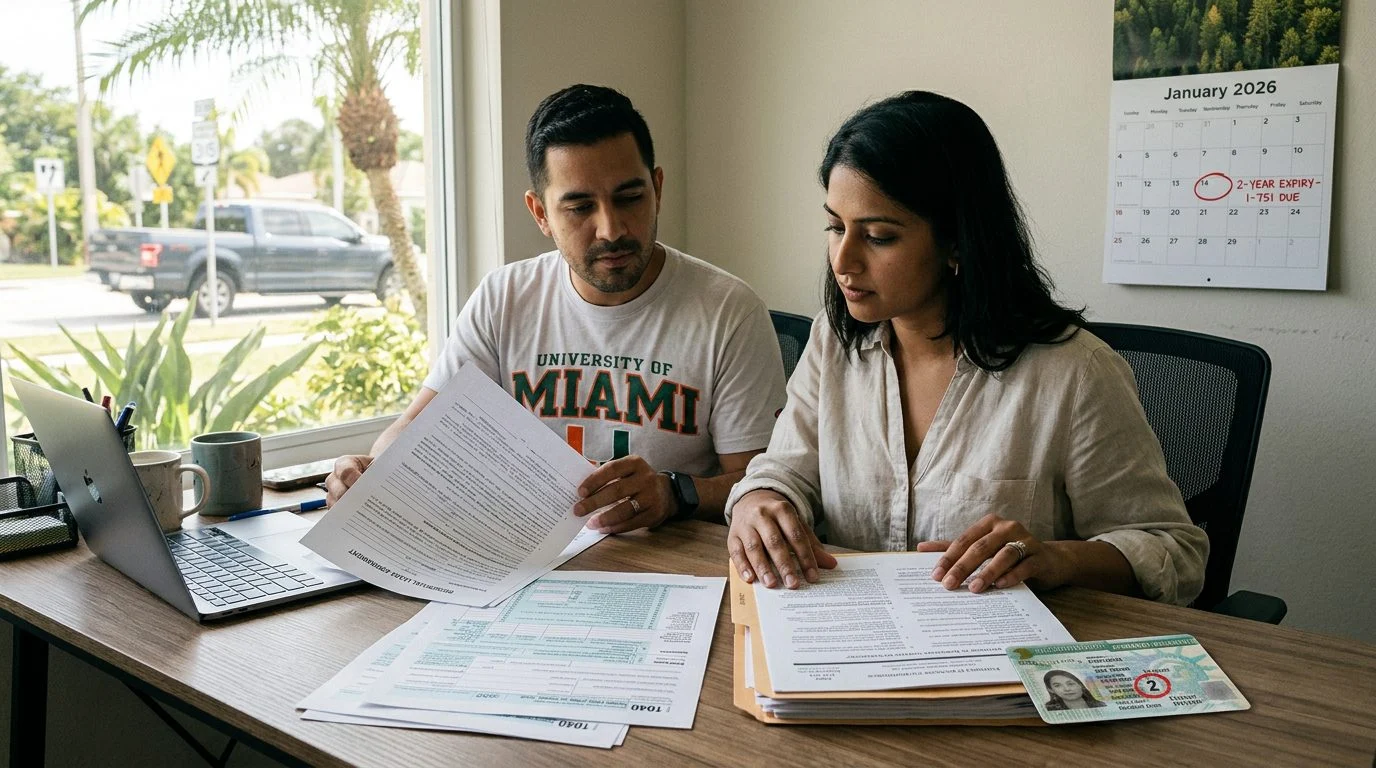
Interviews, appointments, and processing times
Each applicant for adjustment is interviewed by an immigration officer. Under 8 CFR 245.6, the interview can be waived in limited cases. Examples include a child under 14 or an applicant who is clearly ineligible.
Reported policy changes can affect interview scheduling and decision timing. Processing times also vary by office and case type. Keep the appointment notice in a safe place and calendar the date.
When USCIS asks for more evidence, answer by the date on the notice. Under 8 CFR 103.2, interim benefits are not granted based on a benefit request held in suspense for requested initial evidence, except that the applicant or beneficiary will normally be allowed to remain while a benefit request to extend or obtain status while in the United States is pending. USCIS may also take other action to seek removal while an application is pending.
Missing an interview or a response date can hurt a case quickly.
What to do now if you have a pending application
Keep organized records, update your address in writing, and track every notice date.
Keep copies of every form, receipt notice, and piece of evidence you submit. Write down each deadline as soon as a notice arrives.
Your address matters too. Under 8 U.S.C. 1305, each alien required to register must give written notice of a change of address within ten days of the change.
If an adjustment application is denied by the director, no appeal lies from that decision. Under 8 CFR 245.2, the applicant, if not an arriving alien, may renew the application in removal proceedings.
If a notice confuses you, ask about it before you respond. Don’t let an interview or deadline pass.
Frequently asked questions
Is there a new rule for green card holders in 2026?
Most 2026 reports describe agency policy, forms, and guidance. Check whether each item is a memo, a form change, or a final rule.
Can a green card holder still be deported?
Yes. A permanent resident can face removal proceedings if a ground listed in federal law applies.
Does public charge affect a green card application?
It can.
How fast must I report an address change?
Federal law requires written notice within ten days of the change.
Can I renew a denied adjustment application?
A non-arriving applicant may renew it in removal proceedings. There is no appeal from the director’s denial.
Not sure what your next step is?
Talk it through with our team — we can walk you through how a situation like yours is usually handled and what your options are.
Talk with the office about your green card case
You may be reading this because a relative’s adjustment case is pending. A notice may have arrived in the mail. You may fear removal even after getting your green card. You don’t have to sort through these rules alone.
AG Immigration Law P.A. focuses on removal defense, adjustment of status, family petitions, naturalization, removal of conditions on green cards, waivers, and BIA appeals. You can reach the office through the contact form, by calling, by WhatsApp, or by booking a paid consultation.
Consultations are paid, so confirm the fee with the office before you book.
Adriana Gomez is the responsible lawyer for this page.
How AG Immigration Law P.A. Can Help
Review of Your Paperwork
We look at your forms, notices and supporting documents to see how recent updates may affect your filing.
Support for Your Whole Family
Family petitions, green card applications and related filings often affect several people. We keep the full picture in view.
Protection in Removal Proceedings
If you face removal, our team focuses on defending your case in immigration court and on any appeal to the BIA.
Clear Communication
We explain each step in plain language so you know what is happening and what comes next.
Check the Source Before You Act
Online summaries of new rules can be incomplete or out of date. Confirm whether an update is a formal rule, a policy memo or a form change before you change your plans or respond to a notice.
Areas of Practice
Removal Defense
Representation in removal proceedings, including hearings in immigration court and the defense of your right to remain in the United States.
Adjustment of Status and Family Petitions
Help preparing green card applications inside the United States and petitions for spouses, children and other relatives.
Naturalization and Green Card Conditions
Support with citizenship applications and with removing conditions on a conditional green card.
Waivers and BIA Appeals
Assistance with waiver applications and with appeals before the Board of Immigration Appeals.