


BIA Appeals | Immigration Removal Defense
BIA Appeals: Know Your Next Steps After an Immigration Judge's Ruling
AG Immigration Law P.A. focuses on removal defense and appeals to the Board of Immigration Appeals. Get in touch to talk through your ruling and what comes next.
By Adriana Gomez · Published November 6, 2026
A BIA appeal asks the Board of Immigration Appeals to review a decision an immigration judge made. In most cases, the Notice of Appeal (Form EOIR-26) must reach the Board within 10 calendar days. That window is short, so it helps to understand it before you act.
If you’re dealing with the BIA appeals that families face after a hearing, this guide walks through the basics. You’ll see which decisions can be appealed, how the deadline works, and what happens after filing.
What Is a BIA Appeal?
A BIA appeal asks the Board to review what an immigration judge decided. The Board works within the Department of Justice, and its members are attorneys appointed by the Attorney General (8 C.F.R. § 1003.1). Think of it as a review of the decision, not a new trial.
The Board works mainly from the existing record. The immigration court creates and controls that record (8 C.F.R. § 1003.36). The Board does not do its own factfinding, except for commonly known facts and official documents (8 C.F.R. § 1003.1). 8 C.F.R. § 1003.1 reads: “(iv) Except for taking administrative notice of commonly known facts such as current events or the contents of official documents, the Board will not engage in factfinding in the course of deciding cases.”
If new evidence comes in with an appeal, the Board may treat it as a motion to remand. If the record lacks sufficient factual findings on eligibility for voluntary departure, the Board may remand the decision to the immigration judge for further factfinding (8 C.F.R. § 1003.1).
If an immigration judge just ruled against you, the short deadline for a BIA appeal may already be running, so reach out to AG Immigration Law P.A. to talk through your options. Talk it through with our team — we can walk you through how a situation like yours is usually handled and what your options are.
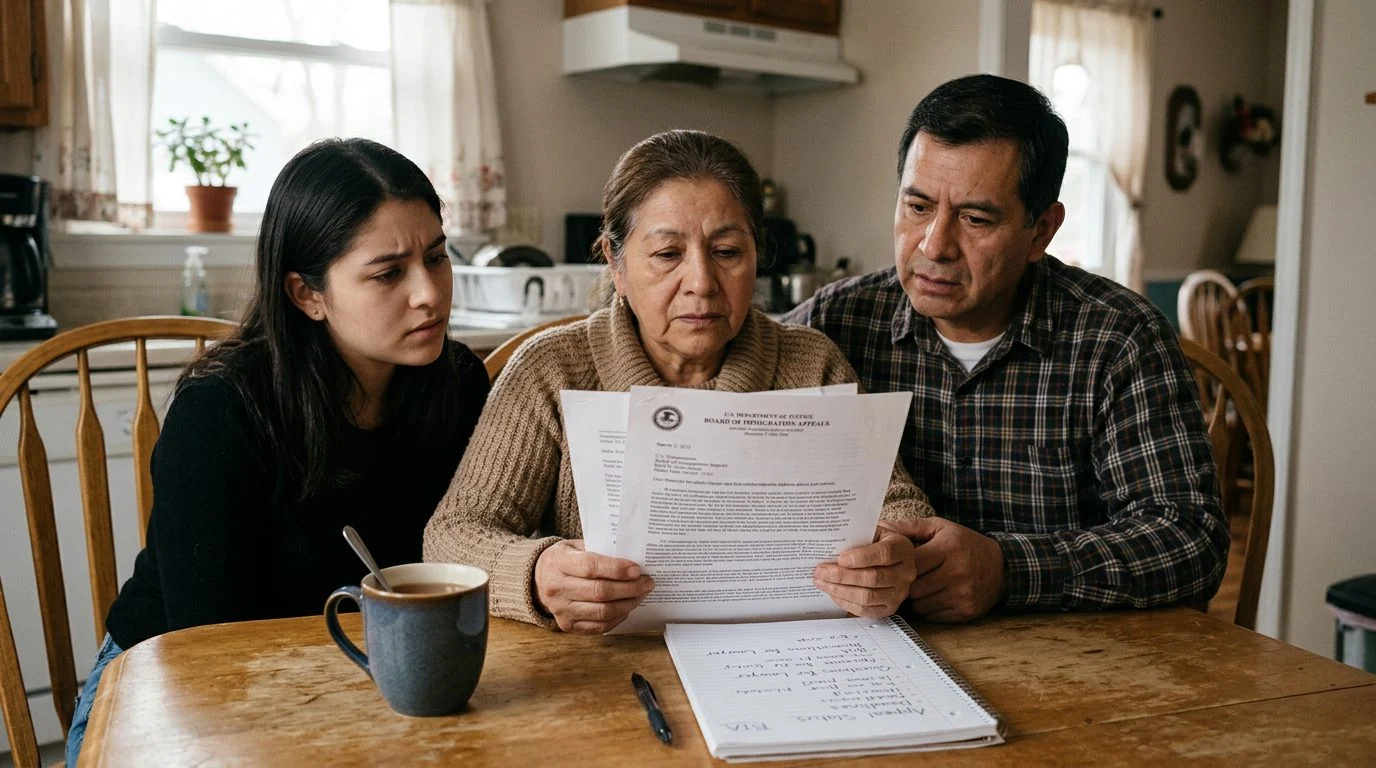
Which Immigration Court Decisions Can Be Appealed to the BIA?
Decisions of immigration judges may be appealed to the BIA (8 C.F.R. § 1003.38). A bond decision can be appealed too (8 C.F.R. § 1003.19).
Some orders cannot be appealed. No appeal lies from a removal order entered in absentia, which is an order issued when a person did not attend the hearing (8 C.F.R. § 1240.15).
A motion to reopen or reconsider is a different filing. A motion to reopen must state new facts, supported by affidavits or other evidence (8 C.F.R. § 1003.2).
Whether an appeal helps you depends on the facts of your case and the order you received.
The Deadline: Filing a Notice of Appeal Within 10 Days
The Notice of Appeal must generally be filed within 10 calendar days of the immigration judge’s decision (8 C.F.R. § 1003.38). Some people assume they have 30 days. That longer period applies only to certain asylum decisions (8 C.F.R. § 1003.38).
The clock starts on the date of an oral decision. For a written decision, it starts on the date of mailing or electronic notice. A deadline that lands on a weekend or legal holiday moves to the next business day (8 C.F.R. § 1003.38).
The filing date is the day the Board receives the Notice, not the day you send it (8 C.F.R. § 1003.38). Mailing it on the last day is not enough.
Your Notice also needs the fee or a fee waiver request, plus proof of service, all within the deadline (8 C.F.R. § 1003.3). Your reasons for appeal must appear in the Notice or its attachments. A Notice that leaves them out can lead to dismissal (8 C.F.R. § 1240.15). Any issue you leave out of the Notice is waived (8 C.F.R. § 1003.38).
How the BIA Appeals Process Works Step by Step
The process moves through filing, briefing, review, and decision. Each stage has its own timing rules.
Step one is filing. The Notice must come with the filing fee or an Appeal Fee Waiver Request (Form EOIR-26A) (8 C.F.R. § 1003.38). Step one is filing. Without the fee, or an Appeal Fee Waiver Request (Form EOIR-26A), filed within the specified time period, the appeal is not deemed properly filed, and the decision becomes final to the same extent as though no appeal had been taken.
The briefing schedule. For appeals of orders by an Immigration Judge in which no transcript is warranted, briefs are due simultaneously from both parties within 20 days of the Board order setting the schedule and in no case more than 35 days after the appeal was filed (8 C.F.R. § 1003.3). Briefs are due within 20 days of the Board’s scheduling order, and no more than 35 days after filing (8 C.F.R. § 1003.3). When a transcript is needed, the 20 days run from when it becomes available.
The Board does not accept a reply brief unless it invites one. Workload and travel plans do not count as exceptional circumstances for an extension (8 C.F.R. § 1003.3).
Review. For all appeals not summarily dismissed, the record is forwarded to the Board as promptly as possible upon receipt of the appeal (8 C.F.R. § 1003.5). Under the rules, a single Board member assigned under the case management system determines an appeal on the merits unless the case is appropriate for review by a three-member panel, and cases may only be assigned for panel review if they present one of the circumstances listed in the rules (8 C.F.R. § 1003.1).
The decision. Where a single Board member determines that a decision is not appropriate for affirmance without opinion, the Board member issues a brief order affirming, modifying, or remanding the decision under review, unless the Board member designates the case for decision by a three-member panel (8 C.F.R. § 1003.1).
Writing the Brief and Working With the Record in a Miami Case
A strong brief names the exact findings or legal conclusions you challenge. The statement of reasons must identify them (8 C.F.R. § 1003.3). For a factual dispute, the statement of reasons in the Notice of Appeal must identify the specific facts contested.
For discretionary relief, you must state whether the error concerns eligibility under the statute or the judge’s exercise of discretion (8 C.F.R. § 1003.3).
Read the hearing transcript and the record closely before you frame arguments. The record is the basis for the Board’s review; if the record does not contain sufficient factual findings regarding eligibility for voluntary departure, the Board may remand the decision to the immigration judge for further factfinding (8 C.F.R. § 1003.1).
Foreign-language documents need an English translation and a translator’s certification (8 C.F.R. § 1003.33). The translator’s certification must include a statement that the translator is competent to translate the document, and that the translation is true and accurate to the best of the translator’s abilities (8 C.F.R. § 1003.33).
Possible Outcomes, Including Summary Dismissal
The Board member to whom a case is assigned shall affirm the decision of the DHS officer or the immigration judge without opinion if the Board member determines that the result reached in the decision under review was correct, that any errors were harmless or nonmaterial, and that the factual and legal issues raised on appeal are not so substantial that the case warrants the issuance of a written opinion in the case (8 C.F.R. § 1003.1). Each result leads to a different next step.
Affirming means the immigration judge’s decision stands. Modifying means the Board changes part of it. Remanding sends the case back to the immigration judge, or to DHS where appropriate, for further factfinding.
Which result applies turns on the record, the issues raised in the Notice and brief, and the law that governs the case.
After the Board rules, a motion to reopen is one route forward. It requires new facts and supporting evidence, and generally only one motion to reopen removal proceedings may be filed, no later than 90 days after the final administrative decision (8 C.F.R. § 1003.2). If no appeal is taken, the decision becomes final upon waiver of appeal or upon expiration of the time to appeal, whichever occurs first, unless it is certified to the Board (8 C.F.R. § 1003.39).
Not sure what your next step is?
Talk it through with our team — we can walk you through how a situation like yours is usually handled and what your options are.
Why Acting Early Matters for Miami Readers
Acting early matters because the deadline is short and runs from the decision date. Start gathering documents right away.
Within five working days of any address change, you must send written notice on Form EOIR-33 (8 C.F.R. § 1003.38). The court does not send a written copy of the decision to an alien who has failed to provide a written record of an address (8 C.F.R. § 1003.37).
Gather these items first: the written order or the memorandum summarizing an oral decision, your hearing notice, the transcript if you have it, your current address, and any prior filings.
Missing the deadline can end the appeal for that decision, because the decision becomes final (8 C.F.R. § 1003.39).

Speak With AG Immigration Law P.A. About Your Appeal
AG Immigration Law P.A. focuses on removal defense and related immigration matters. That work includes BIA appeals, adjustment of status, family petitions, naturalization, removal of conditions on green cards, and waivers.
Adriana Gomez is the lawyer responsible for this page. Our lawyers and support staff handle BIA appeals within this practice. Our team works with immigrants across the United States. Contact our office to discuss your situation and to ask about consultations.
Frequently Asked Questions
How long do I have to appeal to the BIA?
In most cases, you have 10 calendar days from the immigration judge’s decision. Asylum decisions where the immigration judge did not deny the application under 208(a)(2)(A), (B), or (C) of the Act have a 30-day period (8 C.F.R. § 1003.38).
Can I appeal an in absentia removal order?
No. No appeal lies from a removal order entered in absentia (8 C.F.R. § 1240.15).
Do foreign-language documents need a translation?
Yes. They need an English translation and a translator’s certification (8 C.F.R. § 1003.33).
Can I appeal a bond decision?
Yes. A bond decision by an immigration judge can be appealed to the Board (8 C.F.R. § 1003.19).
If an immigration judge ruled against you, don’t wait on the clock. Reach out through our contact form, call the office, or message us on WhatsApp to set up a paid consultation.
Why Bring Your BIA Appeal to Our Team
Focused practice
Our practice focuses on removal defense, adjustment of status, family petitions, naturalization, waivers and BIA appeals.
Support staff who keep your file moving
Our assistants and office staff help organize your records, track your case and keep communication clear.
Several ways to reach us
Fill out our contact form, call the office or message us on WhatsApp to get started.
Clear guidance on each step
We explain your options in plain language so you understand what the ruling means for your case.
Do Not Wait to Act
Appeal deadlines are strict, and missing one can limit the options available to you. If you have received a decision from an immigration judge, contact us right away.
Steps After an Immigration Judge's Ruling
1. Review the decision
Read the ruling carefully and note the relief that was granted or denied, along with any reasons given.
2. Decide whether to appeal
Weigh your options with your legal team, including whether an appeal to the BIA fits your situation.
3. File the notice of appeal
Prepare and submit the required paperwork accurately so your appeal is properly before the Board.
4. Follow the briefing process
Support the appeal with written arguments and the record needed for the Board to review your case.