

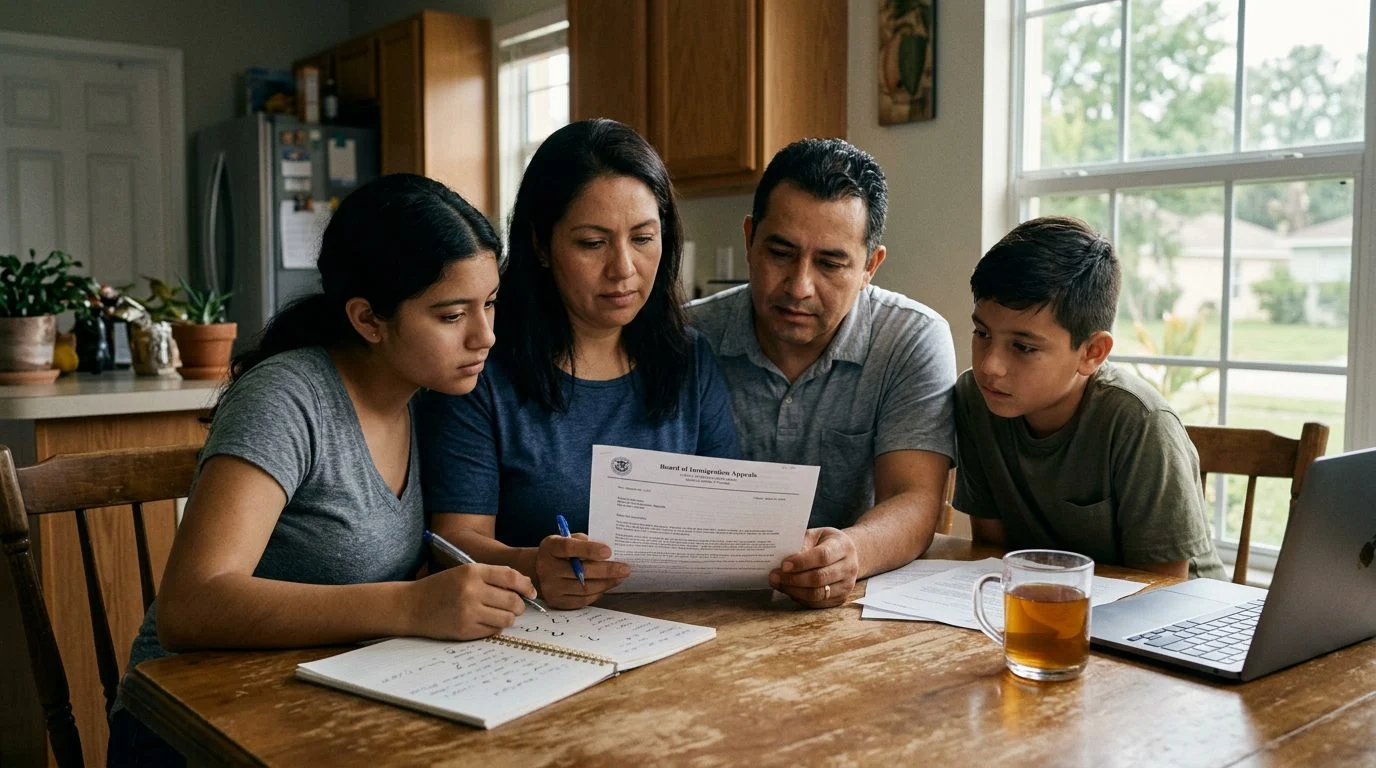
BIA Appeals · Orlando, Florida
Time-Sensitive BIA Appeals in Orlando: Act Early, Plan Carefully
AG Immigration Law P.A. focuses on removal defense and Board of Immigration Appeals (BIA) appeals for immigrants in Orlando and across Florida. Contact our team to discuss your decision and your next steps.
By Adriana Gomez · Published November 7, 2026
BIA appeals in Orlando start with a short deadline. A Notice of Appeal (Form EOIR-26) generally must reach the Board of Immigration Appeals within 10 calendar days of the immigration judge’s decision. Miss that window, and the appeal may not be properly filed.
This guide covers what you need to know about BIA appeals Orlando cases, from the deadline to what happens after filing. It also covers the Board’s possible decisions and the options that may remain after a denial. AG Immigration Law P.A. focuses on removal defense and BIA appeals. This page is written for people who just received a hard ruling.
What the Board of Immigration Appeals Reviews in Orlando Cases
The Board is part of the Department of Justice and works under the Executive Office for Immigration Review (EOIR). 8 CFR 1003.1 sets out its structure and powers.
The Board does not find facts. It works from the record the immigration judge built. If a party says the Board needs more fact-finding, that party must file a motion for remand. New evidence submitted on appeal may be treated as a motion to remand too.
That makes the hearing record central. Ask for the full record early, and keep every notice, exhibit, and order you received.
One limit matters from the start. No appeal lies from an order of removal entered in absentia, under 8 CFR 1240.15.
Talk it through with our team — we can walk you through how a situation like yours is usually handled and what your options are.

The 10-Day Deadline to File a Notice of Appeal
The Notice of Appeal (Form EOIR-26) generally must be filed directly with the Board within 10 calendar days of the immigration judge’s decision. Most readers have this clock running right now.
Timing questions in an appeal depend on the facts of each case. For an oral decision, it starts when the judge states it. For a written decision, it starts on mailing or electronic notification. If the last day falls on a Saturday, Sunday, or legal holiday, it moves to the next business day. See 8 CFR 1003.38.
There is one longer window. The 30-day period applies only when the judge decided an asylum application and did not deny it under section 208(a)(2)(A), (B), or (C) of the Act. Check which kind of case you have before you count days.
Timing is not the only test. The Notice of Appeal must be accompanied by the appropriate fee or an Appeal Fee Waiver Request, and it must be filed with the Board within the deadline. 8 CFR 1003.3 says an appeal is not properly filed without all of these.
How the Appeal Moves After the Notice Is Filed
After the Board takes the appeal, it sets a briefing schedule. Both sides then file briefs under that schedule, including the Department of Homeland Security (DHS).
For appeals with no transcript, briefs are due within 20 days of the Board’s order setting the schedule. They are never due more than 35 days after the appeal was filed. When a transcript is needed, the 20 days run from when the transcript is made available. 8 CFR 1003.3 sets these timing rules.
Extensions are rare. The Board grants them only in exceptional circumstances, and even then as a matter of discretion; workload or travel plans within the control of either party or their representatives don’t count. The Board won’t accept a reply brief unless it invites or orders one.
The Notice of Appeal matters a lot. It must state the reasons for the appeal and identify the findings or conclusions you challenge. Issues left out are deemed waived under 8 CFR 1003.38. Failing to state reasons can also be a ground for dismissal, under 8 CFR 1240.15.
Possible Board Decisions: Sustain, Dismiss, or Remand
The Board can sustain the appeal, dismiss it, or remand the case. Each appeal depends on its own record and the issues raised in it. Dismissing means the judge’s decision stays in place.
Remand sends the case back for more fact-finding. The Board may send it to the immigration judge or, where appropriate, to DHS, as allowed by 8 CFR 1003.1.
Whether the Board sustains, dismisses, or remands depends on the facts: the record, the errors raised, and the relief requested. No one can promise how the Board will rule. An honest review starts with the decision in hand.
Some appeals end early because the paperwork falls short. Missing reasons or missing filings can cut off an appeal before the Board reaches the merits.
What If the Board Denies the Appeal?
A Board denial is not always the end, but the next deadlines are short and strict.
A petition for review goes to a federal court of appeals. For a case completed in Orlando, that is the U.S. Court of Appeals for the Eleventh Circuit, which posts its published opinions online. The petition must be filed not later than 30 days after the final order of removal, under 8 U.S.C. 1252.
The petitioner’s brief is due 40 days after the administrative record is available. The court may extend that deadline only on motion for good cause.
A motion to reopen is a separate tool. The Board can still deny even a motion that makes a prima facie case. See 8 CFR 1003.2.
Don’t wait weeks after a denial to act.
The Same Federal Appeal Rules Apply in Houston, San Antonio, and New York City
Appeal procedures can vary depending on the facts and posture of each case. Readers in Houston, San Antonio, and New York City face the same clocks, the same forms, and the same Board process.
Mail timing matters. A written decision counts as served once it is mailed, under 8 CFR 1240.13. The 10 days can start before the envelope reaches you, so keep it and note the date.
Address changes matter too. You must give written notice of any change of address on Form EOIR-33 within five working days, under 8 CFR 1003.38. Notices sent to an old address can leave you unaware of a deadline.
Keep copies of every filing and proof of mailing. They help confirm dates if questions come up later.
Not sure what your next step is?
Talk it through with our team — we can walk you through how a situation like yours is usually handled and what your options are.
How AG Immigration Law P.A. Assists Clients Across Florida
AG Immigration Law P.A. focuses on removal defense and BIA appeals for immigrants in Florida, Texas, and New York. Its work also covers adjustment of status, family petitions, naturalization, removal of conditions on green cards, and waivers.
Adriana Gomez is the lawyer responsible for this page. Our team, which includes assistants and office staff, can help you organize the decision, track the deadline, and gather the hearing record.
Our team’s support covers the notice, the briefing, and any petition for review or motion that follows. A removal case can move quickly, so the first conversation matters. Bring your questions about BIA appeals Orlando matters early, while the dates are still open.

Contact the Office About Your Orlando BIA Appeal
If an immigration judge has ruled against you, the 10-day clock may already be running. Bring the decision, the hearing notices, and any mail about the case so the dates can be checked quickly.
Consultations are paid. Ask about the consultation fee when you reach out.
Frequently Asked Questions
How long do I have to file a BIA appeal in Orlando?
Generally 10 calendar days from the immigration judge’s decision. Under 8 CFR 1003.1, the Board of Immigration Appeals hears appeals from decisions of Immigration Judges in removal proceedings, except that no appeal may seek review of the length of a period of voluntary departure granted by an Immigration Judge.
Can the BIA consider new evidence?
The Board doesn’t find facts. New evidence on appeal may be treated as a motion to remand.
How long after a BIA denial can I file a petition for review?
Generally no later than 30 days after the final order of removal.
If the judge has just ruled against you, reach out through the contact form, call the office, or message us on WhatsApp so we can check your deadline before it passes.
Why Prompt Action Matters on a BIA Appeal
Appeal Timing Is Strict
BIA appeal filings are governed by procedural rules, so waiting to review a decision can limit the options available to you.
The Record Shapes the Appeal
Your decision, hearing transcript and evidence all matter. Organizing them early helps build a clear, accurate appeal.
Careful Legal Review
Our team reviews the immigration judge's decision for legal errors and considers how the appeal fits your broader case.
Support for Your Family
Removal proceedings affect whole families. We explain each step in plain language so you know what to expect.
Do Not Wait to Get Advice
Procedural requirements for BIA appeals are technical, and delays can narrow your options.
Next Steps After an Immigration Judge's Decision
1. Gather Your Documents
Bring your Notice of Decision, charging documents, hearing records and any notices you received from the court.
2. Schedule a Consultation
Book a paid consultation so our team can review your case, explain the appeal process and outline possible options.
3. Prepare the Appeal
We prepare the notice of appeal and supporting brief, identifying the legal issues that matter most in your case.
4. Follow Through
We track filings, respond to Board requests and keep you informed at every stage of the appeal.