

Asylum Referral Defense | Miami-Dade
Received an Asylum Referral? Get Organized Defense in Miami-Dade
AG Immigration Law P.A. focuses on removal defense, including asylum claims that arise after a referral to immigration court. Reach out to discuss your situation with responsible attorney Adriana Gomez.
By Adriana Gomez · Published November 1, 2026
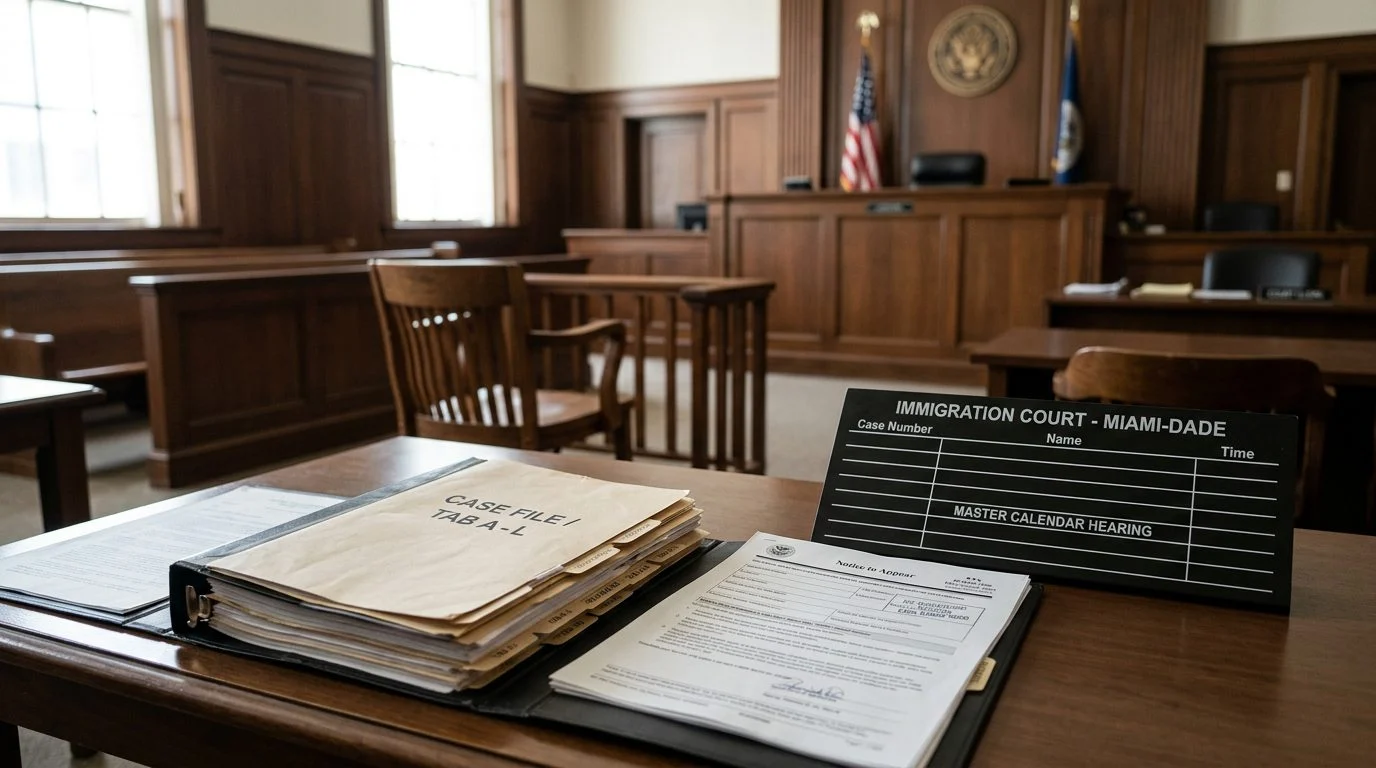
Asylum referral defense in Miami-Dade means a lawyer represents you after your asylum case moves into immigration court. A judge then decides the case in removal proceedings, not at the asylum office. This page explains what that move means, what hearing representation covers, and what to prepare. It is written for the person who received the notice and for family members helping them.
What an asylum referral means and who this page is for
An asylum referral means your case now goes to immigration court. The court, not the asylum office, decides it in removal proceedings. Under 8 C.F.R. § 1239.1, every removal proceeding under section 240 of the Act starts when a notice to appear is filed with the immigration court.
This page is for three kinds of readers. You may have the notice in your hands. You may be a family member who wants to understand the next steps. Or you may be gathering facts for someone else before a lawyer reviews the file.
This page covers removal defense only. It explains the court process and what hearing representation includes. Each case turns on its own facts and evidence, so no page can say how yours will end.
If a court notice has you worried about the next date, you don't have to sort it out alone. Our team can talk through your referral with you. Talk it through with our team — we can walk you through how a situation like yours is usually handled and what your options are.

How non-detained cases work in Miami-Dade immigration court
A non-detained case means you are not held in custody while the case moves forward. You live in the community, and the court sets your hearing dates. Keeping up with those dates is your job, and it matters a great deal.
Missing a hearing can end your case. Under 8 C.F.R. § 1208.10, failure to appear without prior authorization may result in dismissal of the application and an order of removal in absentia. 8 C.F.R. § 1208.10 reads: “Failure to comply with processing requirements for biometrics and other biographical information within the time allowed will result in dismissal of the application, unless the applicant demonstrates that such failure was the result of good cause.”
Under 8 U.S.C. § 1229a, a person who does not attend a removal proceeding after written notice was given to them or their lawyer of record shall be ordered removed in absentia if the government establishes by clear, unequivocal, and convincing evidence that the written notice was provided and that the person is removable. If a final order of removal is entered against you in absentia, and you were given oral notice in your language or one you understand of the time, place, and consequences of failing to attend, you shall not be eligible for certain relief for 10 years after the date of that order, unless you failed to attend because of exceptional circumstances.
Address changes matter too. Under 8 U.S.C. § 1305, each alien required to be registered under this subchapter who is within the United States must notify the government in writing of each change of address within ten days. Keep a copy of what you send.
What hearing representation covers in immigration court
Asylum referral defense in Miami-Dade covers the court work your lawyer does on your behalf. A lawyer who enters an appearance using Form EOIR-28 becomes the practitioner of record. Under 8 C.F.R. § 1003.17, that lawyer must appear in court for you, file documents, and accept service of court papers.
Representation includes these steps:
- Filing the Form EOIR-28 appearance with the court and reviewing your notice to appear.
- Preparing your response at the first hearing. Under 8 C.F.R. § 1240.10, the judge asks whether you admit or deny the factual allegations and removability.
- Preparing and filing your asylum application with supporting documents.
- Attending each scheduled hearing.
- Requesting more time or a new date when the facts support it. Under 8 C.F.R. § 1240.6, after the hearing has begun, a judge may grant a reasonable adjournment either on the judge’s own instance or, for good cause shown, upon application by you or DHS. Under 8 C.F.R. § 1240.6, no adjournment may be authorized that causes the adjudication of an asylum application to exceed 180 days, absent exceptional circumstances.
Related matters can come up in the same case, such as waivers and BIA appeals. Those are matters this practice handles. If a matter may need another lawyer or firm, we tell you so.
How the process works, from notice to decision
The process moves in steps, and the court controls the schedule. Timing varies by court docket, so treat the steps below as a guide, not a calendar.
- Review the notice. Check the charges, the court, and the first hearing date.
- Build the asylum application. Gather evidence and confirm every filing deadline.
- Prepare the declaration. Review your written account and practice your testimony in a language you understand.
- Attend each hearing. Respond to government counsel and track every date the court sets.
- Receive the decision. When a person who was admitted to the United States is charged as deportable, the government must establish deportability by clear and convincing evidence, and the judge’s decision on deportability must rest on reasonable, substantial, and probative evidence; otherwise the person carries the burden: an applicant for admission must show that he or she is clearly and beyond doubt entitled to be admitted and is not inadmissible under section 1182, or the person must show by clear and convincing evidence that he or she is lawfully present in the United States pursuant to a prior admission. The judge must tell you of your right to appeal.
Appeals have a short clock.
What the asylum declaration and evidence must show
Your declaration is your written account of the persecution or fear you face. You prepare it with your lawyer, review every line, and sign it before filing. Under 8 C.F.R. § 1208.13, the burden of proof is on you to establish that you are a refugee. Your testimony, if credible, may be enough without other proof.
Judges can ask for more. Under 8 U.S.C. § 1158, if the judge asks for corroborating evidence, you must provide it. The exception is when you do not have it and cannot reasonably obtain it.
Common evidence includes identity documents, country condition reports, police or medical records, and witness statements. Your testimony may be sufficient to sustain your burden without corroboration, but only if it is credible, is persuasive, and refers to specific facts sufficient to demonstrate that you are a refugee. We check them against each other before the hearing.
Asylum seekers also face a yearly government fee. Under 8 U.S.C. § 1808, the annual asylum fee applies for each calendar year an application stays pending. For fiscal year 2025, the amount is the greater of $100 or an amount set by rule.
Why work with AG Immigration Law P.A.
AG Immigration Law P.A. focuses on removal defense. We also handle adjustment of status, family petitions, naturalization, removal of conditions on green cards, waivers, and BIA appeals.
Adriana Gomez is the lawyer responsible for this page. Our lawyers handle the court work. Our support staff handle scheduling and document intake, so each date and document has a clear owner.
We keep every court date, filing deadline, and document request in one case file. This helps you see what is due and when. Some matters may need referral to another lawyer or firm. We tell you if that happens.
Not sure what your next step is?
Talk it through with our team — we can walk you through how a situation like yours is usually handled and what your options are.
Common questions about asylum in Miami immigration court
Does an asylum applicant pay the annual fee?
Yes, the annual asylum fee applies each calendar year an application stays pending. Federal law says this fee cannot be waived or reduced.
What happens if I miss my immigration court hearing?
Missing a hearing without prior authorization may lead to dismissal of your application. The court may also order removal in absentia.
How long do I have to appeal?
Talk with your lawyer right away about the deadline in your case.
Who decides my asylum case?
An immigration judge decides the case. The judge bases the decision only on evidence produced at the hearing.

Talking with our team about your referral
A court notice can feel urgent, especially when you are helping someone else. Bring the notice to appear, any earlier filings, your court dates, and any letters you received from the government. Consultations are paid, and we state the fee before any work begins.
Asylum referral defense in Miami-Dade starts with a clear look at your notice and your dates. If a referral has you worried about what comes next, you don’t have to work through it alone. Send us a message through our contact form, call the office, or message us on WhatsApp.
Why Clients Contact AG Immigration Law
Focused Immigration Practice
Our practice concentrates in removal defense and the related immigration matters that follow it, so your case is handled within a defined area of immigration law.
Clear Communication
Our team keeps you informed about the steps in your case and explains what to expect in plain language.
Several Ways to Reach Us
Call the office, fill out our contact form, or message us on WhatsApp to get started.
Careful Preparation
We review your documents and immigration history before any filing or court appearance so you are prepared at every stage.
Do Not Miss Your Court Hearing
Immigration court dates are set by the court, and missing one can have serious consequences for your case. Keep every notice you receive and contact our office as soon as possible.
How We Can Help With Your Case
Asylum Referral Defense
When an asylum application is referred to immigration court, we help you present your claim and respond to the government's position in removal proceedings.
Removal Defense
We represent clients in immigration court, prepare filings, and build the record needed to protect your position at each hearing.
Waivers and Related Relief
Where a waiver may be relevant to your case, we evaluate the available options and explain how they fit into your overall strategy.
BIA Appeals
If a decision in your case is appealed to the Board of Immigration Appeals, we prepare and file the appeal and keep you updated on its progress.
Talk With Our Team About Your Asylum Referral
Related practice areas
- Deportation Defense Attorney for Immigration Court: Removal Proceedings Explained