

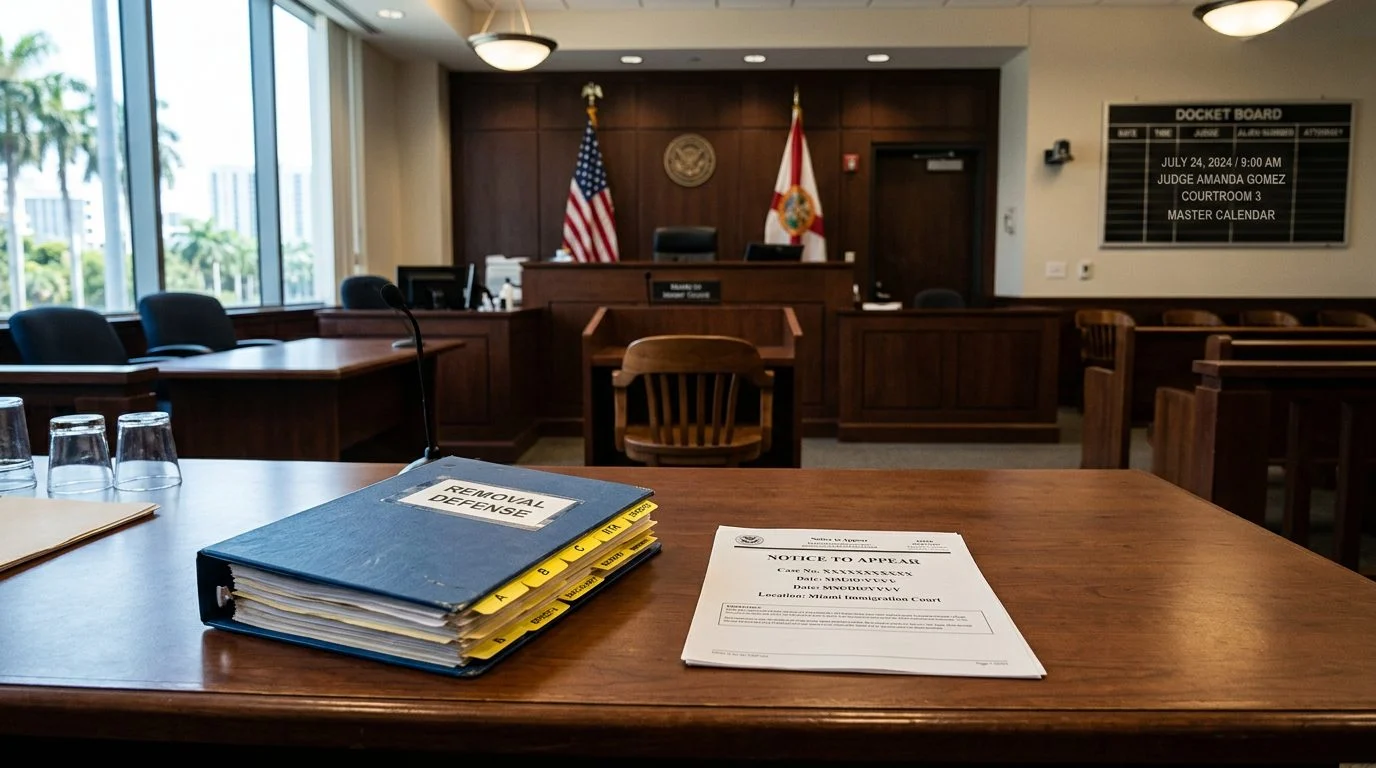
Removal Defense | AG Immigration Law P.A.
Is ICE Deporting Green Card Holders? Understand Your Options
A green card does not end every immigration question. Learn how removal proceedings work and where a lawyer can help you respond.
By Adriana Gomez · Published November 11, 2026
If you’re asking whether ICE is deporting people with permanent residency, the short answer is that it can happen. A green card holder can be placed in removal proceedings when the government alleges a ground the law makes deportable.
That doesn’t mean removal is certain. The grounds, the records, and the timing decide what happens next. This guide explains the main risks in plain words, the deadlines that catch people off guard, and the rights you keep.
Yes, Green Card Holders Can Face Removal Proceedings
A green card gives you lawful permanent resident status, but it does not shield you from removal. Yes, a permanent resident can face removal proceedings.
Being detained is not the same as being ordered removed.
Removal is decided in immigration court. In proceedings under 8 U.S.C. § 1229a, the Service has the burden of establishing by clear and convincing evidence that an admitted alien is deportable. See 8 U.S.C. § 1229a. If the judge orders removal, the judge must explain the right to appeal.
If a notice arrived or someone you love was detained, our team can talk through the facts of your case with you, so you don't face it alone. Talk it through with our team — we can walk you through how a situation like yours is usually handled and what your options are.

Common Legal Grounds for Deportation of Permanent Residents
The grounds for deportability are listed in 8 U.S.C. § 1227. They fall into a few groups. These include certain criminal convictions, certain domestic violence and protection-order findings, and some problems with how status was obtained.
At the start of a case, the government can charge any applicable ground of deportability under section 1227(a). It can also charge grounds of inadmissibility under section 1182(a). The charging rule appears in 8 U.S.C. § 1229a.
The grounds are technical. The same event can fall under different labels, and the label can change the result. For the full list, read our grounds for deportability guide.
Criminal Convictions That Can Put a Green Card at Risk
A criminal conviction can make a green card holder deportable, even when the case seemed minor at the time. The statute lists these categories in 8 U.S.C. § 1227:
- A conviction for a crime involving moral turpitude that was committed within five years after the date of admission, where the crime is one for which a sentence of one year or longer may be imposed. The period is 10 years for some people who got status under section 1255(j).
- Two or more crimes involving moral turpitude that do not come from a single scheme of criminal misconduct.
- A controlled substance offense, other than a single offense of possessing 30 grams or less of marijuana for one’s own use.
- A crime of domestic violence, stalking, or child abuse, neglect, or abandonment. Violating the violence-related part of a protection order also counts, but only if the court determines that the alien engaged in that conduct.
Immigration law uses its own labels. A charge that sounds minor in everyday words can still fall under one of them.
Aggravated felony is a separate term, defined in 8 U.S.C. § 1101. Its list is long. It includes an offense relating to a failure to appear before a court pursuant to a court order to answer to or dispose of a charge of a felony for which a sentence of 2 years’ imprisonment or more may be imposed. An aggravated felony conviction also bars cancellation of removal for a permanent resident, under 8 U.S.C. § 1229b.
Criminal and immigration outcomes are connected. Talk with a lawyer about any arrest or charge before you make decisions in criminal court.
Travel Abroad and Questions at the Border
Travel can create legal questions for a permanent resident. When a removal case starts, the government can charge grounds of inadmissibility, not only deportability. The charging rule is in 8 U.S.C. § 1229a.
Your travel history can come up in a removal case. Before a trip, talk through your travel plans with a lawyer. Keep records of your ties to the United States, such as tax returns, lease or property papers, and proof of work.
For more on the process, see our removal defense page.
Conditional Green Cards Based on Marriage: A Special Deportation Risk
The deadline is strict. If the marriage ended or the spouse refuses to join, the conditional resident may apply for a waiver of the joint filing requirement. See 8 C.F.R. § 216.4. If the marriage ended or the spouse refuses to join, the conditional resident may apply for a waiver of the joint filing requirement. See 8 C.F.R. § 216.4. See 8 C.F.R. § 216.4.
A late filing is possible only if the person shows good cause in writing, and the director must be satisfied with it.
A reminder from the government is not a safety net. Under 8 C.F.R. § 216.2, a failure to send the notice does not excuse filing late.
Mark the 90-day window on your calendar early. Start gathering the joint documents well before it opens.
Fraud and Other Problems in How Status Was Obtained
Fraud in getting a green card can lead to removal proceedings, even after conditions are removed.
Officers look at whether a marriage was entered to get a green card, and whether a fee was paid for the petition. A fee or other consideration paid to an attorney for assistance in preparing a lawful petition is excluded from the fee condition in 8 C.F.R. § 216.4. See 8 C.F.R. § 216.4.
In removal proceedings after a joint petition is denied, the Service has the burden of proof, by a preponderance of the evidence, to establish that the facts and information set forth by the petitioners are not true or that the petition was properly denied. That rule is in 8 C.F.R. § 216.4(d)(2).
Accuracy on every form matters, because the government can review your record later.
Not sure what your next step is?
Talk it through with our team — we can walk you through how a situation like yours is usually handled and what your options are.
Due Process Rights of Permanent Residents When ICE Detains Them
The notice to appear must state the nature of the proceedings, the legal authority, the acts alleged, the charges and statutes alleged, and other required items such as the time and place of the proceedings. See 8 U.S.C. § 1229.
At the hearing, you have a reasonable chance to examine the evidence and present your own. You may also cross-examine government witnesses. These rights come from 8 U.S.C. § 1229a.
The first hearing date cannot be scheduled earlier than 10 days after the notice to appear is served, unless you request an earlier hearing date in writing (8 U.S.C. § 1229(b)(1)). That time gives you the opportunity to secure counsel. You may be represented at the hearing by an attorney or other representative qualified under 8 CFR part 1292, under 8 C.F.R. § 1240.3.
Families searching for someone in custody can use the ICE Online Detainee Locator System, the official ICE tool for locating people in ICE detention. Before you sign any papers, ask for time to speak with a lawyer.

Talk With AG Immigration Law About Your Situation
If a notice arrived or a family member was taken into detention, you may be facing fear and hard decisions at once. You don’t have to sort them out by yourself.
AG Immigration Law P.A. focuses on removal defense, adjustment of status, family petitions, naturalization, removal of conditions on green cards, waivers, and BIA appeals. It serves immigrants across the United States. Consultations are paid.
If you’re ready to talk through your facts, reach out through the contact form, by phone, or on WhatsApp.
Frequently Asked Questions
Can a green card holder be deported?
Yes, a green card holder can be placed in removal proceedings when the government alleges a ground the law makes deportable. An immigration judge decides whether removal is ordered.
Can ICE deport someone without a hearing?
In most cases, an immigration judge issues a removal order after a hearing at which the government must establish deportability by clear and convincing evidence. However, a person who misses a scheduled hearing may be ordered removed in absentia, and under 8 U.S.C. § 1228, the government may decide deportability for an aggravated felony conviction and issue a removal order outside a regular immigration court hearing for certain people, including those who were not lawfully admitted for permanent residence when the proceedings began.
What if a conditional green card holder does not file the petition to remove conditions within the 90-day period?
Late filing may be considered only if you submit a written request showing good cause and the director is satisfied with that showing. Under 8 C.F.R. § 216.4(a)(6), failure to properly file Form I-751 within the 90-day period immediately preceding the second anniversary of the date the individual obtained conditional permanent residence shall result in the automatic termination of the individual’s permanent residence status and the initiation of proceedings to remove the individual from the United States.
Can a family member find someone held by ICE?
Yes, the ICE Online Detainee Locator System can help locate people in ICE detention.
Why Readers Contact AG Immigration Law P.A.
Focused Practice
Our practice focuses on removal defense, adjustment of status, family petitions, naturalization, removal of conditions on green cards, waivers and BIA appeals.
Case-Specific Review
Every green card holder's history is different. We review your records, notices and immigration court documents before recommending a path forward.
Support From Our Team
Our team helps keep your case organized, from document gathering to scheduling and communication with our office.
Important Note
The information on this page is general and is not legal advice. Immigration outcomes depend on the facts of each case. Do not rely on this page alone when making decisions about a removal case or a green card.
How to Reach Our Office
Fill Out a Contact Form
Share a brief summary of your immigration situation and we will follow up with next steps.
Call the Office
Speak with our team directly about your green card, removal notice or pending application.
Message on WhatsApp
Send a message through WhatsApp to ask questions and arrange a time to talk with our office.
Book a Paid Consultation
Schedule a paid consultation to discuss your case in detail with the firm's lawyers.