

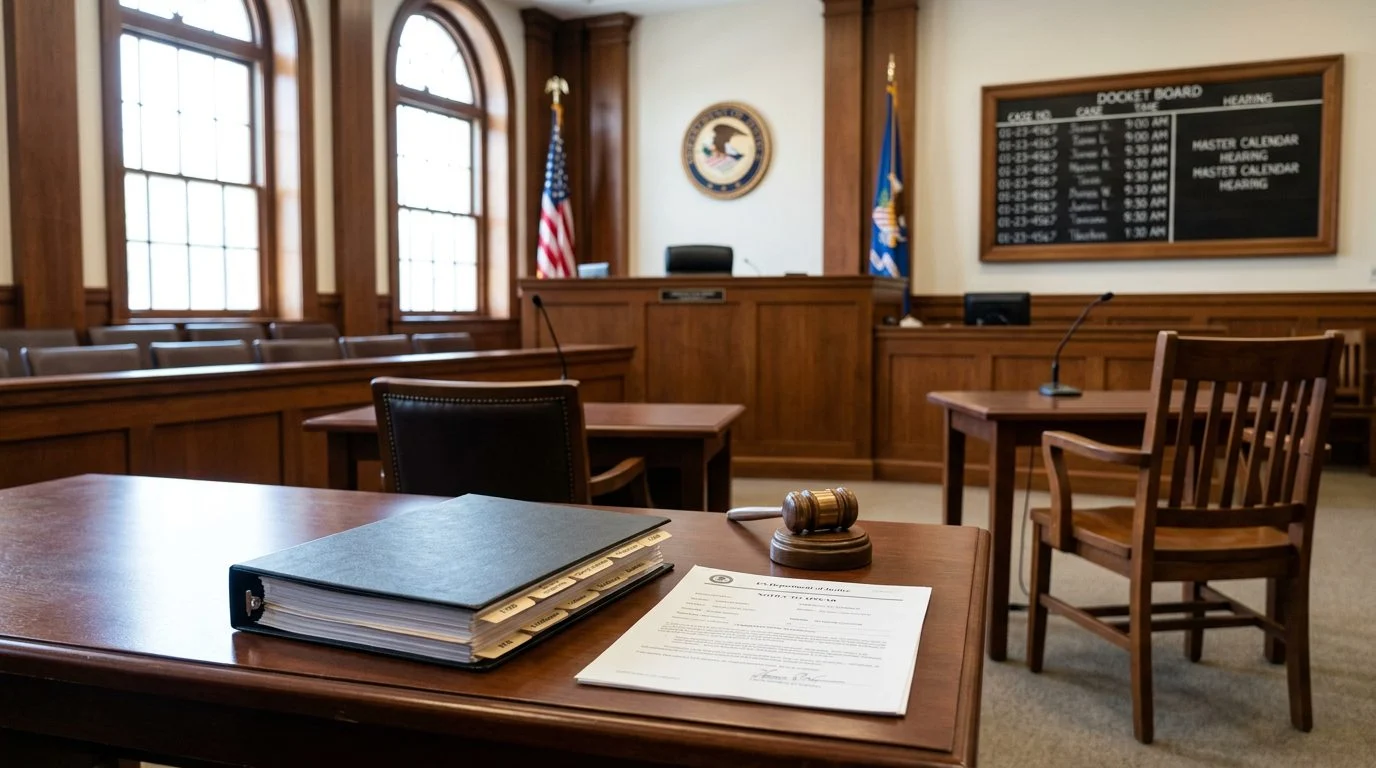
Removal Defense | Immigration Court
Get Your USCIS Asylum File Before Your Immigration Court Hearing
Understand what USCIS holds in your asylum record, how to request it, and how it can shape your removal defense. Contact our office to discuss your case.
By Adriana Gomez · Published November 3, 2026
Wondering how to get my USCIS asylum file before immigration court? Start with one fact. The immigration rules for FOIA sit in 6 CFR part 5, as 8 CFR 103.42 explains. Your USCIS file and the immigration court record are separate, though. You may need to review both before your hearing. This guide explains each one, who can ask for them, and why timing matters.
What Is the USCIS Asylum File and Why Review It Before a Non-Detained Hearing?
The USCIS asylum file is the official record of your asylum application. It sits with your other immigration records. Reviewing it before a non-detained hearing lets you compare your dates, answers, and documents with what the court has.
USCIS describes a record of proceeding as the organized, official material for any application, petition, or hearing before USCIS. USCIS Policy Manual, Volume 1, Part E, Chapter 2 states that a record of proceeding is typically contained within an Alien Registration File (A-File) or other agency file or electronic case management system, or a hybrid paper and electronic file. An A-File documents a person’s immigration history, so your asylum papers may sit inside it.
The immigration court keeps its own record. 8 CFR 1003.36 says the Immigration Court creates and controls the Record of Proceeding. 8 CFR 1240.9 says that record includes the testimony, exhibits, applications, and filed papers. It also says the hearing is recorded word for word, except for off-the-record statements the judge allows.
Why does this matter? A mismatch between the USCIS file and the court record is easier to explain before the hearing than during it. Reviewing both gives you time to prepare. For the wider process, see our removal defense page.
If your hearing date is near and you have never seen your asylum file, our team can talk through your options with you before you testify. Talk it through with our team — we can walk you through how a situation like yours is usually handled and what your options are.

Who Can Request the Asylum File and What Is FOIA?
The rules limit who else can get asylum information.
Asylum information gets extra protection. 8 CFR 208.6 says information about an asylum application shall not be disclosed without the applicant’s written consent. The rule has exceptions, including some proceedings under the immigration laws. So a family member who wants your file should expect to need your written consent.
Identity matters too. Under the USCIS Policy Manual’s guidance on identity verification, when adjudicating an immigration benefit request, USCIS reviews the evidence the requestor submits, including biographical and biometrics information, along with DHS systems, to verify identifying information. If the documents do not support the name you claim, an officer may ask for more evidence. Compare the name on your asylum application with your identity papers before you send anything.
How Do You Request Your Asylum File Through FOIA?
Send a signed request that gives your full legal name and asks for your asylum application file. Keep it specific, so the request matches the record you want.
Sign it yourself. According to the USCIS Policy Manual’s guidance on signatures, apart from very limited exceptions, the person seeking an immigration benefit must personally sign the benefit request, not an attorney or preparer, before it is filed with USCIS. It says attorneys generally may not sign for them. The same care applies to any USCIS form you sign in your case. For benefit requests, the signer certifies under penalty of perjury that the request and its evidence are true and correct.
Name the file. Identify the asylum application you filed, such as your Form I-589, and the papers you sent with it. Use the legal name that matches your identity documents, or your preferred name if state or local law confirms it.
Keep proof. Save a copy of everything you send, and note the date you sent it. You’ll want that record if the file does not match what you remember.
Timing Your Request Before Your Immigration Court Hearing
Start early. A records request takes time, and your hearing date may not move to fit it. Plan the timing around the schedule you already have.
Continuances have limits. 8 CFR 1003.29 lets an immigration judge grant a continuance for good cause. It also says a continuance may not cause the adjudication of an asylum application to exceed 180 days, absent exceptional circumstances. The judge decides whether good cause exists.
Work permits are a separate filing. If you plan to request one, 8 CFR 274a.13 provides that an alien requesting employment authorization may file such request concurrently with a related benefit request that, if granted, would form the basis for eligibility for employment authorization, only to the extent permitted by the form instructions or as announced by USCIS on its Web site. Under 8 CFR 274a.13, a concurrent filing is allowed only where the form instructions permit it or USCIS has announced it on its Web site.
The hearing record includes every paper filed in the case. Compare your USCIS file against it before you appear.
Frequently Asked Questions About the USCIS Asylum File
Can I get my asylum file if my case is already in immigration court?
The USCIS file and the court record are separate records, and 8 CFR 208.6 restricts disclosure of asylum information without written consent, subject to exceptions. The immigration court creates and controls its own Record of Proceeding.
Who must sign a USCIS benefit request?
A FOIA request for your asylum file is governed by its own rules in 6 CFR part 5, so do not rely on the USCIS Policy Manual signature guidance alone to decide who may sign it. Check the FOIA requirements, or ask our team, before anyone signs on your behalf.
Can my asylum information be shared with other agencies?
Sometimes. Disclosure generally needs your written consent, but 8 CFR 208.6 allows it in some proceedings, including proceedings under the immigration laws.
Should I wait for the FOIA response before my hearing?
The answer depends on the facts of your case and your hearing schedule. Plan early so the timing works for you.

Talk With Our Office About Your Asylum File Before Your Hearing
If your hearing is coming up and you have never seen your asylum file, that gap is worth closing now. Picture a non-detained respondent with a court date on the calendar, an asylum application filed some time ago, and no copy of the USCIS papers in hand. A file review is meant to close that gap before testimony begins.
Our team also handles adjustment of status, family petitions, naturalization, removal of conditions on green cards, waivers, and BIA appeals. Adriana Gomez is the lawyer responsible for this page.
You can reach our office through the contact form, by phone, or by WhatsApp. Consultations are paid. If your hearing is near, send us a message and we will talk through your timing and your file.
How We Support Your Removal Defense
Records Requests
We help you request your USCIS file so you can see the asylum record connected to your case.
Case Planning
Our team reviews what your file contains and how it fits with your immigration court strategy.
Careful Handling of Sensitive Information
We account for the rules that limit disclosure of asylum information and plan each step with that in mind.
Clear Communication
We explain each step in plain language and keep you informed as your case moves forward.
Do Not Assume Your Court File Has Everything
The USCIS file and the immigration court Record of Proceeding are separate records. Ask about your USCIS file early so you can review it before your hearing.
Steps to Get Ready
1. Gather Your Documents
Collect your immigration papers, notices, and any records you already have from your case.
2. Submit Your Request
We help prepare and submit the records request so the right file is requested in the right way.
3. Review the Contents
Once you receive the file, we review it with you to identify issues, gaps, and questions to address.
4. Plan Your Hearing
We use what we learn from the file to shape your removal defense before you appear in court.
Ready to Talk About Your Case? Reach Out to Our Office Today
Related practice areas
- Pleadings at First Immigration Court Hearing Explained