

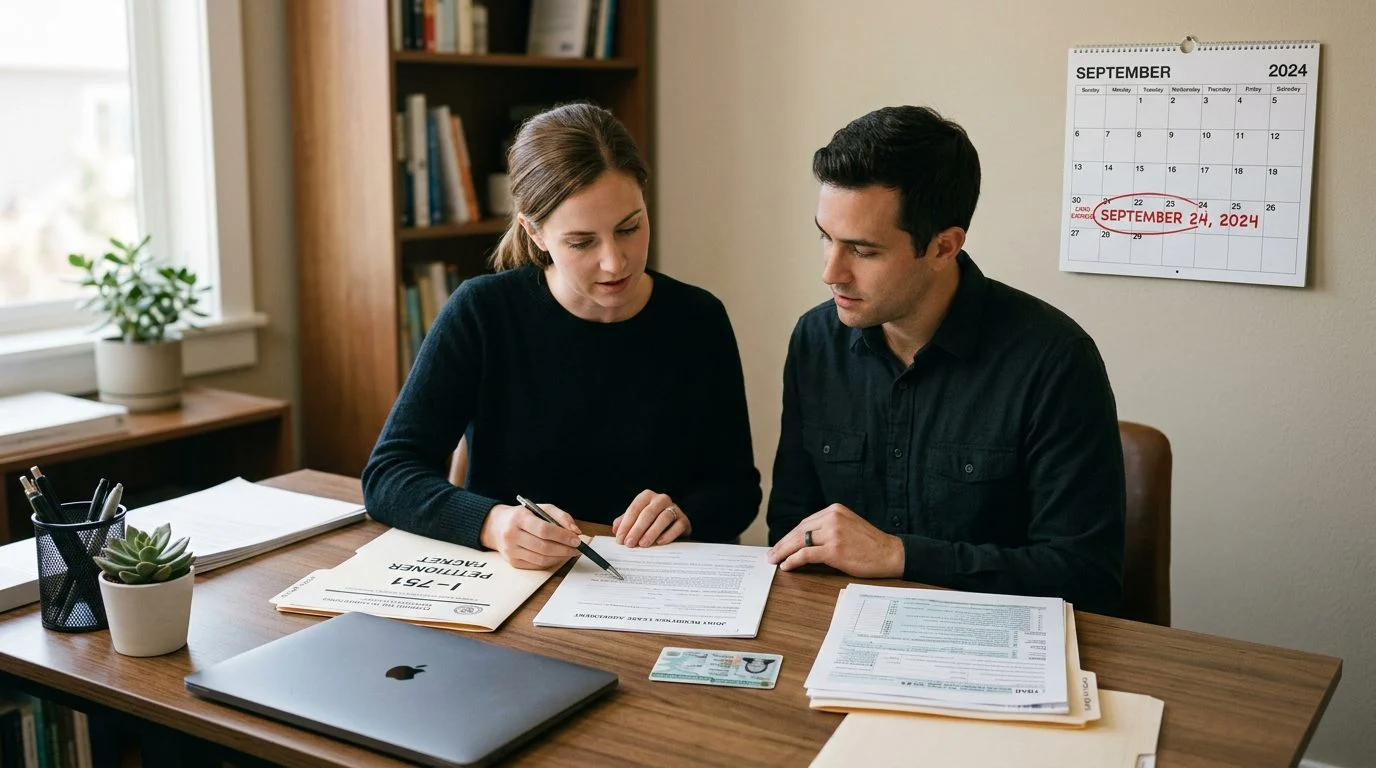
Immigration Law | Florida, Texas & New York
Prepare for Your Green Card Interview With Confidence
Learn the questions USCIS officers commonly ask applicants, and how a Miami-based immigration law practice approaches interview preparation for removal defense, adjustment of status and family petitions.
By Adriana Gomez · Published November 8, 2026
Green card interview questions USCIS asks are meant to check your application and your evidence. The officer reviews your adjustment of status case in person and asks about your background, your documents, and, in marriage cases, your relationship. This guide explains what to expect, who can be in the room, and what to bring.
What the Green Card Interview Is and Who It Is For
The green card interview is an in-person meeting with a USCIS officer about your adjustment of status application. Under 8 CFR 245.6, an adjustment of status applicant is generally interviewed by an immigration officer, but the interview may be waived for a child under the age of 14, for an applicant who is clearly ineligible under section 245(c) of the Act or 8 CFR 245.1, or when USCIS determines that an interview is unnecessary. [8 CFR 245.6]
Marriage-based, employment-based, and other family cases can all reach an interview. You don’t pick the date. The notice does. The USCIS Policy Manual on interviews says the interview lets USCIS verify information and decide eligibility for adjustment.
Read your receipt notice and any interview notice carefully. Act on every request listed in them. Treat the interview as a decision point, because the officer’s review of your answers and papers can shape the result.
If you have a USCIS interview notice and feel unsure what comes next, our team can talk through your questions and your timeline with you. Talk it through with our team — we can walk you through how a situation like yours is usually handled and what your options are.
Questions USCIS Officers Ask in Marriage-Based Interviews
Officers ask questions to see whether a marriage is genuine and whether your forms are accurate. The USCIS Policy Manual on spouses says officers should ask the same types of questions they would in any other spousal case. Expect questions in these areas:
- How you met, when you started dating, and the key events in your relationship.
- Your wedding, your proposal, and who attended.
- Your home: your address, who lives there, and who pays the rent.
- Daily routines: meals, driving, chores, and weekends.
- Money: joint bank accounts, bills, insurance, and tax filings.
- Family and plans: relatives, children, and the next few years.
Officers often ask the same point in different ways. Answer from what you personally know. Don’t memorize a script. Scripted answers can sound off when the officer changes the wording.
Who Can Attend the Interview, and When Spouses Are Questioned Separately
The applicant must attend. In family-based cases, USCIS generally requires the Form I-130 petitioner to attend with the main applicant. Derivative family members must also appear, regardless of filing category. The USCIS Policy Manual on interviews states these rules.
An attorney can appear for you. Under 8 CFR 292.4, the attorney must file an appearance on the proper form. The applicant must complete and sign that form for DHS to recognize the attorney.
An interpreter may help if you need one. An attorney of record cannot serve as the interpreter during the interview.
Officers may question spouses separately or together. The USCIS spouse guidance says USCIS may interview when, for example, facts are inconsistent or raise doubt about the marriage, or the evidence of a legally valid marriage is insufficient, and where both spouses are interviewed it may do so separately or together. Your answers may be compared with your spouse’s answers.
What to Bring: Document Checklist for the Interview
Your notice comes first. Bring what it lists. Compare any checklist you find online against your own notice before you pack.
- The original notice and every receipt notice, including the Form I-797.
- Passports and prior immigration documents the notice requests.
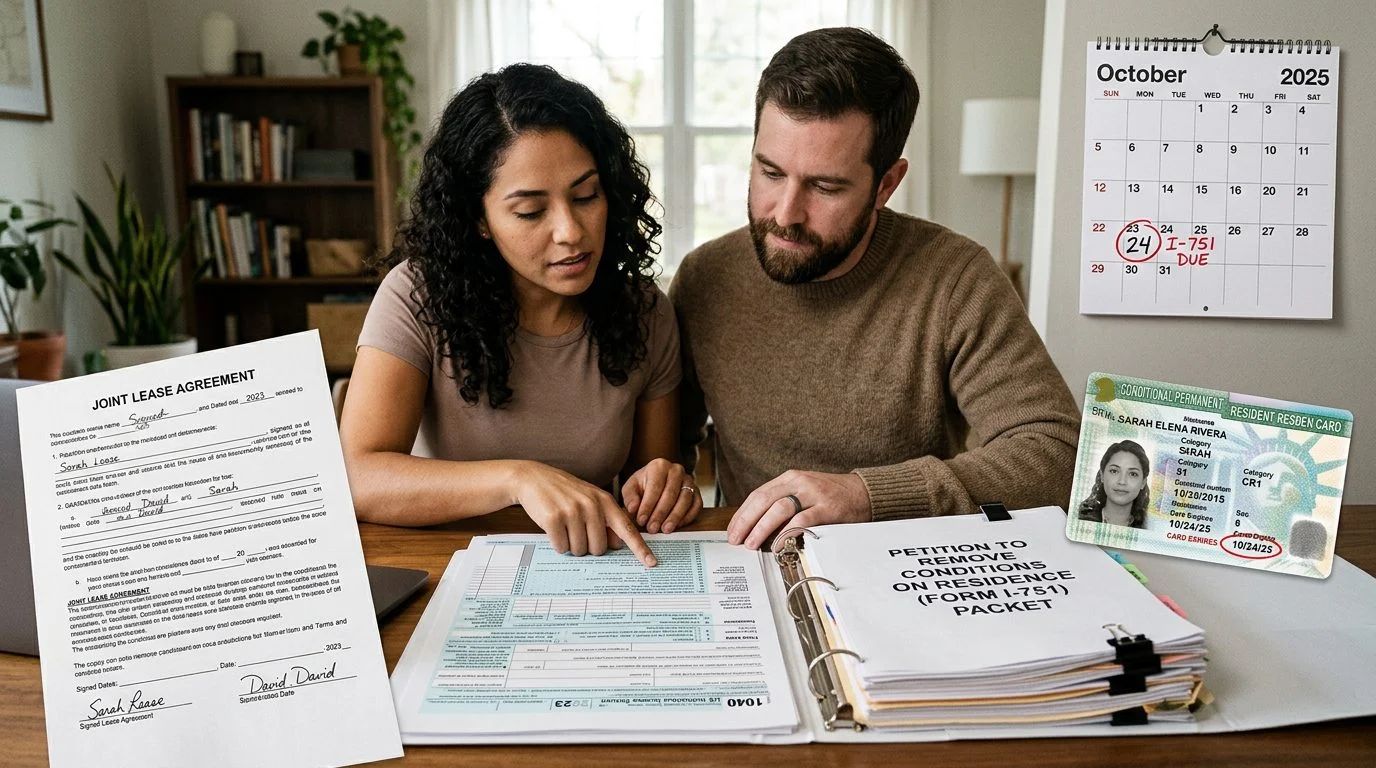
- Relationship evidence: a joint lease or mortgage, joint bank statements, insurance policies, photos across several years, and travel records together.
- Tax and financial records, if the notice asks for them.
- Copies of everything you filed with USCIS, sorted so you can find any item fast.
A valid marriage certificate, timely registered in accordance with the requisite jurisdiction’s requirements and issued by the appropriate civil authority, is a key document to review carefully with your attorney before filing. An officer may still ask for more proof, such as when a ceremony was held virtually. Under 8 U.S.C. § 1361, the person applying must establish eligibility for the benefit claimed.
How Interview Preparation Works, Step by Step
Preparation works best when it starts as soon as the notice arrives. Five steps cover most cases.
- Review the notice. Confirm the date, location, and who must attend. Calendar every deadline.
- Index your documents. Match each item to the notice and to your original filing. Flag gaps and outdated records.
- Review the timeline. Go over how the relationship and the case developed. Check each date against your records.
- Practice answers. Say likely answers aloud. Focus on accuracy and consistency, not word-for-word scripts.
- Plan the day. Set your travel and arrival time. Decide how you’ll handle a question you don’t understand.
If you need to reschedule, ask early. Under 8 CFR 103.2, if you do not appear for a required interview or biometrics appointment, the benefit request is considered abandoned and denied unless, by the appointment time, USCIS has received a change of address or rescheduling request that the agency concludes warrants excusing the failure to appear. Earlier review gives you more time to fix gaps before the interview date.
Common Mistakes to Avoid During the Interview
Four mistakes cause the most trouble at interviews. Each one is avoidable with preparation.
- Inconsistent answers. Officers check that you understood each question. The USCIS interview guidance says you may revise answers that were wrong or have changed since filing. If you add or revise information, re-sign and date the application at the end.
- Guessing. If you don’t remember a date or amount, say so. Then offer the records that show it.
- Missing or incomplete papers. Bring originals when the notice requires them. Keep copies sorted and easy to reach.
- Ignoring the notice. Arriving late or missing someone who must attend can derail the appointment.
Ask for an interpreter before the day if you need one. Ask the officer to repeat a question you don’t follow.
Not sure what your next step is?
Talk it through with our team — we can walk you through how a situation like yours is usually handled and what your options are.
Why Readers Work With AG Immigration Law P.A.
AG Immigration Law P.A. focuses on immigration law. The firm’s practice areas include removal defense, adjustment of status, family petitions, naturalization, removal of conditions on green cards, waivers, and BIA appeals. Adriana Gomez is the responsible lawyer for this page. The firm’s lawyers and support staff handle adjustment of status matters, including interview preparation.
Our team covers document review, timeline work, and question practice, tailored to your facts. Consultations are paid. Our office discusses the fees and every cost you may owe when you contact us.
Results depend on the facts, the evidence, and the decision of USCIS. No lawyer can promise an outcome. If a director denies an adjustment application, 8 CFR 245.2 says no appeal lies from that denial. An applicant who is not an arriving alien may renew the application in removal proceedings under 8 CFR part 240, and an applicant who is a parolee and meets the two conditions described in § 245.2(a)(1) may also renew a denied application in those proceedings to determine admissibility; the section does not by itself entitle anyone to those proceedings if they are not otherwise entitled. That is where our removal defense practice comes in.
Frequently Asked Questions About Green Card Interview Preparation
Can a lawyer attend my green card interview with me?
Yes. The attorney must file an appearance form, and the applicant must sign it for DHS to recognize the attorney.
Can my spouse and I be questioned separately?
Yes. USCIS may interview the petitioner and the beneficiary separately or together in certain cases where it determines that both will be interviewed.
What if I don’t remember a date from our relationship?
Say so honestly. Bring the records you have that show the date.
Do I need to bring original documents?
Follow your notice. It controls which originals you must bring.
What if I need an interpreter?
Confirm the need before the interview date.
Can I reschedule my interview?
Ask early. A rescheduling request can affect processing time under 8 CFR 103.2.
If you have a USCIS interview notice and feel unsure what comes next, you don’t have to sort out the questions alone. Reach out to AG Immigration Law P.A. through our contact page to talk through your notice and your timeline.
How We Can Help You Prepare
Review Your Filing
We review the forms and supporting documents in your file so you can speak to them accurately at your interview.
Family-Based Matters
Our practice focuses on family petitions, including questions that may be asked of both petitioners and beneficiaries.
Removal Defense Experience
Our practice focuses on removal defense and BIA appeals, so we understand how interview answers can affect other parts of a case.
Clear Communication
Our team keeps you informed about each step and answers your questions in English or Spanish.
Important Reminder
General information on this page is not legal advice. Every immigration history is different, and answers given at an interview can have lasting consequences. Discuss your specific situation with an attorney before your interview.
Common Areas of Questioning
Identity and Background
Officers often confirm your name, date and place of birth, addresses, and family members, and may compare them with your filed forms.
Travel and Residence
Expect questions about trips outside the United States, how long you were away, and where you have lived since your last filing.
Work and Finances
You may be asked about your employment history, income, taxes, and any public benefits you have received.
Relationship and Family
For family-based cases, officers may ask how you met your spouse, how you share a home, and details about your daily life together.