

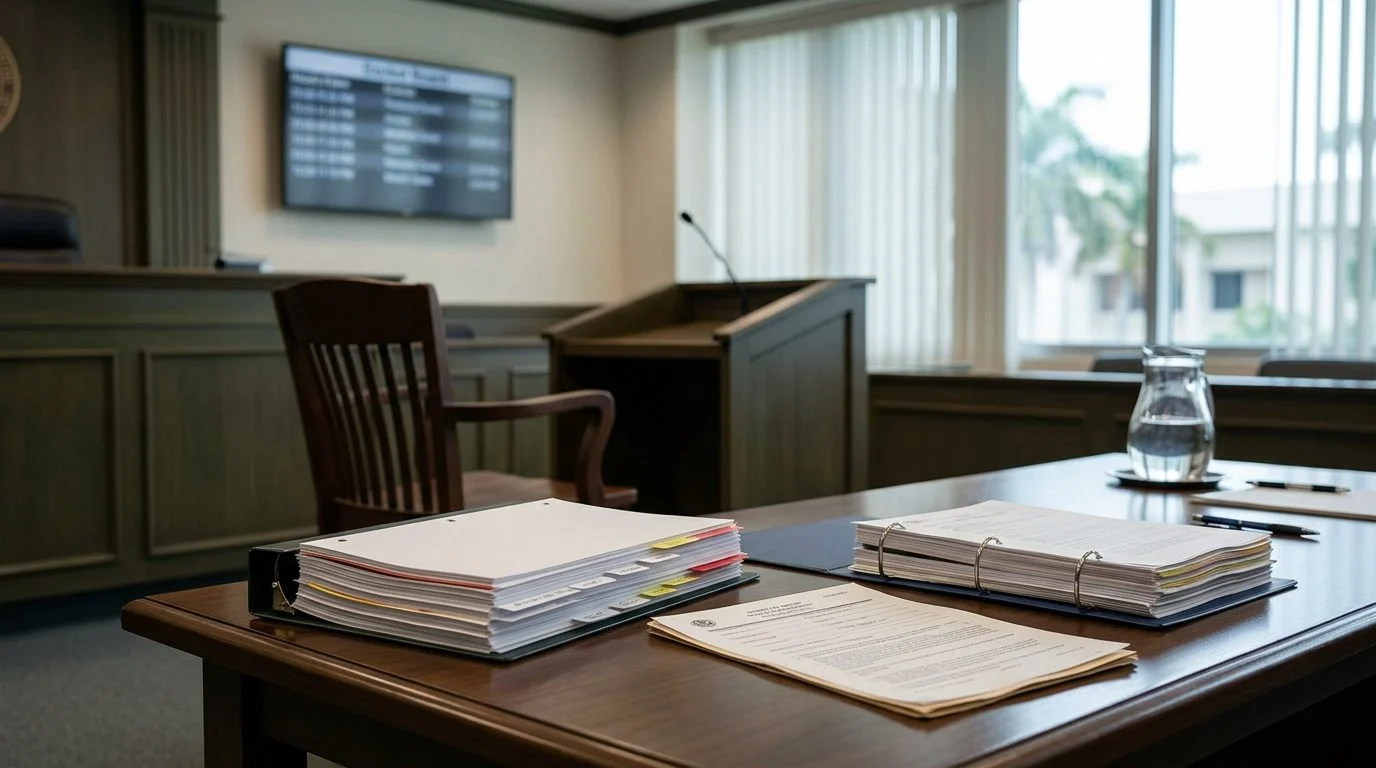
Removal Defense & Adjustment of Status
Clear Guidance on I-485 Timelines and Immigration Court Cases
Plain-language answers from AG Immigration Law P.A. on how a pending green card application and a court case can affect each other.
By Adriana Gomez · Published November 11, 2026
If you have a green card application pending and a removal case open, you’re probably asking how long the wait will last. There isn’t one I-485 timeline in that situation. The office that decides your Form I-485 depends on where your removal case stands.
When you’re in removal proceedings and aren’t an arriving alien, the immigration judge hearing your case has exclusive jurisdiction over the adjustment application. If not, USCIS decides it. Your hearing calendar or your USCIS receipt is the timeline to track.
Why the I-485 Timeline Is Different When Removal Proceedings Are Open
The immigration judge, not USCIS, decides the adjustment application while your removal case is open, for most people. 8 C.F.R. § 1245.2 gives the judge exclusive jurisdiction over an adjustment application filed by a person placed in removal proceedings, other than as an arriving alien.
8 C.F.R. § 245.2 sets the default. USCIS has jurisdiction unless the immigration judge has it under the rule above. That split is why two people with the same filing date can follow very different paths.
Removal proceedings start when a notice to appear is filed with the immigration court. 8 C.F.R. § 1239.1 explains that rule. Find that notice and your latest hearing notice. They show the court, the case status, and the next date.
Keep your entry records with your other papers.
If your green card application is waiting while a court date is already set, you don't have to work out the timing alone. Reach out to our office to talk about your case. Talk it through with our team — we can walk you through how a situation like yours is usually handled and what your options are.
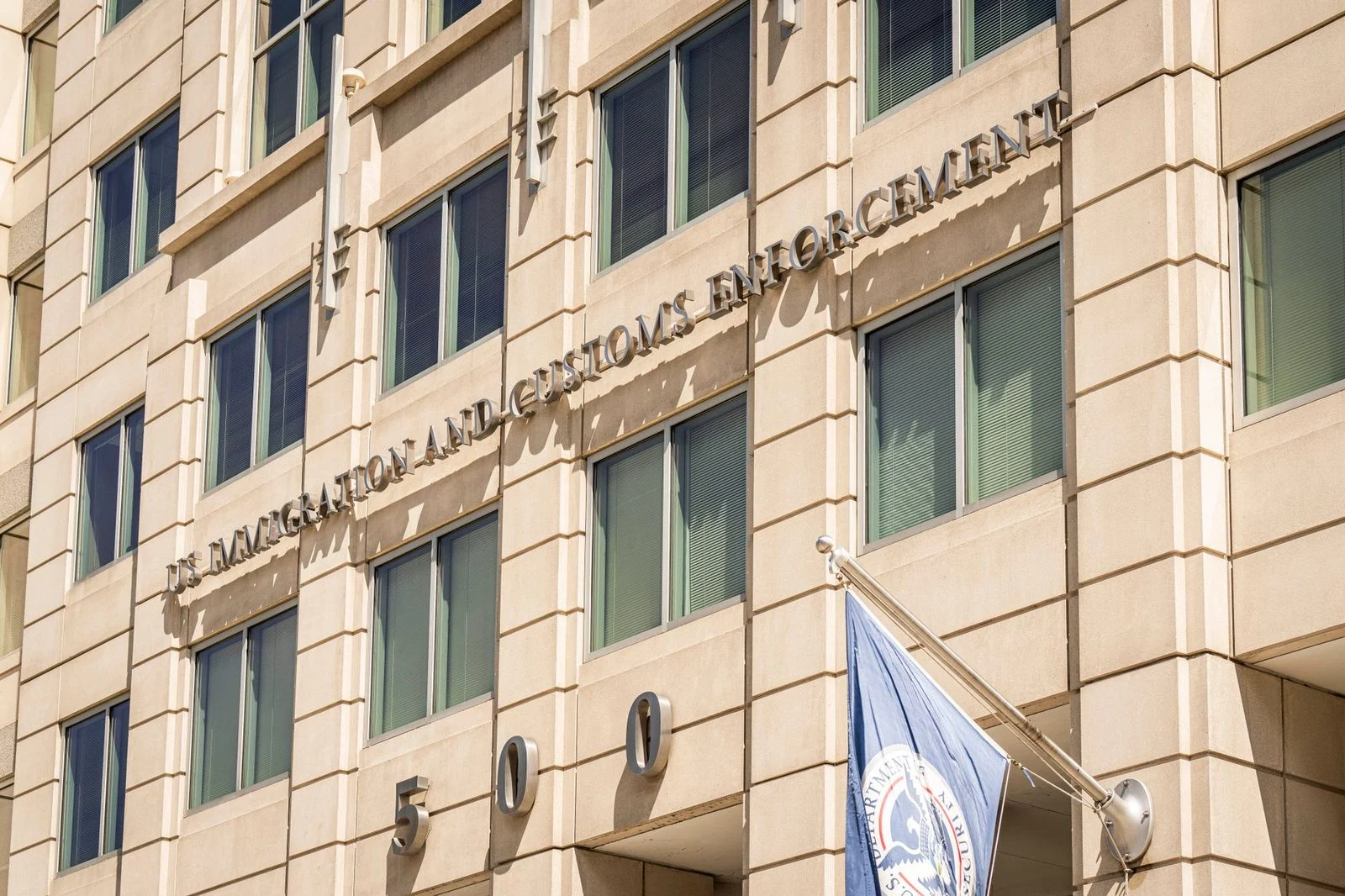
How Long Form I-485 Takes to Process: Reading USCIS Processing Times
USCIS publishes processing time estimates for Form I-485 by field office. These figures are a planning tool, not a schedule for your case. They show how long past cases took, so your own file may move faster or slower.
Start with your receipt notice. It shows your receipt date and receipt number. Those two details tie your case to the right office and let you check its published range.
Two applicants who file in the same month can see different timelines. Their offices differ, and their files differ. Missing evidence, a rescheduled appointment, or a request for more documents can each change the clock.
Use the published range to plan. Use your own notices to track the actual case.
The Stages That Usually Run Before a Decision
Most I-485 cases move through a receipt, a biometrics appointment, an eligibility review, and sometimes an interview. Each step produces a notice, and you should keep every one.
Biometrics are fingerprints, photos, and signatures. 8 C.F.R. § 103.16 lets DHS collect this information and use it for background and security checks and for deciding benefit requests.
A missed appointment is serious. Under 8 C.F.R. § 103.2, except as provided in 8 CFR 335.6, if USCIS requires you to appear for biometrics capture, an interview, or other required in-person process and you don’t appear, the request is considered abandoned and denied, unless by the appointment time USCIS has received a change of address or rescheduling request that it concludes warrants excusing the failure to appear.
USCIS may also require an interview. It must notify you of the date, time, and location. The same rule lets you appear as scheduled or withdraw the request.
USCIS checks eligibility and runs background checks before it decides. This review can take longer when a file has gaps or questions.
Visa Availability and the Priority Date Can Hold an Approval
An adjustment application depends on an immigrant visa.
Family-sponsored preference visas, for relatives subject to the family-sponsored worldwide level, are allotted under the preference system described in 8 U.S.C. § 1153. For a preference case, 8 C.F.R. § 245.2 says the application cannot be approved until the State Department has allocated an immigrant visa number.
The State Department publishes the Visa Bulletin each month. It lists your priority date and the cutoff for your category and country. Compare the two each month, because the cutoffs move.
Events That Change the Clock: RFEs, Rescheduled Appointments, and Address Changes
A Request for Evidence, or RFE, can pause your case. When USCIS asks for more evidence, its processing time limit is suspended from the date of the request. The clock resumes when USCIS receives your response, or a request for a decision based on the evidence, under 8 C.F.R. § 103.2.
Missing initial evidence works differently. The processing period starts over once USCIS receives the required document. The same restart applies when an applicant asks to reschedule a fingerprinting appointment or interview.
Employment authorization runs on its own track. 8 C.F.R. § 274a.13 allows a work authorization request to be filed with a related benefit request only to the extent the form instructions or USCIS permit. Track that receipt separately.
If you must register under section 262 of the Act and are not exempted by section 263(b) of the Act, 8 C.F.R. § 265.1 requires you to report each change of address within 10 days. A notice sent to an old address can lead to a missed appointment.
Your file can also move to another USCIS office. Keep your receipt number ready and check your notices after any move.
How Hearing Dates, Continuances, and Appeals Affect the Application
When the immigration judge holds the application, the hearing calendar and the judge’s rulings set the pace. Each hearing can move the case forward or reset it.
A continuance is a request for more time. The judge may grant a motion for continuance for good cause shown, provided that nothing authorizes a continuance that causes the adjudication of an asylum application to exceed 180 days in the absence of exceptional circumstances, under 8 C.F.R. § 1003.29. Good cause turns on the facts, so bring reasons and documents.
If USCIS denies the application, no appeal lies from that denial. 8 C.F.R. § 245.2 says a non-arriving applicant can renew the application in removal proceedings instead, and a parolee who meets the two conditions described in § 245.2(a)(1) may also renew a denied application in those proceedings to determine admissibility, but this section does not entitle anyone to removal proceedings who is not otherwise entitled to them.
A decision by the immigration judge can be appealed to the Board of Immigration Appeals. An appeal adds time to the overall case.
Missing a hearing carries its own risk. Under 8 U.S.C. § 1229a, a person who doesn’t attend after written notice shall be ordered removed in absentia if the government (the Service) establishes by clear, unequivocal, and convincing evidence that the notice was provided and that the person is removable. Under 8 U.S.C. § 1229a, an order of removal entered in absentia may be rescinded only upon a motion to reopen filed within 180 days after the order if the person demonstrates that the failure to appear was because of exceptional circumstances, or upon a motion to reopen filed at any time if the person demonstrates that they did not receive the required notice, or that they were in Federal or State custody and the failure to appear was through no fault of their own.
Not sure what your next step is?
Talk it through with our team — we can walk you through how a situation like yours is usually handled and what your options are.
Keeping Records That Protect Your Place in the Process
Keep every notice in one folder. Include receipt notices, biometrics notices, Requests for Evidence and your responses, hearing notices, and every decision.
Calendar each deadline, hearing, and appointment as soon as the notice arrives. A missed notice can lead to a missed appointment, and under the rules above that can mean abandonment.
Keep copies of what you send, with the date you sent it. If an immigration judge asks for corroborating evidence, the applicant must provide it. The exception is when the applicant shows it does not have the evidence and cannot reasonably obtain it, under 8 U.S.C. § 1229a.
Can I file an I-485 if I am in removal proceedings?
For anyone who has been placed in removal proceedings and is not an arriving alien, the immigration judge has exclusive jurisdiction to decide an adjustment application.
Does a Request for Evidence stop the USCIS clock?
It suspends the processing time limit from the request date until USCIS receives your response.
What happens if I miss a biometrics appointment?
If USCIS requires you to appear for biometrics capture, an interview, or another required in-person process and you do not appear, the request is considered abandoned and denied, unless by the appointment time USCIS has received a change of address or rescheduling request that it concludes warrants excusing the failure to appear, except as provided in 8 CFR 335.6.
Does an immigrant visa need to be available before approval?
For a preference case, yes. USCIS cannot approve the application until the State Department allocates a visa number.

Talk With AG Immigration Law P.A. About Your I-485 and Removal Case
Waiting on a green card application while a hearing date sits on your calendar can feel like two clocks running at once. You may be weighing timing, paperwork, and whether to ask the judge for more time.
AG Immigration Law P.A. focuses on removal defense and adjustment of status, along with other immigration matters. Adriana Gomez is the responsible lawyer for this page. A matter may be referred to another lawyer or firm if that fits better. Results depend on the facts of each case.
To talk about your situation, reach out through our contact form, by phone, on WhatsApp, or to book a consultation.
Questions We Hear Most Often
Filing an I-485 During Removal Proceedings
Whether an adjustment application can move forward while a case is pending in immigration court depends on your specific facts and procedural posture. Bring your notices and paperwork so we can review them together.
Requests for Evidence
A Request for Evidence from USCIS can change the pace of your case. Understanding what the notice asks for, and how it interacts with your court schedule, helps you respond completely.
Immigration Court Hearings
Missed or rescheduled hearings can create serious problems. Our team helps clients track court dates and prepare for each appearance.
Waivers and BIA Appeals
Waivers and appeals to the Board of Immigration Appeals involve strict paperwork and careful argument. We help clients evaluate their options and prepare their filings.
Why Clients Work With Our Firm
Focused Practice
AG Immigration Law P.A. focuses on removal defense, adjustment of status, family petitions, naturalization, removal of conditions on green cards, waivers and BIA appeals.
Careful Case Review
We read every notice and filing in your file so that timing questions are addressed before they become problems.
Several Ways to Reach Us
Call the office, send a message on WhatsApp, or complete the contact form. Choose whatever is easiest for you.
Support Staff Who Keep Cases Moving
Our assistants and office staff help track deadlines, gather documents and keep you informed between appointments.
Don't Wait on Immigration Notices
Immigration deadlines and hearing dates can be strict. If you have received a notice from USCIS or the immigration court, contact our office promptly rather than waiting to see what happens.