

Adjustment of Status | Removal Defense
Got an I-485 Request for Evidence? Read It, Plan It, Answer It.
A clear path from the first read of USCIS's request to a complete, organized response built with our team.
By Adriana Gomez · Published November 11, 2026
Getting a Request for Evidence on your I-485 can be stressful.
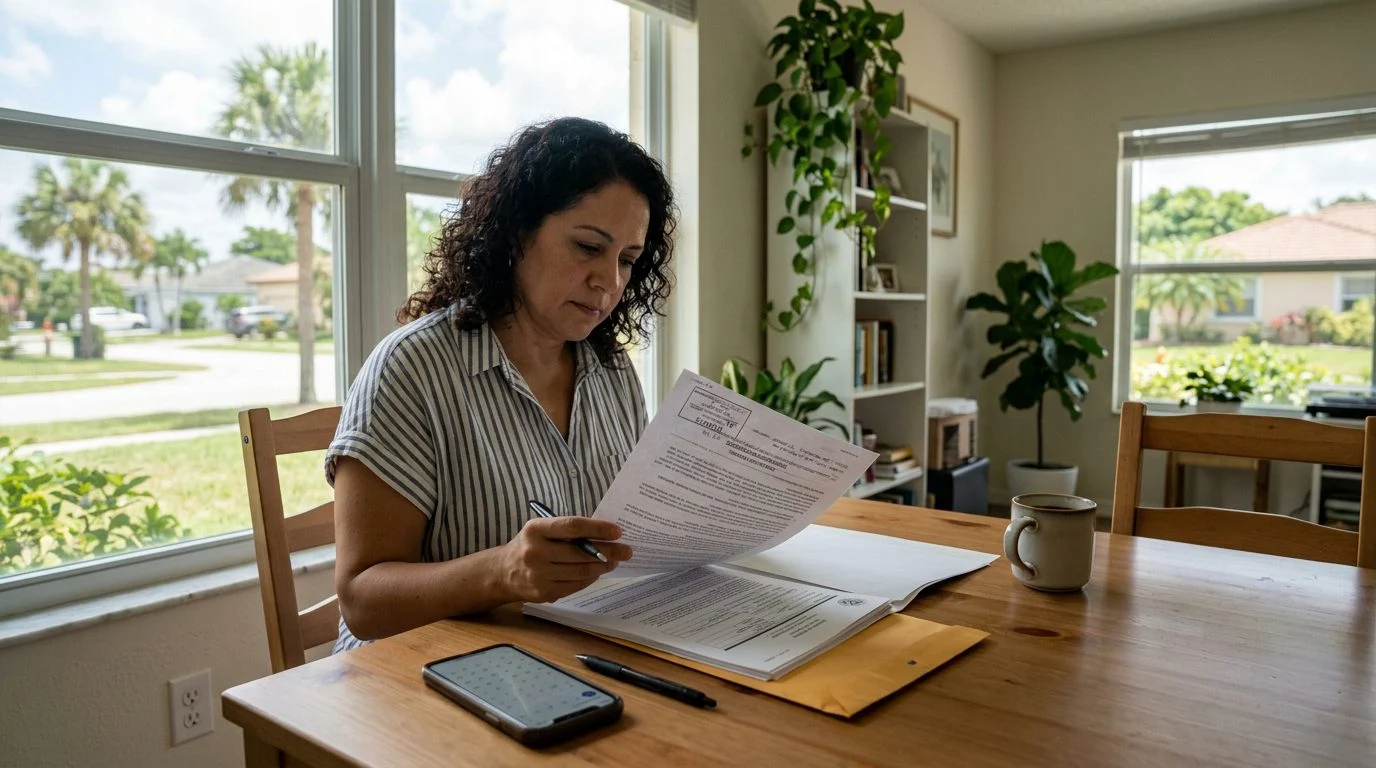
If USCIS has sent you a letter about your I-485, it may be a request for evidence (RFE): a written notice asking for more documents or information before it decides your green card application. To respond well, read the whole notice, match each item to a document you have, and answer every request in order by the deadline.
This guide explains what the notice means, why USCIS sends it, and how to build a response. It also covers what can happen after you reply.
What Is a USCIS Request for Evidence (RFE)?
An RFE is USCIS’s way of saying it needs more information before it can decide your case. It is not a denial.
USCIS sends an RFE when a pending application is missing something or when an officer needs more proof. Under USCIS Policy Manual, any evidence you submit becomes part of your request. The officer checks whether each fact is “more likely than not” true.
A Notice of Intent to Deny (NOID) is different. It tells you USCIS is considering a denial and gives you a chance to respond to its concerns. Read the title of the notice first, because the two notices call for different responses.
Adjustment of status is the process for getting a green card while you are inside the United States. Under 8 U.S.C. § 1255, if you were inspected and admitted or paroled into the United States or have an approved VAWA self-petition, you may apply for adjustment of status, which the Attorney General may grant in his discretion if you file an application, are eligible for an immigrant visa and admissible, and have an immigrant visa immediately available when you file. Adjustment is one of several federal green card pathways, according to the Migration Policy Institute.
If your I-485 notice has a response date and you're unsure whether your documents answer each request, contact our office before that date to talk through it. Talk it through with our team — we can walk you through how a situation like yours is usually handled and what your options are.
Why Does USCIS Issue an RFE on an I-485?
It may also issue one when the officer needs more proof that you meet a requirement.
Filings must follow the rules. Under 8 C.F.R. § 103.2, a request that does not comply with the statutes, regulations, or form instructions may be rejected or denied.
Requests often fall into a few groups. They may ask for identity and civil records, proof of lawful status, financial evidence, or records tied to the petition or category you filed under. The notice names the specific item, so compare it with what you sent. The gap is often one document.
Which I-485 Cases Commonly Receive RFEs?
RFEs appear across many I-485 categories. The case type shapes which documents are likely to be requested.
Family-based cases often draw questions about the relationship and the petition behind the application. Employment-based cases may draw questions about the underlying petition.
Cases that include a waiver request, a prior immigration history, or a question about admissibility often raise more questions. The exact request turns on your file.
If you also have a pending removal matter, a past status problem, or a change in your situation since filing, review the RFE with extra care. Something you file on one track can affect the other.
Step 1: Read the Entire Notice Carefully
Read the whole notice before you gather anything. Each item may carry its own instructions.
- Note the notice date, your receipt number, and every item USCIS requests.
- Find the response deadline and put it on your calendar the day you read the notice. A missed date can hurt your case.
- Check whether the notice asks for originals, certified copies, translations, or a specific form.
- Confirm that your name, date of birth, and receipt number match your records. A mismatch can create a second question.
Step 2: Gather the Evidence the Notice Requests
Match each requested item to a document you already have. Then start looking for anything missing.
Many people already hold the basics. These include a passport, birth certificate, marriage record, tax transcript, employment letter, or a sponsor’s financial papers.
Sponsor income can need extra care. Under 8 C.F.R. § 213a.2, if the sponsor relies on the income of a household member who signed an affidavit of support attachment, that person’s initial evidence must be included, and the household member’s tax return(s) must be for the same tax year as the sponsor’s tax return(s). 8 C.F.R. § 213a.2 reads: “If a sponsor, substitute sponsor, joint sponsor, or household member did not file a Federal income tax return for the year for which a transcript or photocopy must be provided, the affidavit of support or an affidavit of support attachment will not be considered sufficient to satisfy the requirements of section 213A of the Act, even if the household income meets the requirements of section 213A of the Act, unless the sponsor, substitute sponsor, joint sponsor, or household member proves, by a preponderance of the evidence, that he or she had no duty to file.”
Government records used to prove you were in the United States on a certain date have rules. Under 8 C.F.R. § 245.22, the record must bear a signature, seal, or other authenticating mark. It must also be dated at issuance, and its date of issuance must be no later than the required date. When records conflict, doubts are resolved by the official government record, with records of the Service (USCIS) having precedence over the records of other agencies.
If a government record is missing, request a replacement early. Replacement records can take time, so start now.
If the notice asks for translations, follow its instructions. Address each request in order, and give the officer evidence tied to the item it asks about.
Step 3: Organize and Submit a Clear Response
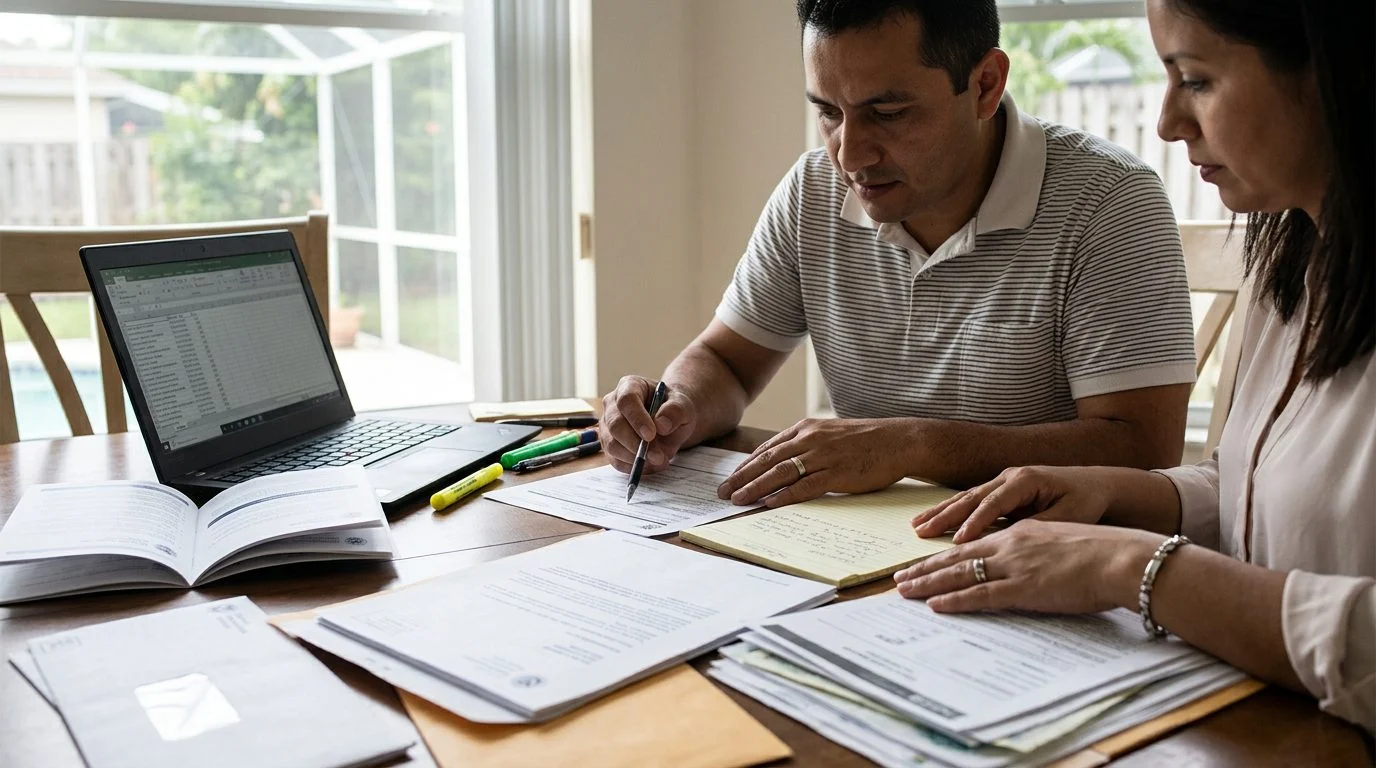
Send a cover letter, a numbered set of exhibits, and a copy of the notice. Keep them in the order the notice lists.
The cover letter should name each item, the exhibit that answers it, and a short explanation. Label and tab each exhibit so the officer can find it quickly.
Include a copy of the RFE with your response. Send the packet to the address or method the notice states. Follow the form instructions for how the filing must be submitted.
Keep proof of mailing or delivery. Also keep a complete copy of everything you sent, page by page.
Not sure what your next step is?
Talk it through with our team — we can walk you through how a situation like yours is usually handled and what your options are.
Does Receiving an RFE Mean My Case Will Be Denied?
No. An RFE asks for more information, and USCIS reviews your full response before it decides.
An I-485 request for evidence does not decide the case on its own. The outcome turns on the facts, how strong your evidence is, and whether your response answers each item.
A denial can also come without an RFE. Under USCIS policy, an officer should deny without first issuing an RFE or NOID when there is no legal basis for approval.
If USCIS denies your application, it must explain the specific reasons in writing. Under 8 C.F.R. § 103.3, that written explanation is required.
If USCIS issues a Notice of Intent to Deny instead, it signals a possible denial. That notice gives you a chance to respond and states its own response period.
What Happens After You Respond?
USCIS reviews your response and then issues a written decision. The time this takes can vary.
Use your receipt number to check case status on the USCIS website. Check the date on any notice you receive, because the latest action is what matters.
If your I-485 is denied, the rules limit your options. Under 8 C.F.R. § 245.2, no appeal lies from the director’s denial. A non-arriving applicant generally keeps the right to renew the application in removal proceedings under 8 CFR part 240.
Under 8 C.F.R. § 103.5, a late motion to reopen may be excused in the discretion of the Service where the delay was reasonable and was beyond the control of the applicant or petitioner. 8 C.F.R. § 103.5 reads: “Any motion to reopen a proceeding before the Service filed by an applicant or petitioner, must be filed within 30 days of the decision that the motion seeks to reopen, except that failure to file before this period expires, may be excused in the discretion of the Service where it is demonstrated that the delay was reasonable and was beyond the control of the applicant or petitioner.”
Policies and deadlines can change. Check the dates on your notice and the official USCIS website.
Why Legal Review of an RFE Can Matter
A careful RFE response can protect the rest of your case. Early review helps you avoid gaps that matter later.
An RFE response can affect later issues, such as a waiver, a removal matter, or a BIA appeal. A mistake on one track can follow you to another.
AG Immigration Law P.A. focuses on removal defense, adjustment of status, family petitions, naturalization, removal of conditions on green cards, waivers, and BIA appeals. Adriana Gomez is the lawyer responsible for this page. Our team can review an RFE with you.
Some matters may be referred to another lawyer or firm. For the wider process, read our adjustment of status guide.
Talk With AG Immigration Law About Your RFE Deadline
If your I-485 notice has a response date and you’re unsure whether your evidence answers each item, contact our office before the deadline.
What does a Request for Evidence mean on Form I-485?
It means USCIS needs more documents or information before it decides your adjustment application. It is not a denial.
Is a Request for Evidence the same as a denial?
No. A denial must come with a written explanation of the specific reasons.
How do I respond to a USCIS Request for Evidence?
Match each requested item to a document, write a cover letter, and send everything by the deadline and method on the notice.
Can I send new evidence in response to an RFE?
Yes, when it answers the specific item USCIS asked for. Evidence you submit becomes part of your request.
Can I appeal an adjustment of status denial?
No appeal lies from the director’s denial. You may generally renew the application in removal proceedings instead.
If an RFE with a deadline is in your hands, you don’t have to sort it out alone. Call the office, send a WhatsApp message, or use our contact form to set up a consultation. Consultations are paid.
Do not ignore the notice
A Request for Evidence asks for more information before USCIS decides your case. Read the notice carefully, note every item requested, and contact our office promptly so we can review your file with you.
How We Help You Respond
1. Read the Notice
We review the Request for Evidence line by line to identify exactly what USCIS is asking for and why.
2. Organize Your Evidence
We help you gather, sort and label documents so each item matches the request clearly.
3. Prepare a Written Response
Our team drafts a cover letter and legal argument that connect your evidence to the eligibility requirements.
4. Submit and Track
We help you assemble and submit the complete response and keep track of USCIS's follow-up.
Why Clients Work With Us
Focused Practice
Our practice focuses on adjustment of status, removal defense, family petitions, naturalization, removal of conditions on green cards, waivers and BIA appeals.
Careful Document Review
We examine each requested item and the supporting records so nothing is overlooked in your response.
A Supportive Team
Our team, led by responsible lawyer Adriana Gomez, keeps you informed at each stage of the process.
Clear Communication
You receive plain-language explanations of what USCIS wants and what we are doing about it.