

BIA Appeals | AG Immigration Law P.A.
Appealing a Denied Waiver to the Board of Immigration Appeals
A denial can feel final, but the appeal process gives you a formal way to ask a higher authority to review the decision.
By Adriana Gomez · Published November 8, 2026
BIA Appeal of a Denied Waiver
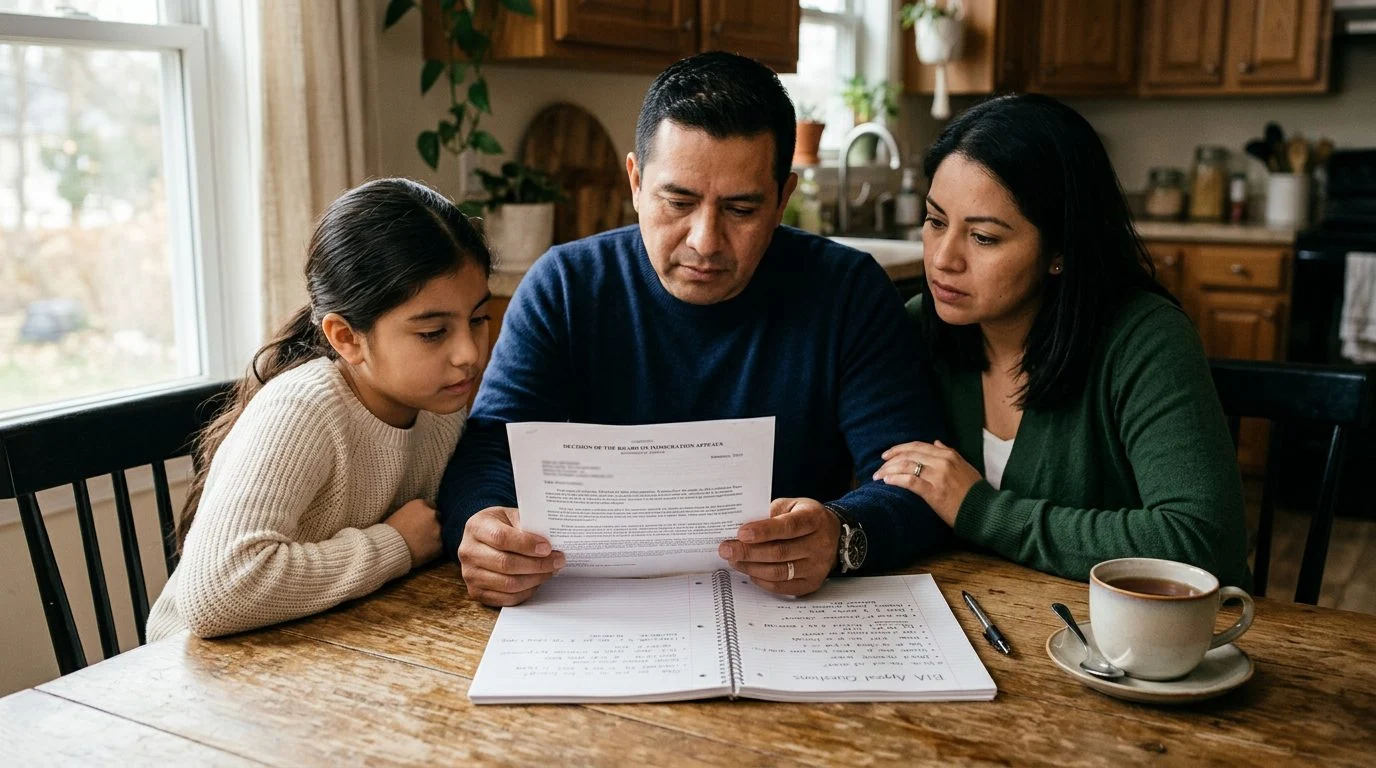
A denied waiver can feel like the end of a removal case, especially when you’re reading the decision for a family member. Often it isn’t. A BIA appeal may be your next step, and its deadline is shorter than many people expect.
In most cases, you have 10 calendar days from the immigration judge’s decision to file a Notice of Appeal with the Board of Immigration Appeals (BIA). Miss that window, and the decision can become final. Whether your case is in Houston or elsewhere, the appeal runs under the same federal rules.
If an immigration judge has just denied your waiver, you don't have to work out the deadline alone; our team can talk through your decision with you. Talk it through with our team — we can walk you through how a situation like yours is usually handled and what your options are.
What a BIA Appeal of a Denied Waiver Is
A BIA appeal asks the Board of Immigration Appeals to review an immigration judge’s decision, including a decision that denies your waiver. The Board is part of the Department of Justice, and its members decide cases as the Attorney General’s delegates (8 CFR 1003.1).
Only certain people can appeal. The appealing parties are those covered by the decision and specifically named on the Notice of Appeal (8 CFR 1003.3). Usually that is the person in removal proceedings, with family members helping behind the scenes.
The Board generally doesn’t find new facts. It reviews the record the immigration court built and decides whether legal or factual errors happened. The immigration court creates and controls that record (8 CFR 1003.36).
The 10-Day Deadline and the Notice of Appeal
You must file Form EOIR-26 directly with the Board within 10 calendar days of the immigration judge’s decision. The 30-day period applies only in certain asylum cases (8 CFR 1003.38).
The clock starts when the judge states an oral decision, or when a written decision is mailed or sent electronically. If the last day falls on a weekend or legal holiday, the deadline moves to the next business day. The filing date is the day the Board receives your notice, not the day you mailed it.
Your notice must also say why you disagree. Identify the findings of fact or conclusions of law you challenge. For a waiver, which is discretionary relief, state whether the error concerns statutory eligibility or the exercise of discretion (8 CFR 1003.3). Any issue left out of the notice is treated as waived (8 CFR 1003.38).
The notice must come with the appeal fee or a Fee Waiver Request (Form EOIR-26A). If the fee is not paid or the Fee Waiver Request (Form EOIR-26A) is not filed within the specified time period, the appeal is not properly filed.
What the Board Reviews and What the Brief Covers
The Board reviews the record and the specific points you raise. Your brief should tie directly to the judge’s reasoning on the waiver.
If no transcript is needed, both sides’ briefs are due together within 20 days of the Board’s briefing order. In no case are they due more than 35 days after the appeal was filed (8 CFR 1003.3). Extensions are discretionary and limited to exceptional circumstances. Workload and travel plans do not count.
If you raise a question of law, cite supporting authority. If you dispute facts, name the specific facts you contest. Every filing needs proof of service on the other side.
A motion to reopen is a different filing. It must state the new facts to be proven at a hearing and be backed by affidavits or other evidence (8 CFR 1003.2).
How the BIA Appeal Runs, Step by Step
A BIA appeal moves through five stages, from review of the decision to the Board’s ruling.
- Review the decision and record. Find the exact grounds for denial and the hearing record behind them.
- Prepare the brief on the Board’s schedule.
- Board screening. For appeals of decisions issued on or after March 9, 2026, the Board shall summarily dismiss the appeal unless a majority of the permanent Board members vote en banc to accept it for adjudication on the merits, except for appeals under paragraphs (b)(5), (6), (7), and (14) of 8 C.F.R. § 1003.1. Some exceptions apply (8 CFR 1003.1).
- Decision. The Board rules on the appeal. Timing depends on the Board’s schedule and the case.
While the appeal window is open or an appeal is pending, the decision generally cannot be carried out (8 CFR 1003.6). The rule has exceptions, including some custody matters.
When a Federal Court Petition for Review Comes Next
After a final order, you may ask a federal court of appeals to review it. The petition must be filed within 30 days after the final order of removal (8 U.S.C. § 1252).
The petition goes to the court of appeals for the circuit where the immigration judge completed the proceedings. The court reviews the case on the typewritten record and briefs. Your brief is due 40 days after the administrative record is available, and the court may extend that only for good cause (8 U.S.C. § 1252). 8 U.S.C. § 1252 reads: “If an alien fails to file a brief within the time provided in this paragraph, the court shall dismiss the appeal unless a manifest injustice would result.” 8 U.S.C. § 1252 reads: “The alien shall serve and file a brief in connection with a petition for judicial review not later than 40 days after the date on which the administrative record is available, and may serve and file a reply brief not later than 14 days after service of the brief of the Attorney General, and the court may not extend these deadlines except upon motion for good cause shown.”
Keep the two clocks separate. The BIA deadline and the federal petition deadline run on their own schedules.
Not sure what your next step is?
Talk it through with our team — we can walk you through how a situation like yours is usually handled and what your options are.
Why Work With AG Immigration Law P.A.
AG Immigration Law P.A. focuses on removal defense, adjustment of status, family petitions, naturalization, removal of conditions on green cards, waivers, and BIA appeals. We provide immigration law services to immigrants across the US.
Adriana Gomez is the lawyer responsible for this page. Our support staff helps with intake and organizing documents, so the paperwork moves in order.
For a first conversation, bring the judge’s decision, the Notice to Appear, prior filings, and your waiver application. No result can be promised. Each appeal turns on its own record and legal issues.
Common Questions About Appealing a Denied Waiver
Most questions come down to the deadline, the fee, and what the Board will consider.
Can I appeal if an immigration judge denied my waiver?
Yes, in most cases you can file a BIA appeal within 10 calendar days of the decision.
Is the deadline always 30 days?
No. The 30-day period applies only in certain asylum cases.
What if I can’t pay the appeal fee?
You can file a Fee Waiver Request (Form EOIR-26A) with your notice. If the request fails to show you can’t pay, the Board must grant 15 days to refile, and the deadline pauses during that time (8 CFR 1003.8).
Can the Board consider new evidence?
The Board generally doesn’t find new facts. New evidence generally calls for a separate motion, such as a motion to reopen, and only the motion-to-reopen fee is paid to the Board when that motion is based on an application for relief (8 CFR 1003.8).
Is an appeal the same as a motion to reopen?
No. A motion to reopen must state new facts and support them with evidence.
Does filing an appeal stop removal?
The decision generally can’t be carried out during the appeal window or while an appeal is pending. The rule has exceptions.

Next Step: Talk With Our Office Before the Deadline Passes
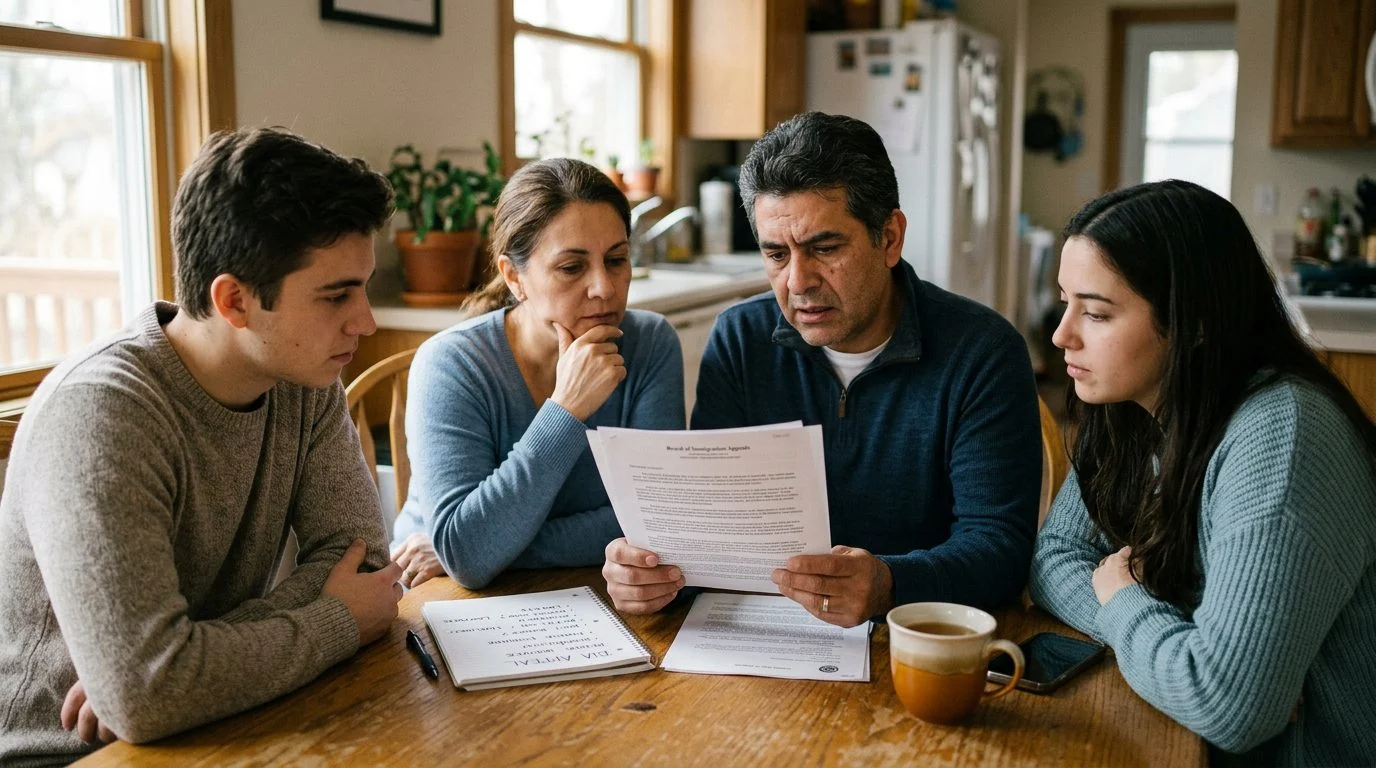
If an immigration judge has just denied your waiver, your family may be counting days right now. That is a stressful place to be.
You can fill out our contact form, call the office, or message us on WhatsApp. To review your case in detail, you can book a paid consultation.
Act Carefully and Promptly
Appeal papers must be prepared and filed exactly as the rules require. Missing a step or a filing requirement can affect your case, so review your decision with our office before you take any action.
How Our Practice Can Help
Review of the Denial
We examine the decision, the record and the grounds on which the waiver was refused.
Appeal Preparation
Our team helps prepare the notice of appeal and the supporting brief for the Board of Immigration Appeals.
Coordinated Case Support
Our assistants and office staff help keep documents, deadlines and communication organized throughout your case.
Clear Communication
We explain each step of the appeal in plain language so you know what to expect.
Related Immigration Services
Removal Defense
Representation for individuals facing removal proceedings before an immigration court.
Waivers
Guidance on waiver applications that may be needed to address an inadmissibility or other bar.
Adjustment of Status
Support for applicants seeking lawful permanent residence while in the United States.
Family Petitions and Naturalization
Help with family-based petitions, citizenship applications and removal of conditions on green cards.
Speak With Our Team About Your Denied Waiver
Related practice areas
- Immigration Waivers in the US