

Immigration Law | Florida, Texas and New York
ICE and USCIS: Two Agencies, Two Different Roles
Both agencies sit inside the Department of Homeland Security, but they do very different jobs. Here is how to tell them apart and why the difference matters for your case.
By Adriana Gomez · Published November 2, 2026
Are ICE and USCIS the same agency?
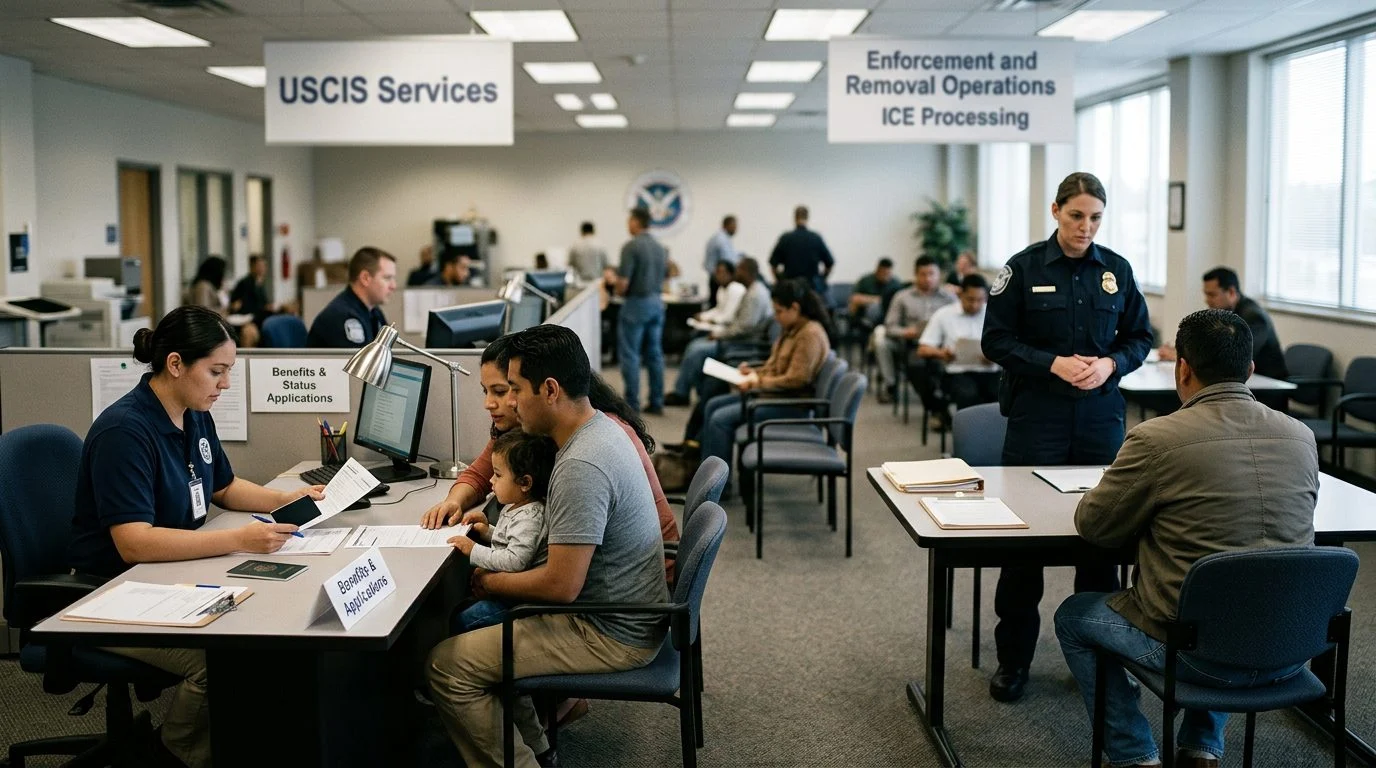
Are ICE and USCIS the same? No. They are two separate agencies. Both sit inside the U.S. Department of Homeland Security (DHS), and that shared parent is a big reason people mix them up.
Under 8 U.S.C. § 1103, the Secretary of Homeland Security is charged with administering and enforcing the immigration laws, except insofar as those laws relate to the powers, functions, and duties conferred upon the President, Attorney General, the Secretary of State, the officers of the Department of State, or diplomatic or consular officers. Both agencies work under that umbrella, but they do very different jobs.
Confusion makes sense. Both names appear on immigration papers, and both can affect whether a person keeps their status or moves forward. A letter from one can feel like it came from the other.
This page explains what each agency does, how they connect, and where immigration court fits. Knowing which agency sent a document is the first step, because the next move depends on it.
If a notice from ICE or USCIS has you worried about what comes next, you don't have to sort it out alone. Our office can talk through your notice with you. Talk it through with our team — we can walk you through how a situation like yours is usually handled and what your options are.
What does ICE stand for, and what does ICE do?
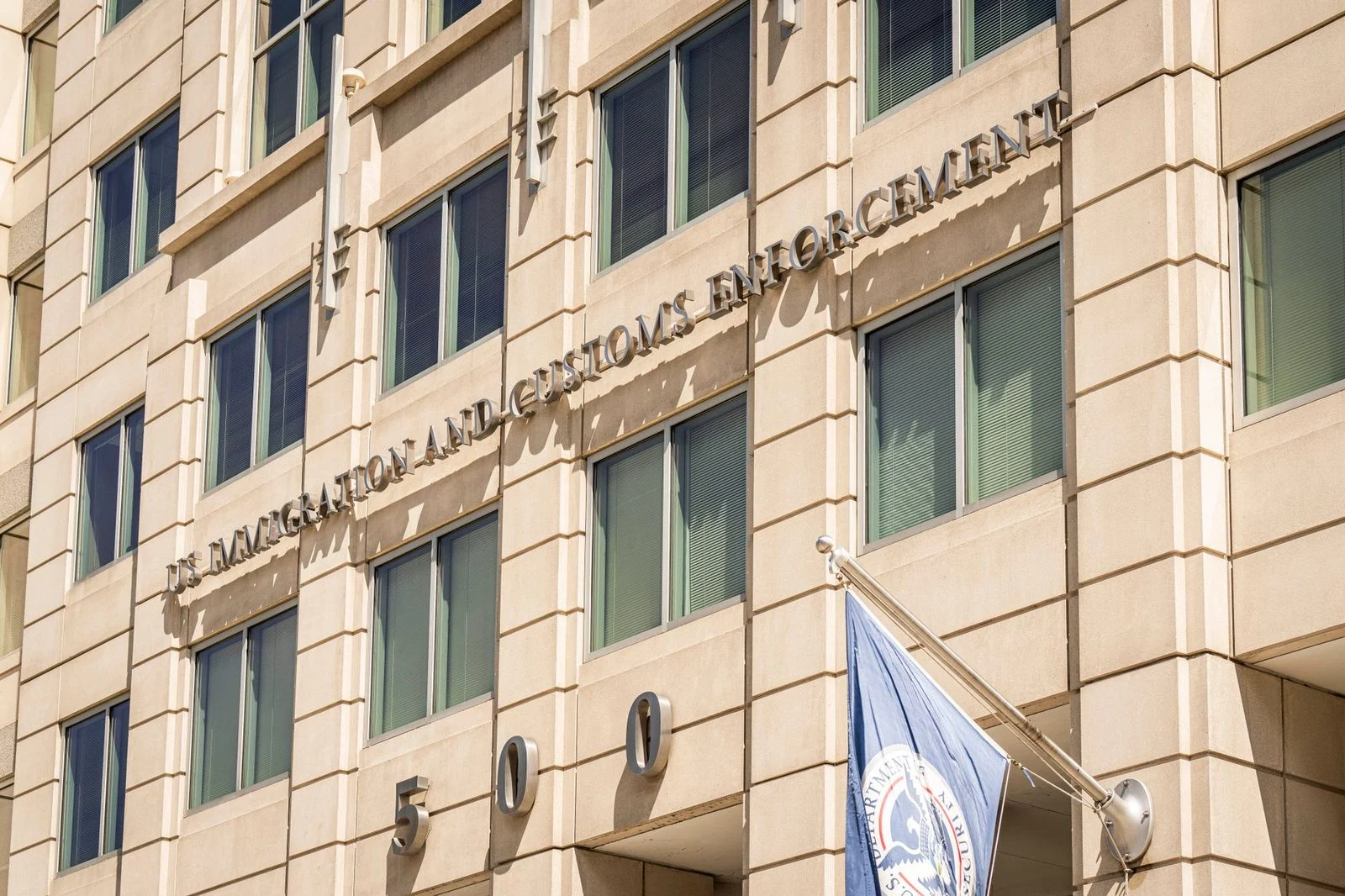
ICE stands for U.S. Immigration and Customs Enforcement. It is DHS’s enforcement arm. Its work includes investigating and enforcing immigration and customs laws, and that work can lead to arrest and detention.
Under 8 U.S.C. § 1226, a noncitizen may be arrested and detained while a decision is pending on whether they will be removed. That statute describes arrests made under a warrant.
Enforcement can also start formal court cases. In removal proceedings, the written notice described in 8 U.S.C. § 1229 is called a notice to appear and must be given in person to the alien (or, if personal service is not practicable, by mail to the alien or to the alien’s counsel of record, if any). The notice must state the time and place of the hearing.
If a family member is held, ICE’s Online Detainee Locator System is the official ICE tool for finding people in ICE immigration detention.
Removal defense means responding to these cases in court. Read more on our removal defense page.
What does USCIS stand for, and what does USCIS do?
USCIS stands for U.S. Citizenship and Immigration Services. It is the DHS agency that decides immigration benefit requests. It is generally a benefits agency, not an enforcement agency.
Those requests include green card applications through adjustment of status, family petitions, naturalization, removal of conditions on green cards, and waivers. These are the kinds of matters this practice handles.
USCIS may require an applicant to attend an interview or a biometrics appointment. Under 8 CFR 103.2, USCIS will notify the person of the date, time and location.
A denied application can change a person’s options. Whether a denial leads to other steps depends on the facts: the filing history, the reasons given, and what the decision says. Read every decision closely and note any deadline it lists.
Is USCIS cooperating with ICE?
Both agencies sit inside DHS, so they share the same department and the same framework for administering the immigration laws. That is a fact about structure. It does not tell you how any single file will move.
A benefit case can lead to enforcement in some situations. Whether it does depends on the facts of that person’s history and filings, and no two files look the same.
Filing status matters too. Under 8 U.S.C. § 1255, an applicant who is in unlawful immigration status on the date of filing generally cannot adjust status. Section 1255(c)(2) excepts immediate relatives and special immigrants described in 8 U.S.C. § 1101(a)(27)(H), (I), (J) or (K) from its bar, subject to subsection (k); separately, none of the bars listed in 8 U.S.C. § 1255(c) reaches an alien having an approved petition for classification as a VAWA self-petitioner.
A pending application is not a shield on its own. Keep copies of every filing and receipt, and read every notice from either agency carefully.
Where does immigration court fit, and can ICE deport a U.S. citizen?
Removal cases are heard in immigration court. That court sits within the Executive Office for Immigration Review (EOIR), which belongs to the Department of Justice, not DHS. Under 8 CFR 1003.0, EOIR includes the Board of Immigration Appeals and the Office of the Chief Immigration Judge.
So the split is simple. DHS agencies like ICE and USCIS bring enforcement and benefit actions. EOIR runs the courts and the appeals board.
A person in removal proceedings can have a lawyer. Under 8 CFR 1240.3, the respondent may be represented at the hearing by an attorney or another qualified representative. Under 8 U.S.C. § 1229(b)(1), so that a respondent has the chance to secure counsel, the first hearing date may not be scheduled earlier than 10 days after service of the notice to appear, unless the respondent requests in writing an earlier hearing date, and at the hearing may be represented by an attorney or other representative qualified under 8 CFR part 1292 (8 CFR 1240.3).
Can ICE deport a U.S. citizen? No. Removal rules apply to noncitizens, as 8 U.S.C. § 1227 shows by listing classes of deportable aliens. A person born in the United States and subject to its jurisdiction is a citizen at birth under 8 U.S.C. § 1401. Still, a citizen may be questioned during an enforcement encounter, so keep proof of citizenship where you can reach it.
Missed hearings are serious.

What should you understand before taking the next step?
Are ICE and USCIS the same? No. Keep three roles in mind. ICE enforces immigration laws. USCIS decides benefit requests. EOIR runs immigration court.
Read every notice slowly. Find the issuing agency, the deadline, and any hearing date, and write them in one place. A missed hearing can lead to a removal order, so dates come first.
If a referral or first hearing is coming up, contact our office to discuss the early steps in your removal case.
Consultations are paid. Details are on our consultation fees page.
If a notice from ICE or USCIS has you worried, you don’t have to work out the next step alone. Call the office, send a message through the contact form, or message us on WhatsApp to talk through your notice and its deadlines.
Frequently asked questions
Are ICE and USCIS the same?
No. ICE enforces immigration laws, and USCIS handles benefit requests. Both sit inside the Department of Homeland Security.
Can ICE deport you if you are a U.S. citizen?
No. Removal rules apply to noncitizens, and a person born in the United States is a citizen at birth.
Is USCIS cooperating with ICE?
Both agencies sit in DHS. Whether a particular case leads to enforcement depends on the facts of that person’s history and filings.
What happens if you miss an immigration court hearing?
A judge can order removal in absentia if notice was properly given. That order can bar certain relief for 10 years.
Responsible lawyer for this page: Adriana Gomez.
How the two agencies differ
ICE enforces immigration law
U.S. Immigration and Customs Enforcement handles immigration enforcement, including arrests, detention and the removal proceedings that follow.
USCIS processes benefit requests
U.S. Citizenship and Immigration Services reviews petitions and applications such as green cards, naturalization and waivers.
Different functions, same department
Both agencies report to the Department of Homeland Security, yet a filing with USCIS and an enforcement action by ICE follow separate processes.
Why the distinction matters
Knowing which agency sent a notice or holds your file helps determine the right response and the right legal strategy.
Do not assume an agency letter is routine
A notice from ICE or USCIS can affect your immigration status. Speak with a lawyer before you respond, sign anything or miss a scheduled date.
Where our practice fits
Removal defense
Representation in removal proceedings, where ICE enforcement and immigration court intersect.
Green cards and status
Adjustment of status and removal of conditions on green cards, handled with attention to the filing details that USCIS reviews.
Family and citizenship
Family petitions and naturalization applications for immigrants building their lives in the United States.
Waivers and BIA appeals
Waiver applications and appeals to the Board of Immigration Appeals for cases that need a second look.