

BIA Appeals & Removal Defense
Received a BIA Decision? Understand Your Options Before Your Next Move
Appeals, motions and federal court review each follow different paths. Our team can help you weigh them against the facts of your case.
By Adriana Gomez · Published November 14, 2026
You just opened a decision from the Board of Immigration Appeals, and you want to know what it means for you. A BIA decision can be challenged, but not always through a regular appeal back to the Board. Instead, you can file a written motion asking the Board to reconsider or reopen its decision, or a petition for review in a federal court of appeals. Each route has its own deadline, so the date on your letter matters.
What the Board of Immigration Appeals Is and What Its Decisions Mean
The Board of Immigration Appeals, or BIA, is the administrative body that reviews decisions made by immigration judges and DHS officers. It sits within the Department of Justice and has 15 members, all attorneys appointed by the Attorney General (8 CFR 1003.1). When it reviews a case, the Board can affirm, modify, or remand the decision. A remand sends the case back to the immigration judge or DHS. That happens because the Board does not do its own fact-finding, meaning it does not gather and weigh new facts itself. Some BIA decisions end the case inside the immigration system, but they are not always the last word. Check the date on your decision letter first. Many deadlines in this guide start from the date a decision was made, so write that date down.
If a Board decision letter has you worried about the next date, our office can talk through your options with you. Talk it through with our team — we can walk you through how a situation like yours is usually handled and what your options are.

Can You Appeal a BIA Decision?
You have three main routes: a motion to reconsider, a motion to reopen, and a petition for review in federal court. Motions go to the Board itself. A petition for review goes to a federal court of appeals, specifically the court for the judicial circuit where the immigration judge completed the proceedings (8 U.S.C. § 1252). Which route fits depends on the facts of your case and what the decision says. Each route has its own filing rules, grounds, and deadline. Watch for one trap: the routes are linked. When a petition for review is filed, any review of a motion to reopen or reconsider is consolidated with it. That means your motion and your federal case can move together, so plan each step with the other in mind.
Filing a Petition for Review in the Federal Court of Appeals
A petition for review asks a federal court of appeals to review a final order of removal, and it must be filed no later than 30 days after that order (8 U.S.C. § 1252). Know the date of that final order before you do anything else. The court reviews the proceeding on a typewritten record and typewritten briefs. Filing alone does not stop removal. Service of the petition does not stay removal unless the court orders otherwise, so any request for that order should be made early. Your brief has its own clock too. It is due 40 days after the administrative record is available, and the court will not extend that deadline except on a motion showing good cause. If the brief is late, the court must dismiss the appeal unless a manifest injustice would result.
Motions to Reconsider and Motions to Reopen
A motion to reconsider and a motion to reopen both ask the Board to look at its decision again, but they serve different purposes. A motion to reconsider asks the Board to take another look at its decision, and it must be a written motion.
A motion to reopen asks the Board to consider new facts. It must state the new facts that would be proven at a hearing, and it must be supported by affidavits (sworn written statements) or other evidence. The new evidence must be material and must not have been available earlier. Filing rules for motions to reopen are strict, so contact our office promptly after a final administrative decision to discuss your options. The rule has exceptions, so act early. The Board has discretion to deny a motion to reopen, even when the motion makes a prima facie case (a basic showing that the claim has merit). If DHS denies a stay, an immigration judge or the Board can still grant a stay in connection with a motion to reopen or reconsider that was already filed, but a stay that is granted or communicated after you have been placed aboard the plane or other transport for removal and normal boarding is complete has no effect (8 CFR 1241.6).
Appealing a Deportation Order and a Citizenship Denial
You can challenge a removal order through the BIA and federal court routes, but a naturalization denial follows its own path. Start by identifying which order you have. No appeal lies from an order of removal entered in absentia (8 CFR 1240.15). Unless the case is certified to the Board, a decision becomes final when you waive appeal or when the time to appeal runs out, whichever comes first (8 CFR 1003.39). Until then, the order generally cannot be carried out during the appeal period or while an appeal is pending (8 CFR 1003.6).
A naturalization denial has its own steps. If a naturalization application is denied after your examination, you may request a hearing before an immigration officer. That request is due within 30 days after you receive the denial notice, so the date you received it matters (8 CFR 336.2). If you go to court, you must first use the USCIS hearing process. The petition then goes to the U.S. District Court where you live, within 120 days after the USCIS final determination (8 CFR 336.9). Those clocks are separate from the 30-day deadline for a federal petition on a removal order, so track them apart.

Deadlines to Track and Your Next Step With Our Office
Gather your decision letter, the date you received it, and any earlier filings before you take another step. Those papers show which route applies and which date starts each clock. Keep any notice that lists a deadline, and write each date on a calendar.
- The decision letter, including its date
- The date you received it
- Any earlier motions, appeals, or filings
- Any notice that lists a deadline
AG Immigration Law P.A. focuses on removal defense, adjustment of status, family petitions, naturalization, removal of conditions on green cards, waivers, and BIA appeals.
Common Questions
How long do you have to file a petition for review?
It must be filed no later than 30 days after the final order of removal.
Does filing a petition for review stop deportation?
Not by itself. Service of the petition does not stay removal unless the court orders otherwise.
Can you appeal a citizenship denial?
Yes, first by requesting a USCIS hearing within 30 days of receiving the denial notice.
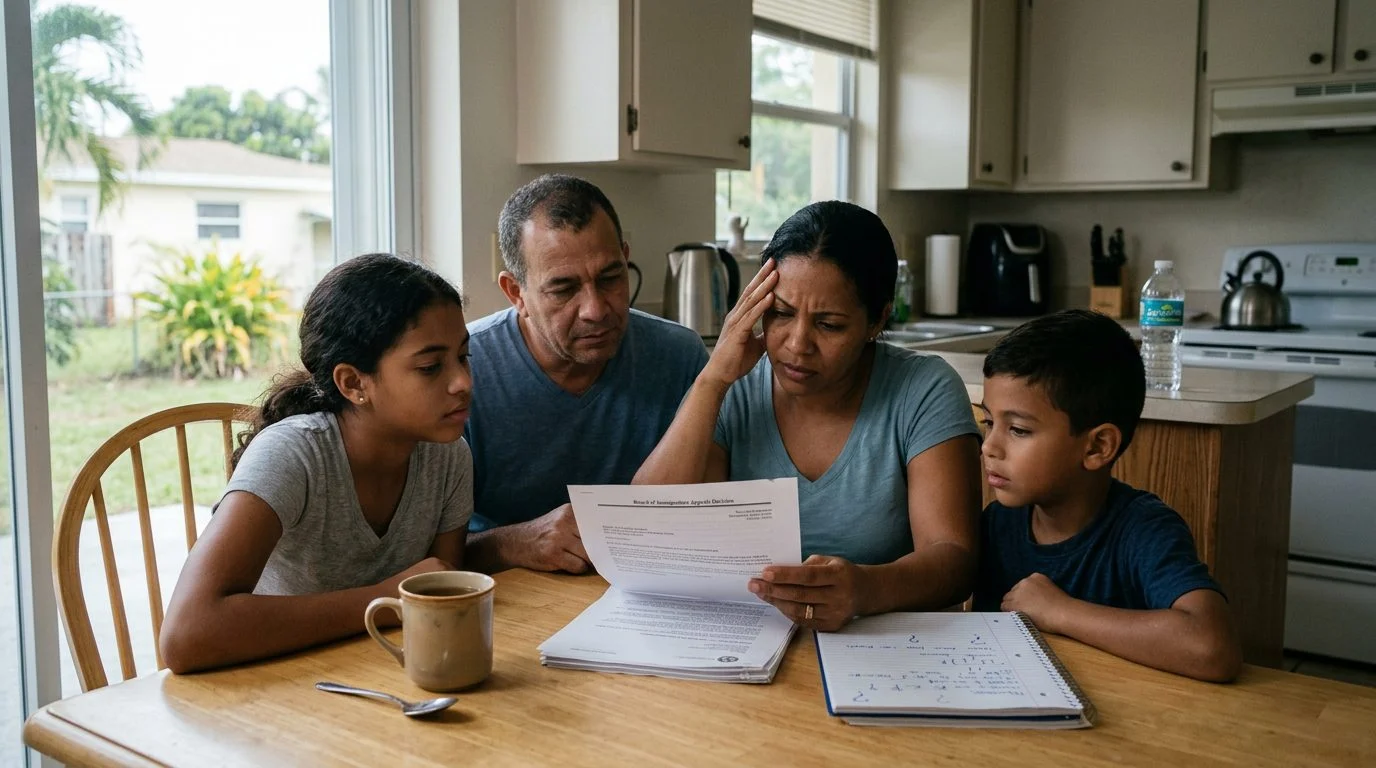
Facing a removal decision or a denial letter is stressful, especially when your family is waiting for the result. If you want help reading your decision and its dates, you can reach out through our contact page.
How We Approach Your BIA Appeal
Careful Record Review
We examine the Board's decision, the immigration judge's ruling and the full case file to identify the issues that matter.
Timing Awareness
Deadlines in immigration appeals can be strict. We help you understand what applies to your situation so you can plan ahead.
Support From Our Team
Our attorneys and staff keep you informed at each step and answer your questions as your case moves forward.
Clear Communication
We explain your options in plain language so you can make informed decisions about your case.
Do Not Wait to Seek Advice
A BIA decision can carry serious consequences, and the steps available to you may be time-sensitive. Reach out as soon as you receive a decision so we can review your options before any deadline passes.
Common Paths After a BIA Decision
Petition for Review
A challenge to a final order filed in federal court. Whether it fits your case depends on the decision and the record.
Motion to Reconsider
A request asking the Board to re-examine its decision based on errors in its reasoning or application of law.
Motion to Reopen
A request to reopen proceedings when new, material evidence or changed circumstances may affect the outcome.