

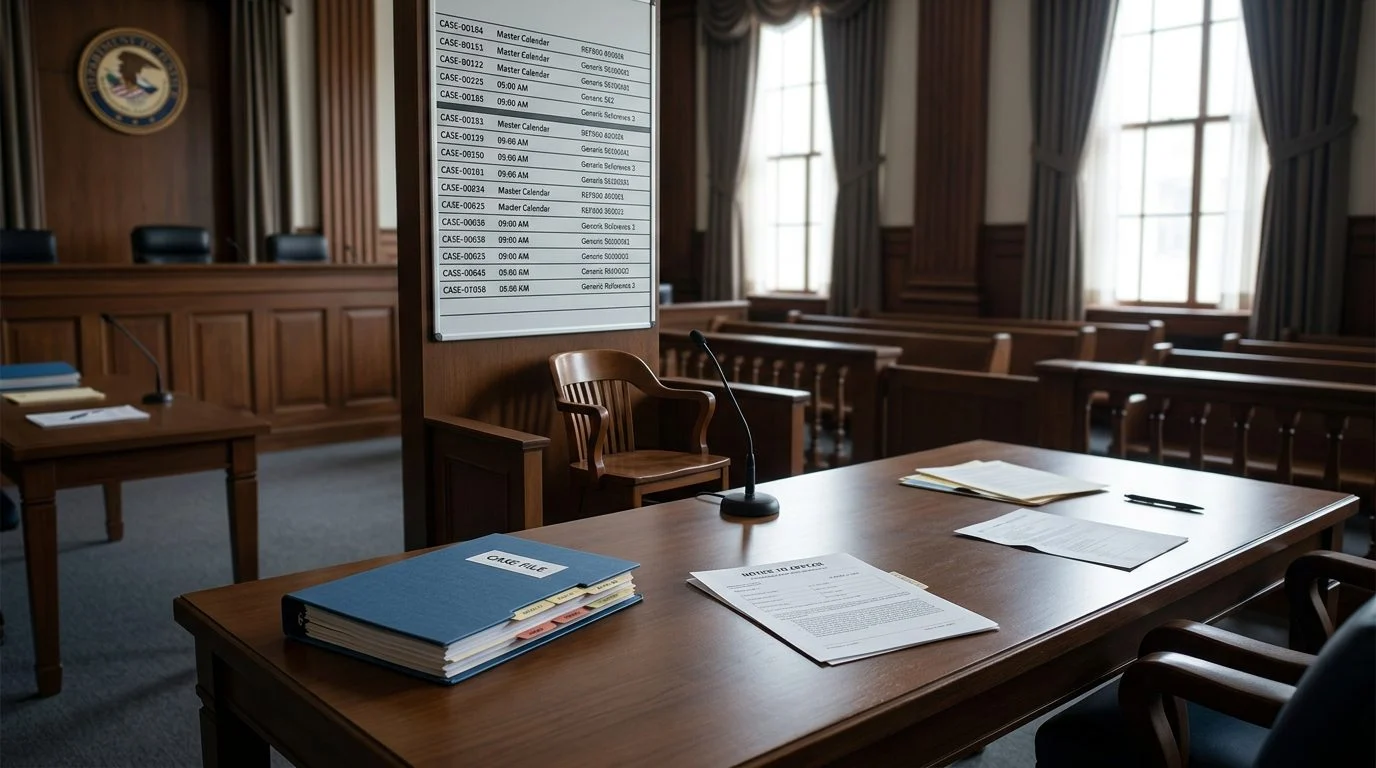
Removal Defense | Immigration Court Jurisdiction
Not Sure Which Immigration Court Is Handling Your Case?
Adriana Gomez and the team at AG Immigration Law P.A. focus on removal defense and related immigration matters. Learn how immigration court jurisdiction works, then reach out to our office to talk through your situation.
By Adriana Gomez · Published November 1, 2026
How do I know which immigration court has jurisdiction? Start with your Notice to Appear. The court where that notice was filed is the court with jurisdiction. Under 8 C.F.R. § 1003.14, jurisdiction vests when a charging document is filed with the Immigration Court.
A notice doesn’t always settle the question for good. Court names can change, and a person in custody may be moved. This guide explains the rules in plain words so you can check your own paperwork. Immigration cases can involve different steps depending on each person’s individual circumstances and where the matter is filed.
What jurisdiction means in immigration court
Jurisdiction is the authority of one immigration court to hear your removal case. Venue is the specific court where the case is heard. The two words sound alike, but the rules treat them as separate steps.
Under 8 C.F.R. § 1003.20(a), venue “shall lie at the Immigration Court where jurisdiction vests.” See 8 C.F.R. § 1003.20. Put simply, you find the court with jurisdiction first.
Immigration courts are part of the Executive Office for Immigration Review (EOIR), which sits within the Department of Justice. Under 8 C.F.R. § 1003.9, the Office of the Chief Immigration Judge includes the immigration judges and staff. The rule defines an Immigration Court as a local site where hearings are held and records are created.
If you hold a Notice to Appear and can't tell which court has your file, we can help you sort it out. Reach out to our office when you're ready to talk. Talk it through with our team — we can walk you through how a situation like yours is usually handled and what your options are.

How the Notice to Appear and the court’s record control the answer
The Notice to Appear starts the case. The court with control over your record then handles it. Under 8 C.F.R. § 1239.1, a removal proceeding conducted under section 240 of the Act begins when a notice to appear is filed with the immigration court.
The notice lists the basics: your name and any aliases, your address, your registration number (your A-number), your nationality, and the language you understand. 8 C.F.R. § 1003.15 says the Service shall provide these items, but omission of any of these items shall not provide the alien with any substantive or procedural rights. Find the court name and address on the first page, and write them down.
Next, look at the record. 8 C.F.R. § 1003.11 says an administrative control court creates and keeps the Record of Proceeding for an assigned area. Documents must go to that court and not to any other Immigration Court.
Compare each new notice against the old one. A court name can change after a transfer, and a hearing notice may show the new court. Keep every notice in order, with its date.
How detention and residence affect which court is assigned
Where a person lives or is held can affect which court handles the case. Check the court after every move or change in custody.
The Chief Immigration Judge directs how cases are assigned. Under 8 C.F.R. § 1003.9, that office may “regulate the assignment of immigration judges to cases” and manage the docket. A respondent doesn’t control that process alone.
Consider a father moved from a detention center in Texas to a facility in another state. His family receives new paperwork with a different court name. They should not assume the old court still holds the file. They should confirm the court on the newest notice.
To find where someone is held, use the ICE Online Detainee Locator System. ICE describes it as the official tool for locating people in ICE detention. Keep the A-number ready when you search.
Your address on file and how it can change the court
The address on file controls where notices and hearing papers go. An outdated address can lead to missed notices and serious consequences.
The duty is strict. 8 U.S.C. § 1229 requires a person to give written notice of any address change immediately. Under 8 C.F.R. § 1003.15, the change must be filed on Form EOIR-33 within five days with the court handling the case. A separate statute, 8 U.S.C. § 1305, sets a ten-day notice rule for people required to register. Because the deadlines differ, act the same day you move.
Under 8 U.S.C. § 1229a(b)(5)(A), a person who does not attend a proceeding after written notice has been provided “shall be ordered removed in absentia” if the government establishes by clear, unequivocal, and convincing evidence that the written notice was so provided and that the person is removable. Notice sent to the most recent address on file can count as sufficient. The government must meet a clear, unequivocal, and convincing evidence standard. The consequences of missing a hearing also depend on whether exceptional circumstances apply under 8 U.S.C. § 1229.
A family member can help file an address update. Keep a copy and proof of every filing.
How to confirm which court currently holds your case
Compare the court on your latest notice with the court listed on earlier papers. Then confirm which court has control of the record. Use these steps:
- Gather every notice, order, and hearing letter. Put the newest one first.
- Write down the A-number, the court name and address, and the hearing date and time.
- Note any transfer or change notice you received, and its date.
- If the person is held, search the ICE locator and record the facility.
The rules say a public list of administrative control courts and their geographic areas is available at any Immigration Court. See 8 C.F.R. § 1003.11. Use that list to match your area to the right court.
When a case can be moved to a different court
A judge may change venue for good cause. A move is not automatic, though. It requires a motion by one of the parties. Under 8 C.F.R. § 1003.20, the judge must give the other side notice and a chance to respond. The motion also needs a fixed street address, including city, state, and ZIP code, where the person can be reached.
Timing matters. A move can change hearing dates, filing steps, and where evidence and witnesses are. What works in one file depends on the facts, so each move needs individual review.
Not sure what your next step is?
Talk it through with our team — we can walk you through how a situation like yours is usually handled and what your options are.

Next steps if you are unsure which court is handling the case
Gather every notice, confirm the court on the most recent one, check the address on file, and note any custody change. These four steps answer most court questions.
Don’t rely on one old notice. A court named on an older document may no longer hold the file. Compare dates across every paper you have.
Your case may involve more than the court question. For a broader view, read our removal defense overview.
Frequently asked questions
Which court has jurisdiction over my case?
The court where your Notice to Appear was filed has jurisdiction. Check the court named on the most recent notice.
Can I change my immigration court?
Yes, but only by motion. The judge may grant it for good cause after the other side has a chance to respond.
What if I moved and didn’t update my address?
Give written notice on Form EOIR-33 right away.
Adriana Gomez is the responsible lawyer for this page. If you hold a Notice to Appear and can’t tell which court has your file, reach out. Call the office, send a message through our contact form, or message us on WhatsApp. Bring every notice you have.
How our office can help with your court questions
Review your notices
We look at the court named on your Notice to Appear and any later notices so you understand where your case is pending.
Plan around changes
If you have moved or are thinking about moving, we can explain how that may affect your immigration court and your next steps.
Protect your hearing dates
Our team helps you keep track of hearing information so you do not miss an important court date.
Talk with us directly
Reach out by contact form, phone, or WhatsApp to ask questions and schedule a paid consultation.
Check your paperwork before you act
The court named on your most recent Notice to Appear is the best place to start. Do not assume your case is in the court closest to you. Before you move, change your address, or miss a hearing, speak with our office first.
Common questions about immigration court jurisdiction
Where was my case filed?
Start with the court listed on your Notice to Appear. If you have received later notices, compare them, since the court named may have changed.
Can my immigration court change?
A change of venue is handled through a motion filed with the immigration court. Our office can explain the process and what it may mean for your case.
What if I have moved?
A change in address can affect where your case is heard. Contact us before you move so we can review your situation together.
Who can help me review my case?
Our team focuses on removal defense and can review your court papers, explain your options, and answer your questions about jurisdiction.
Have questions about which immigration court has your case? Contact AG Immigration Law P.A. today.
Related practice areas
- How Much Does a FOIA Request Cost? Immigration Fees