

BIA Appeals | AG Immigration Law P.A.
Waiting on a BIA Decision? Know What Shapes the Wait
Learn which factors affect the pace of an appeal, what you can do while your case is pending, and how to prepare the questions you want answered.
By Adriana Gomez · Published November 9, 2026
If an immigration judge has ruled against you, or someone you care about, the clock may already be running. Most of a Board of Immigration Appeals case follows a set of steps, and each step has its own rules.
The short answer: a Notice of Appeal (Form EOIR-26) generally must reach the Board within 10 calendar days of the immigration judge’s decision. After that, briefing, the Board’s review, and any motions set the pace.
What the Board of Immigration Appeals Does
The Board of Immigration Appeals (BIA) is the appeals body that reviews decisions made by immigration judges. It operates under the general supervision of the Executive Office for Immigration Review (EOIR), within the Department of Justice, as 8 CFR 1003.1 explains.
The Board reviews the record from the immigration court case. Except for commonly known facts, it will not engage in factfinding itself. 8 C.F.R. § 1003.1 reads: “(iv) Except for taking administrative notice of commonly known facts such as current events or the contents of official documents, the Board will not engage in factfinding in the course of deciding cases.” That is why the record from the immigration court matters so much.
For an overview of how appeals fit into a removal case, see our removal defense overview. This page is the responsibility of Adriana Gomez of AG Immigration Law P.A.
If you are waiting on a decision in your own removal case, you do not have to sort out the dates alone. Reach out to AG Immigration Law P.A. to talk through your deadlines. Talk it through with our team — we can walk you through how a situation like yours is usually handled and what your options are.

The Deadline That Starts the Clock
To appeal an immigration judge’s decision, you generally must file Form EOIR-26 directly with the Board within 10 calendar days. 8 CFR 1003.38 sets this rule. The count starts from the oral decision, or from the mailing or electronic notice of a written decision.
If the last day falls on a weekend or legal holiday, the deadline moves to the next business day. The filing date is the day the Board receives the notice, not the day you sent it.
Two exceptions matter. If an immigration judge decided an asylum application without denying it under the listed Act provisions, the deadline is 30 calendar days. Appeals of decisions made by a DHS officer are filed on Form EOIR-29 (Notices of Appeal). Check which decision you received before you count.
The notice must come with the appeal fee or an Appeal Fee Waiver Request (Form EOIR-26A). If neither is filed on time, the decision becomes final. Read the decision date carefully and calendar it right away. For readers asking whether an appeal is possible after a loss, see lost immigration case appeal options.
The Briefing Stage
After the notice is filed, the parties move into briefing, which means written arguments. In most appeals where no transcript is needed, both sides file briefs within 20 days of the Board’s order setting the schedule. In no case may briefs be due more than 35 days after the appeal was filed, per 8 CFR 1003.3.
When a transcript is needed, briefs are due within 20 days of the Board order setting the schedule and making the transcript available, per 8 CFR 1003.3. 8 C.F.R. § 1003.3 reads: “The Board shall not accept a reply brief in any case unless the Board has invited or ordered a party to submit a reply brief.”
Extensions are hard to get. The Board may extend only in exceptional circumstances, and workload or travel plans do not qualify. A reply brief is allowed only if the Board invites or orders one.
Your notice must also state the reasons for the appeal. Under 8 CFR 1240.15, failing to do so can lead to dismissal. Any issue left out of the notice is treated as waived under 8 CFR 1003.38.
What Happens While the Board Reviews the Case
While the Board reviews the appeal, it works from the existing record. If a party needs more facts, that party must file a motion for remand. New evidence submitted on appeal may be treated as one.
Some appeals end quickly. For decisions issued on or after March 9, 2026, the Board must summarily dismiss an appeal unless a majority of its permanent members vote to accept it, except for appeals under paragraphs (b)(5), (6), (7), and (14) of 8 CFR 1003.1. A single Board member can make that call, and the written order must issue within 15 days after the appeal is filed, under 8 CFR 1003.1.
The Board may also send a case back to the immigration judge or to DHS. That means more proceedings, and more time.
Motions follow their own rules. A request by DHS or by the party affected by the decision to reopen or reconsider a case the Board has decided must be in the form of a written motion to the Board, and the decision to grant or deny that motion is within the Board’s discretion, subject to the restrictions of 8 C.F.R. § 1003.2. Under 8 CFR 1003.2, a motion with no timely response is treated as unopposed.
A removal decision generally cannot be carried out while an appeal is pending. The rule has exceptions, including some custody cases, as 8 CFR 1003.6 explains.
Factors That Make the Timeline Longer or Shorter
Several rule-based steps can shorten or lengthen the path. Each filing either moves the case forward or slows it down.
Filing problems cause the biggest delays. A missed 10-day date, a missing fee or fee waiver request, or no proof of service can mean the appeal is not properly filed. 8 CFR 1003.3 lists these requirements.
Address changes count too. Within five working days of a move, a respondent must give written notice of the new address on Form EOIR-33, under 8 CFR 1003.38.
A motion adds its own round of filings, and the other side gets 20 days to respond. Each remand sends the case back for another round in immigration court.
Custody matters can change the timing as well.
The answer depends on the facts of each case, so one reader’s timeline may look very different from another’s.

Talk Through Your Case and Its Deadlines
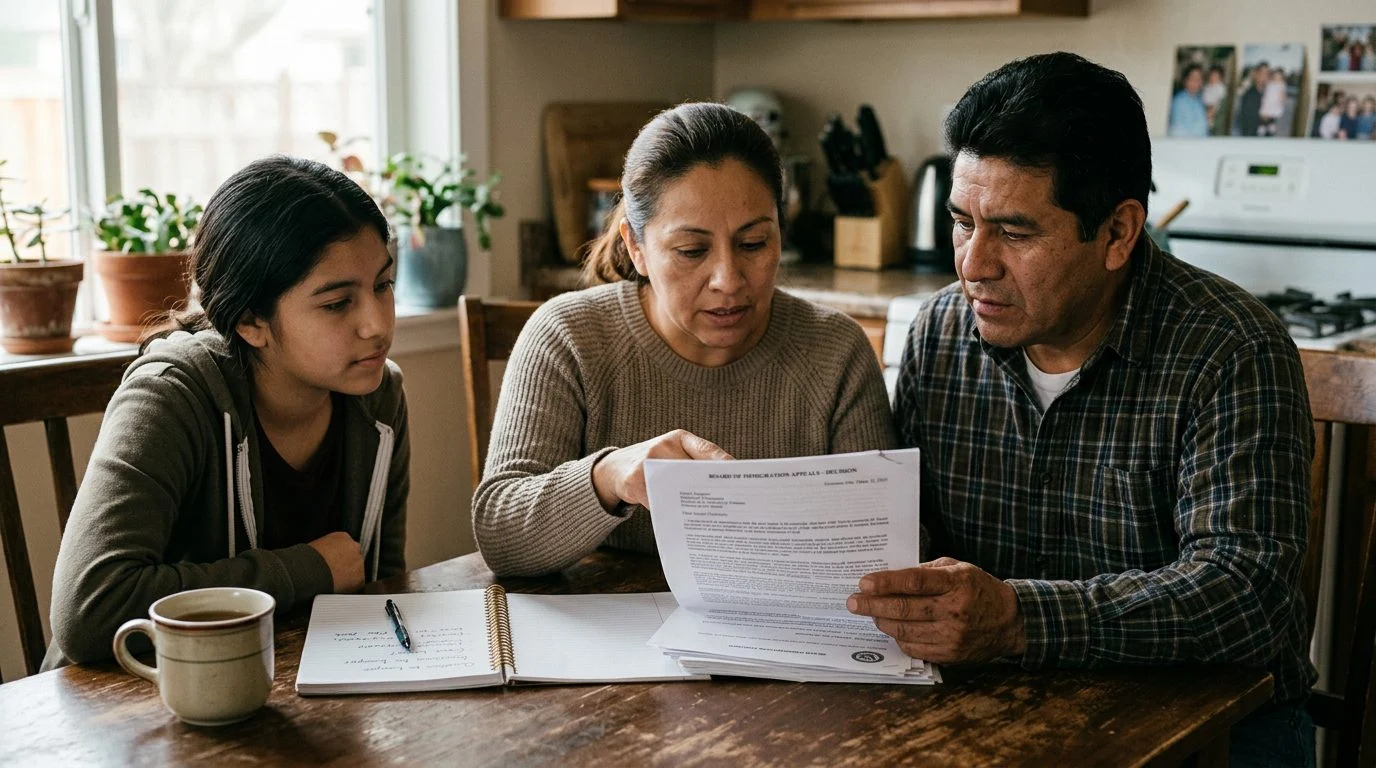
Waiting on an appeal is stressful, especially when a parent, spouse, or child faces removal. Family members often track the deadlines while also worrying about the person in the case.
Common Questions
How many days do I have to appeal to the BIA?
Generally 10 calendar days from the immigration judge’s decision. Certain asylum cases have a 30-day deadline.
Does the BIA hear new testimony?
The Board generally does not find facts itself. New evidence may be treated as a motion to remand.
Does an appeal pause removal?
Generally, a removal order cannot be carried out while an appeal is pending, though exceptions apply.
If you have a decision in hand and are unsure which deadline applies, reach out to AG Immigration Law P.A. through the contact form, by phone, or on WhatsApp. You can also book a paid consultation to talk through your dates.
Why Clients Work With AG Immigration Law P.A.
Immigration Focus
Our practice focuses on removal defense, BIA appeals, adjustment of status, family petitions, naturalization, removal of conditions on green cards, and waivers.
Careful Record Review
We review the immigration judge's decision and the full record so you understand where your appeal stands.
Clear Communication
Adriana Gomez and our team explain each step in plain language, so you always know what is happening with your case.
Support for Families
Immigration cases affect whole families. We take time to understand your goals and your household's situation.
Keep Every Document
Save all notices, receipts, and decisions from the immigration court and the Board. Bring them to your consultation so we can confirm the status of your appeal.
What Influences the Timeline
Complexity of the Case
Cases with several legal issues or a detailed factual record often take more time to review than narrower appeals.
Briefing and the Record
The completeness of the transcript, exhibits, and written arguments can shape how quickly an appeal moves forward.
Motions and Filings
Requests to remand, reopen, or supplement the record can add steps, so each filing is weighed carefully.
Current Board Workload
The number of pending matters before the Board changes over time and is outside any one party's control.