

Removal Defense | Florida & Texas
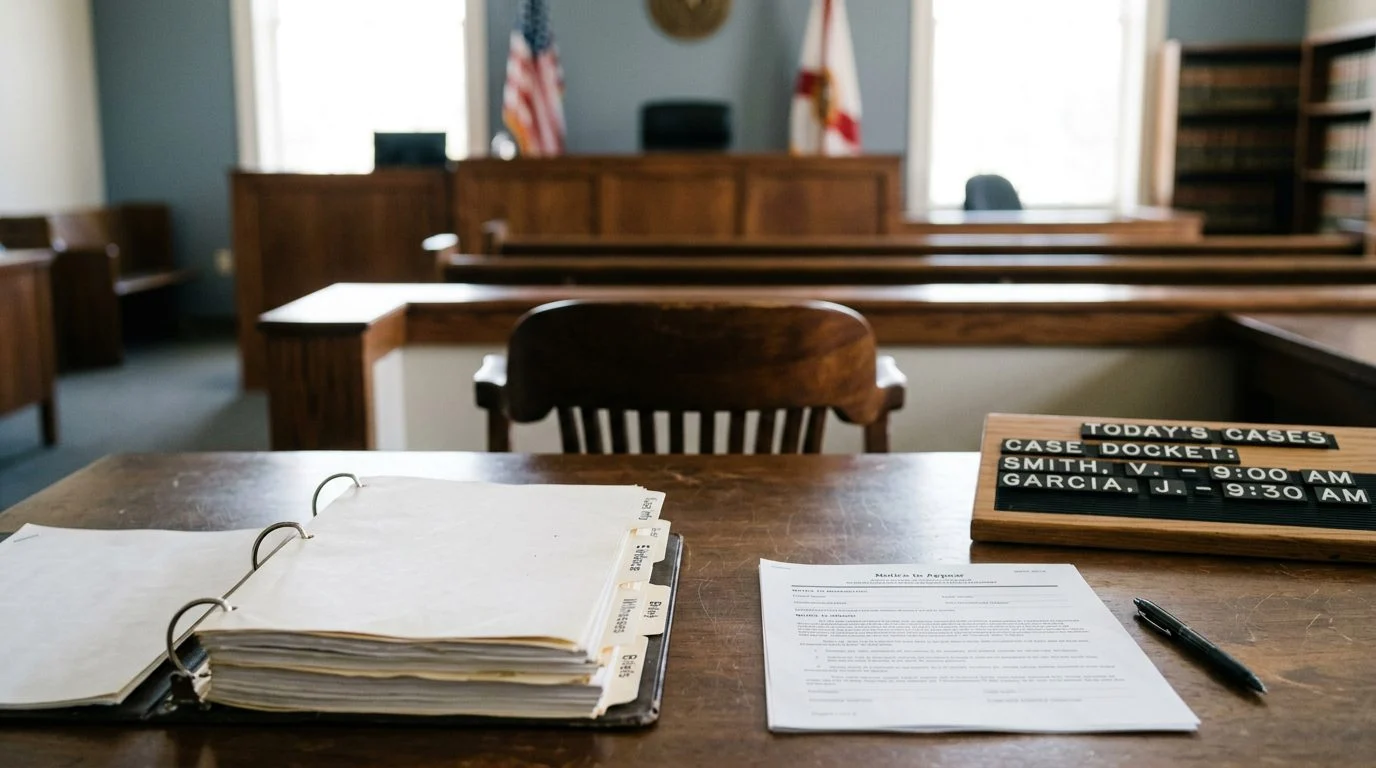
Which Immigration Court Will Hear Your Case?
AG Immigration Law P.A. focuses on removal defense and related immigration matters for clients in Florida, Texas and New York. Contact our office to talk through your situation with Adriana Gomez.
By Adriana Gomez · Published October 31, 2026
What This Page Covers and Who It Helps
Your case is heard in the immigration court where the government files your charging document. Under 8 C.F.R. § 1003.14, proceedings start when that document is filed with the Immigration Court, and the filing must show the court where it was filed.
Most people ask this question after they receive a Notice to Appear (NTA). Others are relatives helping a family member, or people who moved or were held in detention and got their mail late. Each of these readers needs to know which court to watch and when to show up.
The question matters because a missed hearing can have serious results. Confirm your court and hearing date early, not the week before. This page covers how court assignment works, how to confirm your court with official tools, and how moves and address changes affect your case. It focuses on Florida and Texas, and the rules it explains apply in both states.
If you have a Notice to Appear and can't tell which court has your case, our office can help you sort out your next step. Reach out and we'll talk through it with you. Talk it through with our team — we can walk you through how a situation like yours is usually handled and what your options are.

How the Immigration Court Is Assigned
Your case starts in the immigration court where the NTA is filed. Under 8 C.F.R. § 1239.1, a removal proceeding begins when a notice to appear is filed with the immigration court.
Two terms help you read your papers. Jurisdiction is the court’s legal authority over your case. Venue is the place where your case is heard. Under 8 C.F.R. § 1003.20, venue lies at the court where jurisdiction vests.
Your filing details control the answer. Look at the court named on your NTA and any certificate of service. Those papers, not memory or a neighbor’s advice, show where your case was filed. If the court listed does not match the address you were given, treat that as a reason to confirm right away.
How to Confirm Your Court and Hearing Location
You can confirm your court and hearing time with the official Automated Case Information system, using your A-number. The EOIR operational status page lists the online system and the phone line.
Follow these steps:
- Gather your papers. Collect the NTA, any hearing notice, and your A-number exactly as it appears.
- Call 800-898-7180. The TDD line is 800-828-1120. Follow the prompts and enter your A-number.
- Use the online system. Check the court name, hearing date, and time on the same official tools.
- Confirm the court address. Compare the court name with EOIR’s official immigration court list.
- Note the hearing format. Check whether the hearing is in person or by video.
If the person is in ICE custody, the Online Detainee Locator System is the official ICE tool for finding them.
At the first hearing, the judge places you under oath. The judge then asks whether you admit or deny the factual allegations and your removability, as described in 8 C.F.R. § 1240.10.
Florida and Texas: Courts, Hearing Formats, and Changes
Florida and Texas cases follow the same federal venue rules. Your court still comes from your filing, not from your city name. Whether you are in Miami, Broward County, Orlando, Houston, or San Antonio, the same steps apply.
For petitions for review of BIA decisions from Florida immigration courts, the Eleventh Circuit’s published decisions are binding precedent. You can read them on the Eleventh Circuit published opinions page.
Under 8 U.S.C. § 1229, when the time and place of removal proceedings are changed or postponed, a written notice must be given to the person in person, or by mail to the person or their counsel of record if personal service is not practicable. There is one exception: a person who is not in detention does not have to receive that written notice if they have failed to provide the Attorney General with the written record of an address and telephone number required under paragraph (1)(F). That notice must state the new time or place. Under 8 U.S.C. § 1229, the notice must also state the consequences of missing the hearing. Check the court address on EOIR’s current list before you travel, because court details and hearing formats can change.
Changing Venue, Moves, and Address Updates
A move does not change your court on its own. You must update your address in writing, and you may need a change of venue to move your case. The address rule matters most, so act quickly.
Under 8 C.F.R. § 1003.15, you must notify the court within five days of any address change, using Form EOIR-33. If venue has changed, send the notice to the new court.
Under 8 C.F.R. § 1003.20, a judge may change venue only on a motion by one of the parties, after the charging document has been filed with the immigration court. Under 8 C.F.R. § 1003.20, the judge must find good cause. The other side must get notice and a chance to respond. The request must also include a fixed street address, with city, state, and ZIP code, where you can receive hearing notices.
Why Work With AG Immigration Law P.A. on Your Court Questions
AG Immigration Law P.A. focuses on removal defense. The firm also handles adjustment of status, family petitions, naturalization, removal of conditions on green cards, waivers, and BIA appeals.
Adriana Gomez is the responsible lawyer for this page. The firm’s lawyers and support staff work from the same documents, so your NTA, hearing notices, and EOIR printouts stay organized. Our team can help you sort those papers before your case review.
A case review with our office is a paid consultation. The fee is confirmed before you book.
Not sure what your next step is?
Talk it through with our team — we can walk you through how a situation like yours is usually handled and what your options are.
Frequently Asked Questions About Court Venue and Assignment
What court hears immigration cases?
Immigration courts are part of EOIR. Your case goes to the court where your NTA was filed.
How do I check my immigration court hearing?
Call 800-898-7180 or use the online Automated Case Information system with your A-number.
How do I know which immigration court has jurisdiction?
Look at the court named on your NTA and any certificate of service. Jurisdiction follows that filing.
Do immigrants get a hearing before deportation?
Yes. Removal proceedings take place before an immigration judge in immigration court.
Can I request a virtual hearing?
Whether a video hearing is available depends on the court and the hearing type. Check the current hearing format with EOIR.
Does moving to another city change which court hears my case?
A move alone does not change the court. Report your new address within five days in writing on Form EOIR-33 to the immigration court where your charging document was filed, or to the court it was moved to if venue has changed.

Next Step: Bring Your Notice to Appear to Our Office
If you hold an NTA and cannot tell which court has your case, that uncertainty is stressful. You don’t have to sort it out alone. Bring your NTA, hearing notices, A-number, and any EOIR printouts when you reach out.
You can use the contact form, call the office, or message us on WhatsApp to schedule a paid consultation about your court assignment. We can’t promise an outcome, but we can review your papers with you.
How We Can Help
Removal Defense
We represent clients facing removal proceedings and work to protect their position from the first notice through each hearing.
Court Filings and Records
We review your Notice to Appear and other case papers so you understand where your case is pending and what comes next.
Related Immigration Matters
Our practice also covers adjustment of status, family petitions, naturalization, removal of conditions on green cards, waivers and BIA appeals.
Reach Us Your Way
Call the office, send a message on WhatsApp, or complete our contact form to get started.
Do Not Ignore Your Hearing Notice
If you have received a notice about an immigration court hearing, read it carefully and keep it with your other papers. Contact our office as soon as possible so we can confirm where your case is pending and help you prepare.
Steps to Take Now
Gather Your Papers
Bring any Notice to Appear, hearing notices, and immigration documents you have, including your A-number if you know it.
Note Your Dates
Write down every hearing date, time and location listed in your paperwork so nothing is overlooked.
Reach Out to Our Team
Call, message on WhatsApp, or use our contact form to tell us about your case and request a paid consultation.
Find Out Which Court Handles Your Case
Related practice areas
- Deportation Defense Attorney for Immigration Court: Removal Proceedings Explained