

Immigration Law | Florida, Texas & New York
I-601A Provisional Unlawful Presence Waiver Attorney
Contact AG Immigration Law P.A., a firm that focuses on removal defense and family-based immigration matters, to talk through your situation before you file.
By Adriana Gomez · Published November 9, 2026
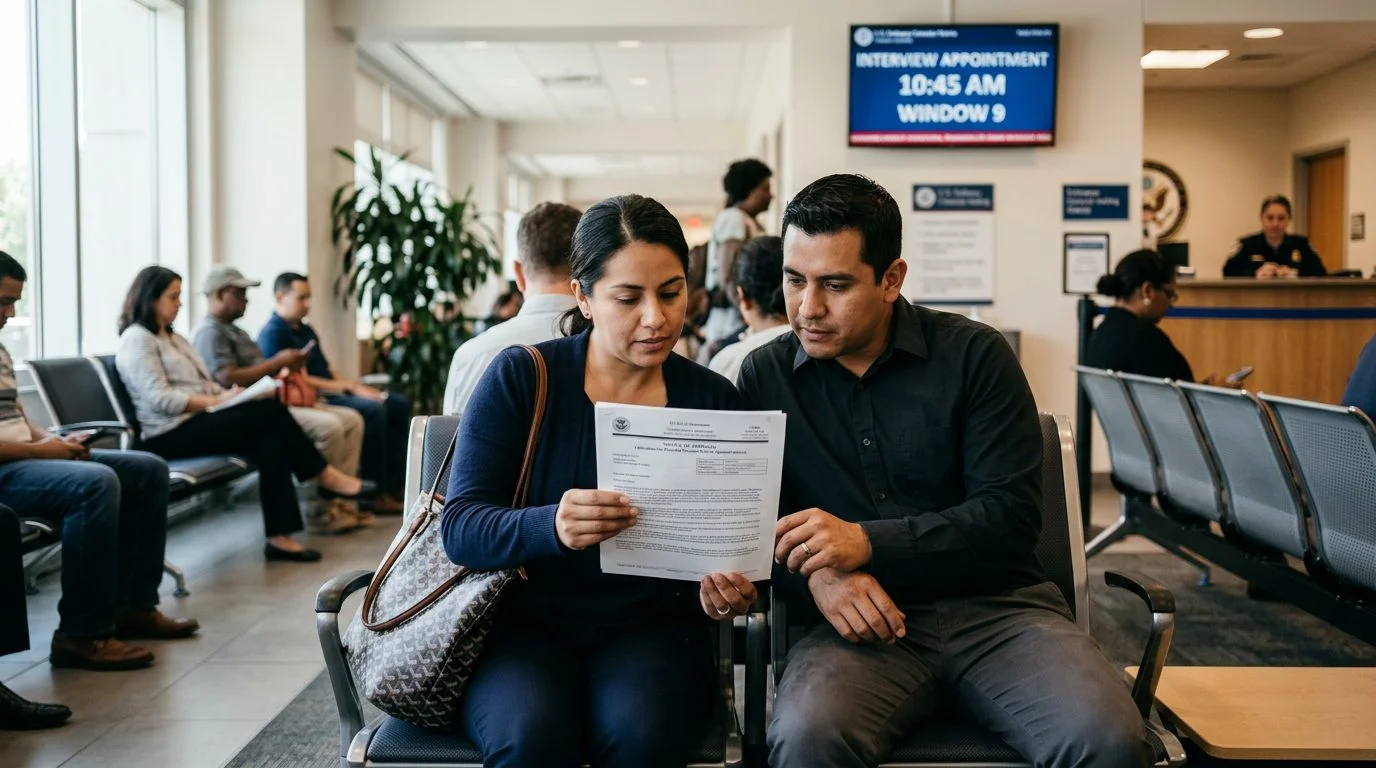
If a relative abroad has a consular interview coming up, and you have been in the United States without status, you may be wondering whether a waiver can keep your family together. The I-601A is a provisional unlawful presence waiver that certain immigrants can file while still in the United States.
It asks USCIS to waive an unlawful presence bar, and it turns on proof of extreme hardship to a qualifying relative. Below is how the waiver works, who it fits, and what the process involves.
What the I-601A Provisional Unlawful Presence Waiver Is
The I-601A lets certain immigrants seek a waiver before they leave for their consular interview. 8 CFR 212.7 says certain immigrants may apply for a provisional unlawful presence waiver, and it sets the filing rules.
The reason this matters is the re-entry bar. The USCIS Policy Manual chapter on unlawful presence explains that if a person accrues more than 180 days but less than a year of unlawful presence during a single stay in the United States, departs the United States, and again seeks admission within 3 years of that departure, the person is inadmissible. A person who accrues one year or more is inadmissible if they seek admission within 10 years.
That bar can keep a spouse or parent outside the country for years. The waiver exists to address it.
The I-601A is not the same as the I-601. Section 212.7 describes both paths, so the right form depends on where your case stands.
If a consular interview or an unlawful presence bar has you worried about your family, our team is here to talk through your options with you. Talk it through with our team — we can walk you through how a situation like yours is usually handled and what your options are.

Who the I-601A Is For
The I-601A fits immigrants who need an unlawful presence waiver and can show extreme hardship to a qualifying U.S. citizen or lawful permanent resident spouse or parent. The hardship is measured on that relative, not on the applicant.
USCIS says extreme hardship means more than the usual hardship that comes with family separation or relocation. According to the USCIS Policy Manual’s extreme hardship policy guidance, the extreme hardship standard is not as demanding as the statutory “exceptional and extremely unusual hardship” standard that generally applies to non-lawful permanent resident cancellation of removal.
Officers look at the whole picture. The USCIS Policy Manual’s guidance on extreme hardship factors directs officers to base their decisions on the totality of the evidence and circumstances presented. Common hardship themes include:
- Disruption of care for children
- Conditions in the country where the relative would have to live
Eligibility also turns on your full history, including any prior removal order and other grounds of inadmissibility. Each case needs its own review.
What the Application Covers and the Evidence It Needs
A filing combines the application form, proof of the family relationship, and evidence of extreme hardship. USCIS can approve a waiver only when the applicant meets every statutory and regulatory requirement, including the form instructions.
The family link comes from a petition. A citizen or permanent resident files Form I-130 to classify a qualifying relative, as 8 CFR 204.1 explains. Documentary evidence for an approved petition establishes the petitioner’s United States citizenship or lawful permanent resident status and the claimed relationship of the petitioner to the beneficiary.
Hardship must be proven by a preponderance of the evidence. That means the claim is more likely than not true. The USCIS Policy Manual’s guidance on evidence for extreme hardship explains that USCIS accepts any type of probative evidence, and it lists bank records and other financial records among the examples without limiting the evidence to that list. A bare statement is not enough. Each claim needs support: each assertion should be accompanied by evidence that substantively supports it, absent a convincing explanation why the evidence is unavailable and could not reasonably be obtained.
Useful evidence usually includes:
- Birth and marriage records that show the relationship
- Tax returns, pay stubs, and bank statements
- School, caregiving, and household records
- Sworn statements describing the hardship
If a document cannot be obtained, you must explain why and provide what you can.
Filing fees are set under 8 CFR part 106, as 8 CFR 103.7 explains. The form instructions list the amounts.
How the Process Works, Step by Step
The process moves from the family petition to evidence gathering, filing, a USCIS decision, and then the consular interview. Each step builds on the one before it.
- Check the family petition. Confirm where the Form I-130 stands for the qualifying relative.
- Gather and check evidence. Collect identity, unlawful presence, and hardship records. Draft sworn statements.
- File the I-601A. Submit the form, the fee, and the evidence. Keep copies of everything.
- Wait for the USCIS decision. Processing times vary, so plan the consular interview timing around that.
- Prepare for the consular interview. If the waiver is approved, the next step is the interview abroad.
If USCIS denies the waiver, the decision letter must give the reasons. It must also say whether an appeal or a motion is available. According to the USCIS Policy Manual chapter on waiver decisions, when USCIS denies a waiver application, the governing regulation may allow the applicant to appeal the denial, and the officer must specify in the decision letter whether the applicant may file an appeal or file a motion to reopen or reconsider.
Timing matters for appeals. In the legalization and Replenishment Agricultural Worker provisions of 8 CFR 103.3, an appeal received after the thirty (30) day period has tolled will not be accepted for processing. An appeal must also name a specific error of law or fact, or it can be summarily dismissed.
Why Clients Work With AG Immigration Law P.A.
AG Immigration Law P.A. focuses on removal defense, adjustment of status, family petitions, naturalization, removal of conditions on green cards, waivers, and BIA appeals.
Adriana Gomez is the lawyer responsible for this page. Our team includes support staff who help organize identity records, hardship evidence, and filing deadlines, so your file stays in order.
We provide immigration services to immigrants across the United States. If your matter falls outside these practice areas, we will tell you and may refer you to another lawyer or firm.
Common Questions About the I-601A Waiver
Do I need a lawyer to file an I-601A?
Hardship evidence and the bar analysis can be complex. Every filing must meet each requirement in the form instructions.
What happens if the I-601A is denied?
When USCIS denies an application or petition, it must explain in writing the specific reasons for the denial. If the notice is Form I-292, it notifies you of the right to appeal. You may file again if you meet the requirements, including that your case is still pending with the Department of State.
Is an I-212 the same as an I-601A?
No. Form I-212 is the consent to reapply form for people subject to an order of removal, deportation, or exclusion under section 212(a)(9)(A)(iii) of the Act and 8 CFR 212.2(j), but a grant of permission to reapply does not waive inadmissibility under section 212(a)(9)(A) of the Act from proceedings instituted later.
Can I appeal a waiver decision?
Does an approved waiver mean a green card is certain?
No one can promise a result. Each decision depends on the full record in the case.
Not sure what your next step is?
Talk it through with our team — we can walk you through how a situation like yours is usually handled and what your options are.
Talk With Our Team About Your Situation
A consular interview date, a bar that has already been triggered, or a denial can leave a family waiting with no clear next step. You do not have to work through that alone.
Share the basics of your case through our contact form, call the office, or send a WhatsApp message. Our team will explain the next steps for your I-601A question.
Consultations are paid, and the fee is explained before you book one.
Why Clients Work With AG Immigration Law
Focused Practice
Our practice focuses on removal defense, waivers, adjustment of status, family petitions, naturalization, removal of conditions on green cards and BIA appeals.
Careful Filings
Immigration applications are detail-driven. We review the forms, instructions and supporting evidence with you before anything is submitted.
Supportive Team
Our team, including our assistants and office staff, helps keep your case organized and answers your questions along the way.
Multiple Ways to Reach Us
Fill out our contact form, call the office, or message us on WhatsApp to start the conversation.
Review Before You File
Speak with our office before you submit anything to USCIS so your application is prepared carefully.
Immigration Services We Handle
Removal Defense
Representation for individuals facing removal proceedings in immigration court, including Florida, Texas and New York matters.
Waivers
Help preparing and presenting waiver applications, including the provisional unlawful presence waiver.
Family Petitions
Guidance on petitions filed for eligible family members seeking to immigrate or adjust status in the United States.
BIA Appeals
Assistance with appeals to the Board of Immigration Appeals after a decision in your case.