

Removal Defense | Florida, Texas & New York
Do Immigrants Get a Hearing Before Deportation?
can help you respond.
By Adriana Gomez · Published November 1, 2026
Do immigrants get a hearing before deportation? In most cases, yes. A person the government seeks to remove is usually entitled to a hearing before an immigration judge. This page explains how that process works, the narrower cases where no judge hearing happens, and what to do if a notice has arrived. Adriana Gomez is the lawyer responsible for this page.
Short answer: most people in removal proceedings get a hearing
Most people the government seeks to remove get a hearing before an immigration judge. The hearing is governed by 8 U.S.C. § 1229a. Under that statute, a person placed in removal proceedings may be charged with any applicable ground of inadmissibility or deportability.
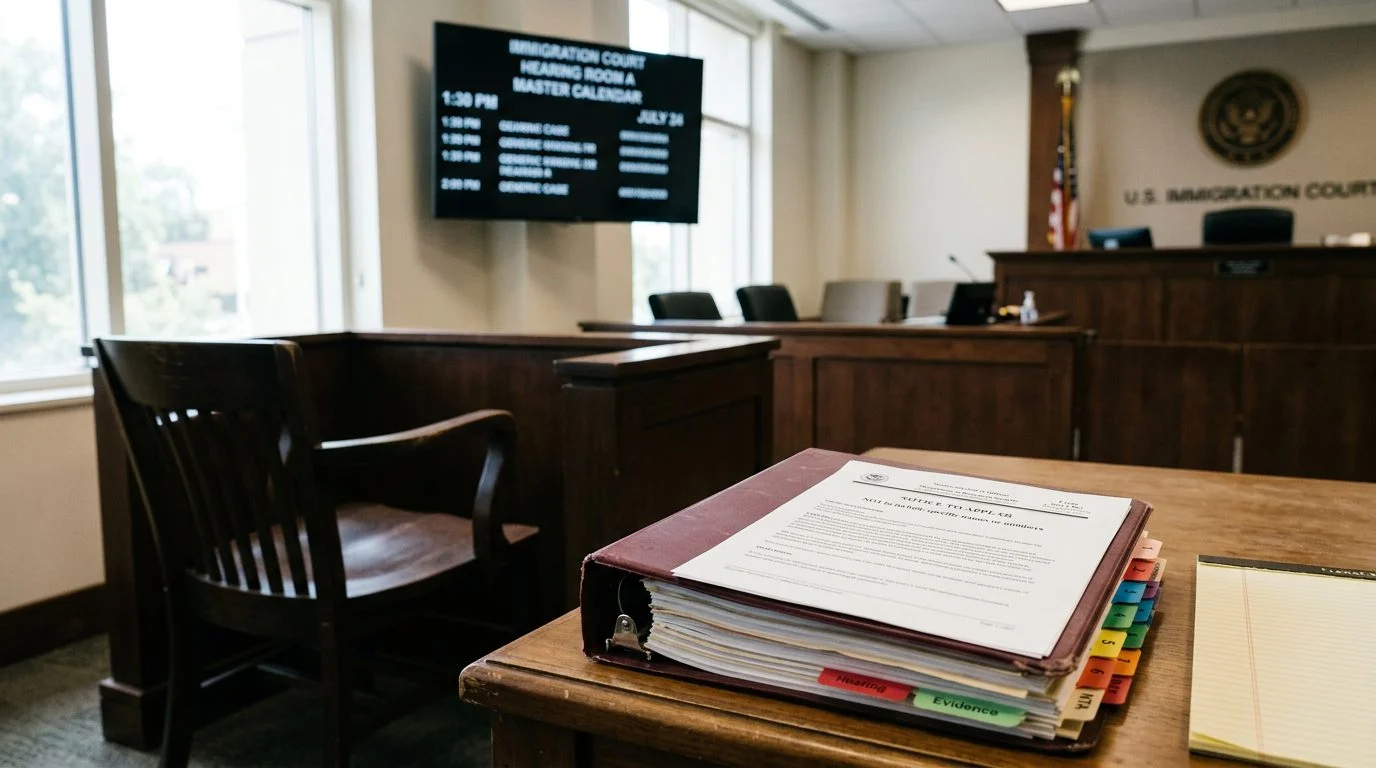
The hearing takes place in immigration court, not in a criminal court. The judge decides whether the person may be removed. The judge can also end the case or grant a form of relief.
Some people go through faster processes with no hearing before a judge. Those situations are narrower. We explain them later on this page. That is why the details below matter.
If a notice or hearing date has you worried, you don't have to sort it out alone. Reach out to our office to talk through your situation. Talk it through with our team — we can walk you through how a situation like yours is usually handled and what your options are.

Deportation vs. removal proceedings: what’s the difference?
Deportation is the everyday word for being sent out of the country. Current law uses the term removal for the formal process. The court case itself is called removal proceedings.
Removal proceedings take place before an immigration judge. A removal order is the final decision that orders a person removed. A person can be in proceedings for months before any order exists.
Under 8 C.F.R. § 1239.1, every removal proceeding under section 240 of the Act starts when a notice to appear is filed with the immigration court. The filing is what opens the case.
Some people are processed through faster administrative procedures instead. Those paths differ from full removal proceedings. They are covered in the section on hearings that may not happen. For an overview of the whole process, see the firm’s removal defense page.
How removal proceedings start: the notice to appear and the first hearing
The case starts with a notice to appear, and the first court date is the master calendar hearing. 8 U.S.C. § 1229 says the notice must be given in person. If personal service isn’t practical, it may be mailed to the person or to the lawyer of record.
The notice must list the charges and the law the government says was violated. It must also show the time and place of the hearing. It must say the person may have a lawyer.
The first hearing date cannot be set earlier than 10 days after the notice is served. That rule applies unless the person asks for an earlier date in writing.
See 8 C.F.R. § 1240.10. The judge also identifies the country of removal if an order is entered.
Keep every notice and every hearing date in writing. Missed dates are one of the most serious problems in these cases.
The individual hearing: where evidence is presented
The individual hearing is the main hearing. This is where evidence and testimony are presented. Witnesses testify under oath, and the judge administers that oath. See 8 C.F.R. § 1240.7.
See 8 U.S.C. § 1229a. If the judge determines that an applicant should provide evidence that corroborates otherwise credible testimony, such evidence must be provided, unless the exception below applies. The exception applies when the person shows they do not have the evidence and cannot reasonably obtain it.
The government presents its side through its own attorney. The person can testify, present documents, and respond to the government’s evidence. The judge’s decision may be oral or written. It must state the reasons and end with an order, as set out in 8 C.F.R. § 1240.12.
Can I get a green card while in removal proceedings? Some people ask the judge for relief that connects to a green card. Adjustment of status and waivers are separate practice areas at the firm. Whether either applies turns on the person’s history and the law.
When a hearing before an immigration judge may not happen
A judge hearing may not happen in some faster processes. The two main examples are expedited removal and reinstatement of an old order.
A person whose prior removal order has been reinstated, who expresses fear of returning to the country designated in that order, is immediately referred to an asylum officer for a reasonable fear interview. That interview is a screening step, not a full removal hearing.
Reinstatement works differently. Under 8 C.F.R. § 241.8, a person who illegally reenters after being removed, or after leaving voluntarily while under an order of exclusion, deportation, or removal, is removed by reinstating the prior order. That person has no right to a hearing before an immigration judge. The officer must give written notice. The person may contest the determination in a written or oral statement. If the person fears return, the person is referred for a reasonable fear interview.
Time rules can also matter. Eligibility for cancellation of removal for certain permanent residents depends on several factors, and each person’s history should be reviewed individually. See 8 U.S.C. § 1229b. Which process applies depends on the facts of each case.
Missing a hearing and in absentia orders
A person who misses a properly noticed hearing may be ordered removed in absentia. The government must show, by clear, unequivocal, and convincing evidence, that the person is removable. It must also show that written notice of the hearing was given. See 8 C.F.R. § 1003.26.
Notice sent to the most recent address the person gave can be enough. The consequences are serious. The exception is when exceptional circumstances apply. See 8 U.S.C. § 1229a.
An in absentia order cannot be appealed to the Board of Immigration Appeals. See 8 C.F.R. § 1240.15. Under 8 C.F.R. § 1240.15, an appeal generally lies from an immigration judge’s decision to the Board of Immigration Appeals, but no appeal lies from an order of removal entered in absentia.
Voluntary departure is different. An immigration judge may grant it at the end of proceedings. The person then leaves at the person’s own expense. 8 U.S.C. § 1229c sets conditions. These include at least one year of physical presence before the notice to appear, and good moral character for at least five years.
People also use “self-deportation” to mean leaving without a court order. Leaving is a major decision. Understand the consequences before you choose it.
Not sure what your next step is?
Talk it through with our team — we can walk you through how a situation like yours is usually handled and what your options are.
Appeals after the decision and key points to remember
A decision of an immigration judge can be appealed to the Board of Immigration Appeals (BIA). Under 8 C.F.R. § 1240.15, the appeal starts with a Form EOIR 26, Notice of Appeal. The filing date is the day the Board receives it.
The reasons for the appeal must be stated in the notice. Failing to do so may lead to dismissal. Read the judge’s notice of appeal rights closely, because the timing matters.
The firm’s BIA appeals practice handles these matters. Here are the key points to remember:
- Most people in removal proceedings get a hearing before an immigration judge.
- The notice to appear starts the case.
- The master calendar hearing and the individual hearing are different steps.
- Some faster processes have no hearing before a judge.
- Missing a hearing can lead to an in absentia order.
Talk with our office about the hearing in your case
If a family member has been detained or has received a notice to appear, the next date may be close. Waiting for a date is stressful. You may be trying to help someone who can’t easily read the papers.
For a person held in immigration detention, the Online Detainee Locator System is the official tool to locate that person.
Adriana Gomez is the lawyer responsible for this page. A matter may be referred to another lawyer or firm if that is appropriate. If a notice or hearing date is on your mind, reach out through our contact page. You can also call or message the office on WhatsApp.

Frequently Asked Questions
Do immigrants get a hearing before being deported?
Most people placed in removal proceedings get a hearing before an immigration judge, where they can respond to the charges and ask for relief. Some people can be removed without that hearing, such as through expedited removal or reinstatement of a prior removal order.
What happens at a removal hearing?
The government presents the charges and its evidence, and the person can respond, present evidence, and ask the judge for any relief they may qualify for. Contact AG Immigration Law P.A. to discuss what a hearing would involve in your situation.
Can I have a lawyer at my removal hearing?
Yes, you have the right to be represented by an attorney, but the government generally does not provide one, so you arrange and pay for your own counsel. AG Immigration Law P.A. can explain how representation works and invites you to call the office or send a message to get started.
Can I ask for release from detention while my case is pending?
In some cases, a person may request a bond hearing before an immigration judge, who decides whether release on bond is appropriate. Eligibility depends on individual circumstances, so contact AG Immigration Law P.A. to discuss your options.
How AG Immigration Law P.A. Can Help
Removal Defense Focus
The firm focuses on removal defense, including proceedings before immigration judges and appeals to the Board of Immigration Appeals.
Related Immigration Matters
Our team also handles adjustment of status, family petitions, naturalization, removal of conditions on green cards, and waivers.
Support From Our Team
Our attorneys and support staff work together to organize documents, explain each step, and keep you informed.
Multiple Ways to Reach Us
Fill out our contact form, call the office, or message us on WhatsApp to get started.
Don't Wait to Get Advice
Immigration cases can move quickly, and small details can matter. Speak with a lawyer before you sign forms, miss a court date, or attend an interview without guidance.
Common Questions About Removal Hearings
Who Holds the Hearing?
Removal hearings are typically held before an immigration judge with the Executive Office for Immigration Review.
What Is Discussed?
The hearing addresses the charges in the Notice to Appear and any applications for relief you may be able to file.
Can a Case Be Different?
Some cases proceed through expedited removal or reinstatement of a prior order, which can involve different procedures.
Who Can Help?
A removal defense attorney can review your case, explain the options, and prepare you for each step.
Have Questions About Your Case? Talk to AG Immigration Law P.A.
Related practice areas
- Deportation Defense Attorney for Immigration Court: Removal Proceedings Explained
- Paralegal Consultation for Immigration Court in Florida