

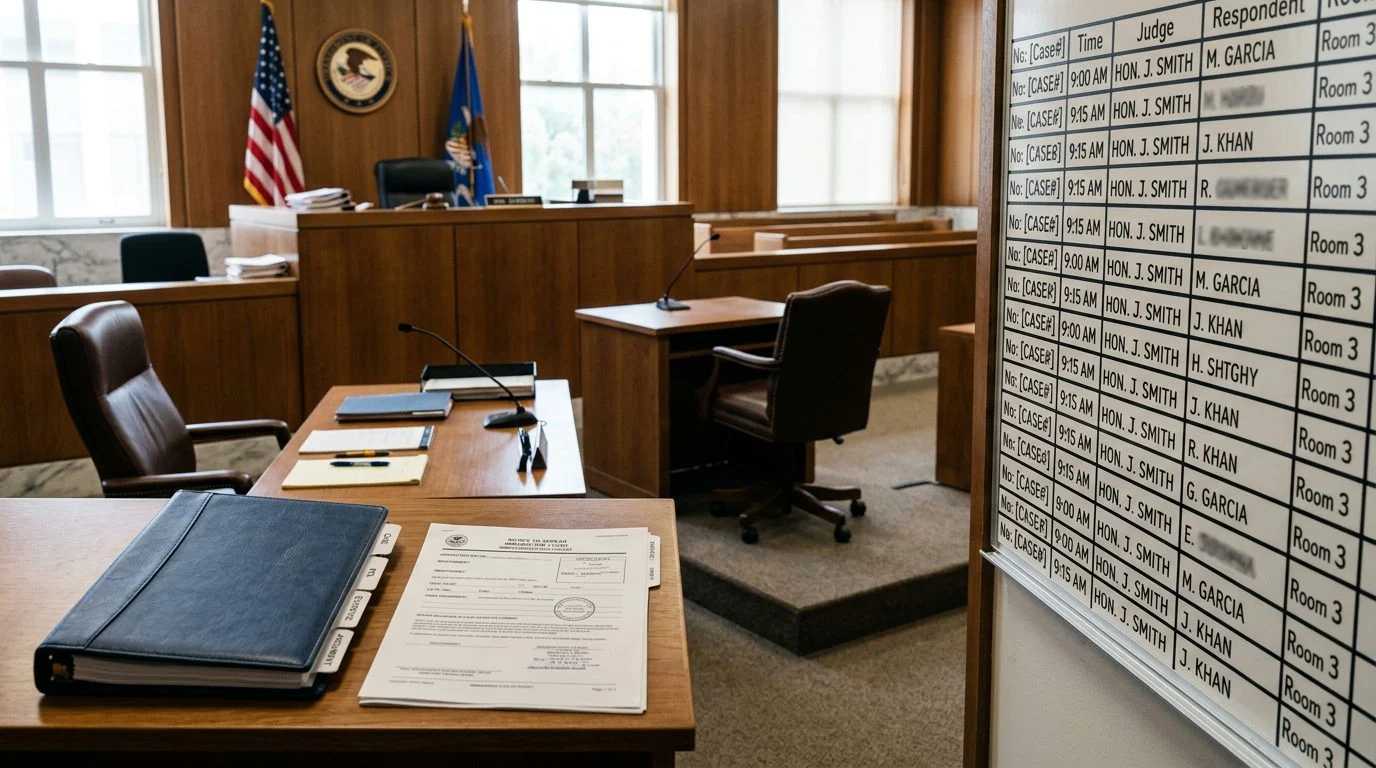
Removal Defense Resources
Prepare for Your Pre-Hearing Conference With Confidence
AG Immigration Law P.A. focuses on removal defense and related immigration matters. Learn what happens at a pre-hearing conference and how to get in touch with our team to plan your next steps.
By Adriana Gomez · Published November 1, 2026
A pre-hearing conference is a meeting the immigration judge may schedule before the main hearing in a removal case. The judge uses it to narrow the issues, look for agreed facts, and organize the case. This guide explains what a pre-hearing conference is, what usually comes up, and how to decide whether attending matters in your case. If you have a notice, read it first. It lists the dates that matter most.
What a Pre-Hearing Conference Is in Immigration Court
A pre-hearing conference is a discussion the immigration judge may hold before the individual merits hearing. The judge decides whether to schedule one. The rule says the conference may narrow issues, obtain agreed facts, exchange information voluntarily, and simplify the proceeding (8 CFR 1003.21).
The conference is not where the judge hears your full case. The individual merits hearing is. That is where evidence comes in, witnesses testify, and the judge decides the issues. Earlier hearings in a case are often used for scheduling and pleadings, so their purpose is different.
Under 8 U.S.C. § 1229a, the immigration judge administers oaths and receives evidence. The formal rules of the hearing apply once the case moves forward.
The court’s notice and the judge’s instructions set the format and timing. Two cases can look alike and still have different schedules. That is why the paperwork you receive matters most.
If your notice lists a pre-hearing conference, and you're not sure whether to go alone or with a lawyer, reach out before the date. Talk it through with our team — we can walk you through how a situation like yours is usually handled and what your options are.
What Usually Gets Discussed at the Conference
The conference usually covers scheduling, the relief you plan to seek, and the issues still in dispute. Each of these affects what you do next.
Scheduling comes first. The judge may set time limits for filing applications and documents. Under 8 CFR 1003.31, a filing not made within the time the judge sets is deemed waived. Missing one deadline can cost you a request you cannot make later.
Relief comes next. You may discuss the applications you want to pursue. Under 8 CFR 1240.11, the alien has the burden of showing eligibility for a requested benefit. The alien must also show that the benefit should be granted in the exercise of discretion.
Evidence and agreed facts come last. The judge may order a pre-hearing statement. Under 8 CFR 1003.21, that statement can list agreed facts, witnesses, exhibits, the time needed, and unresolved issues. If the judge requires written objections and none arrive by the set date, the evidence described in the statement is deemed unopposed. Review that statement closely before the conference.
Do You Have to Attend, and What Happens If You Do Not?
Whether you must attend depends on the notice and the judge’s instructions. Read the notice for the date, time, and place. Write those details down right away.
Missing a hearing can have serious results. Under 8 CFR 1003.26, in a removal proceeding the judge shall order a person removed in absentia if DHS shows by clear, unequivocal, and convincing evidence that the person is removable and that written notice of the time and place of proceedings and of the consequences of failure to appear was provided to the person or their counsel of record. The judge must also find that written notice of the time, place, and consequences was given.
That is why you should update the court whenever you move. Notice goes to the address you last gave, so an outdated address can cause real problems.
Even when no removal order is entered, a missed conference can cost you deadlines. A late filing may be treated as waived. Ask yourself these questions:
- Does the notice list a conference or a hearing date?
- Are any filings or statements due?
- Are you seeking any form of relief?
- Do you have a lawyer or other representative?
If you answer yes to any of these, plan carefully before the date.
How to Prepare for a Pre-Hearing Conference
Preparation starts with the notice. Confirm the date, time, and courtroom, and write them on a calendar. If anything changes, get the change in writing so you have a record.
Gather your identity, immigration, and case documents. Sort them by date and keep copies of everything you file. Under 8 CFR 1003.31, any document that requires a signature must carry an original handwritten ink signature, an encrypted digital signature, or an electronic signature. Plan that step early so it doesn’t delay a filing.
Write a short summary of each form of relief you may pursue. List the deadline tied to each one next to it. A one-page summary helps you answer questions clearly and keeps the facts straight.
Plan the practical parts too. Arrange transportation and childcare. Give yourself time to arrive early for security screening. If you need an interpreter, raise that with the court early. Under 8 CFR 1003.22, any interpreter must swear or affirm to interpret and translate accurately. 8 C.F.R. § 1003.22 reads: “Any person acting as an interpreter in a hearing shall swear or affirm to interpret and translate accurately, unless the interpreter is an employee of the United States Government, in which event no such oath or affirmation shall be required.”
What to Expect on the Day and What to Avoid
Expect check-in, a wait, and then your case being called. The judge and the parties then speak to the court. Stay calm and follow the judge’s instructions.
Under 8 CFR 1240.10, the judge must confirm that you received a copy of your appeal rights. The judge must also explain that you have a reasonable opportunity to examine and object to evidence, present evidence, and cross-examine government witnesses, but you cannot examine national security information the government offers against your admission or an application for discretionary relief. In a removal case, the judge requires you to plead to the notice to appear. You admit or deny the factual allegations and the charge of removability. Know what you’re saying before you answer.
Listen carefully. Take notes on every date and deadline. If a question is unclear, ask the judge to repeat or explain it. Do not agree to a date, fact, or request you do not understand. Guessing can change the direction of your case.
Watch for follow-up deadlines. Ask what must be filed, who must file it, and when. Write each answer down before you leave the courtroom.
Why Legal Guidance Matters Before the Conference
The choices made around a pre-hearing conference can shape later steps. Those include which relief to preserve, which deadlines to meet, and what goes into any statement the judge orders.
Under 8 CFR 1240.3, the respondent may be represented at the hearing by an attorney or other qualified representative. A lawyer can review the notice, the filing schedule, and the relief you may be able to pursue. That review does not come with a promised result, because each case turns on its own facts.
AG Immigration Law P.A. focuses on removal defense. The practice also handles adjustment of status, family petitions, naturalization, removal of conditions on green cards, waivers, and BIA appeals. Adriana Gomez is responsible for this page.
Not sure what your next step is?
Talk it through with our team — we can walk you through how a situation like yours is usually handled and what your options are.
Talk With Our Team Before Your Conference Date
If your notice lists a pre-hearing conference, and you’re not sure whether to go alone or with a lawyer, reach out before the date. You can use the contact form, call the office, or message us on WhatsApp to book a paid consultation. Consultations are paid services.
Bring your notice, any earlier filings, and a list of questions. In that meeting, our team reviews your deadlines and the relief you’re weighing. You’ll leave with a clearer picture of what happens next.

Frequently Asked Questions
What is a pre-hearing conference in immigration court?
A pre-hearing conference is a meeting with the immigration judge, the government attorney, and the respondent or their lawyer before the main hearing. It is used to narrow the issues, confirm deadlines, and plan how the case will move forward.
Do I have to attend a pre-hearing conference?
Yes, if the court sets one, you or your lawyer should attend as scheduled, because missing it can lead to serious problems in your case. Contact our office right away if you have a conflict or received a notice you do not understand.
What happens during a pre-hearing conference?
The judge and attorneys often discuss which forms of relief may be requested, which documents will be submitted, whether any facts are agreed upon, and how much time is needed for the individual hearing. Some conferences are held in person, while others take place by phone or video.
Should I have a lawyer with me at a pre-hearing conference?
Having a lawyer helps you understand what the judge is asking, speak accurately about your case, and meet filing deadlines. Our office can review your notice and discuss your options, so please contact us to schedule a consultation.
What Happens at a Pre-Hearing Conference
Narrowing the Issues
The judge and the parties identify which matters are disputed and which are not, so the hearing can focus on what matters most.
Confirming Deadlines
The conference is a chance to review scheduled dates, filing requirements and the steps that must happen before the main hearing.
Planning the Case
Parties discuss how the case will move forward, including evidence, witnesses and the order of proceedings.
Preparing for the Hearing
Careful preparation before the conference helps you understand the process and go into the main hearing organized.
Bring Your Questions to a Lawyer First
Court schedules and filing requirements can change. Keep your court papers and contact information current, and speak with a lawyer about your case before the conference so you know what to expect.
Why Clients Work With AG Immigration Law P.A.
Focused Immigration Practice
Our firm focuses on removal defense, adjustment of status, family petitions, naturalization, removal of conditions on green cards, waivers and BIA appeals.
Supported by Our Team
Assistants and office staff help keep your case organized, from scheduling to document follow-up.
Multiple Ways to Reach Us
Fill out our contact form, call the office, or message us on WhatsApp to start the conversation.
Clear Explanations
We explain the process in plain language so you can make informed decisions about your case.
Talk With Our Team Before Your Conference
Related practice areas
- Deportation Defense Attorney for Immigration Court: Removal Proceedings Explained
- Removal Defense in Florida
- Removal Defense in New York